


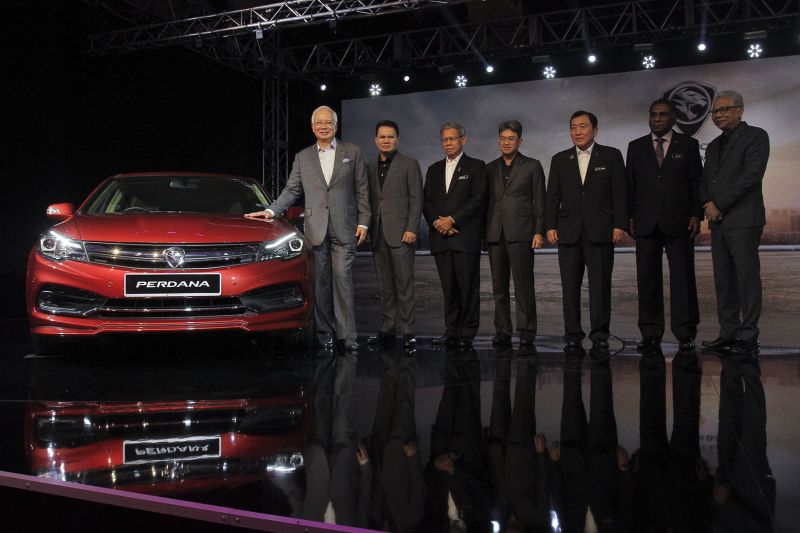
KUALA LUMPUR, Aug 19 ― Taxis make up a minor percentage of Proton’s sales, experts have said when negating claims that a liberalisation of the industry would harm the national car maker.
Commending the Land Public Transport Commission's (SPAD) initiative to remove model restrictions for taxis, the Malaysian Automotive Association (MAA) and Asean Intellectual Property (Asean IP) said this would encourage Proton to be more competitive and encourage participation by other brands.
“It is a good move and it will not hurt Proton at all, and if it all anything, this move by SPAD and the government will encourage Proton to boost its performances,” MAA president Datuk Aishah Ahmad told Malay Mail Online.
Acknowledging concerns raised by a taxi group that the change may harm the national car policy, she stressed, however, that any effect would be negligible.
Proton is currently the second-largest automaker by sales volume and sold 102,175 vehicles in 2015, according to MAA that tracks sales and production figures. The total industry volume for last year was 666,674 units, of which 75,376 were commercial vehicles.
According to SPAD, there are now 61,349 registered taxis of various classes in the country.
“Proton sells only a small proportion of its cars to the taxi industry as its major sales come from cars sold to the general public,” she added, when stressing that the taxi group’s concern was unfounded.
“Everyone should know that the government would never decide on a policy that would hamper the development of the Malaysian car maker.”
Proton has enjoyed decades of protection in various forms since its inception in the 1980s, which the government previously revealed as amounting to RM13.9 billion in value.
It recently received a RM1.5 billion soft loan from Putrajaya, which also announced a special taskforce headed by Performance and Management Delivery Unit (Pemandu) CEO Datuk Seri Idris Jala to help revive the carmaker.
“The government is simply looking for a level playing field for all parties here and I think it is a good move,” she said.
Asean IP president Chew Phye Keat was similarly supportive of SPAD's proposal to allow all car models to be used as taxis, also predicting the impact on Proton’s overall performance to be negligible.
He added that Proton would still “survive” as most people would choose the national car maker for its affordability and cost effectiveness, adding that liberalisation was a trend affecting virtually all sectors.
“The use of Toyota, Perodua or Proton by such service providers should not make a difference as most people would choose a cheaper and economical car,” he told Malay Mail Online.
“Moreover, most Uber and Grab drivers are already driving the Malaysian brand cars,” Chew added.
Last Tuesday, SPAD announced 11 initiatives contained in its Taxi Industry Transformation Programme that included, among others, the removal of any restrictions on the make and model of cars that may be registered as taxis.
The announcement was criticised by the Sector Taxi group, which claimed that it would sideline national cars.
Sector Taxi secretary Apriman Dalias said it would imply that Malaysians were ashamed of their national cars, and claimed that all countries with their own car brands used these as taxis.


