


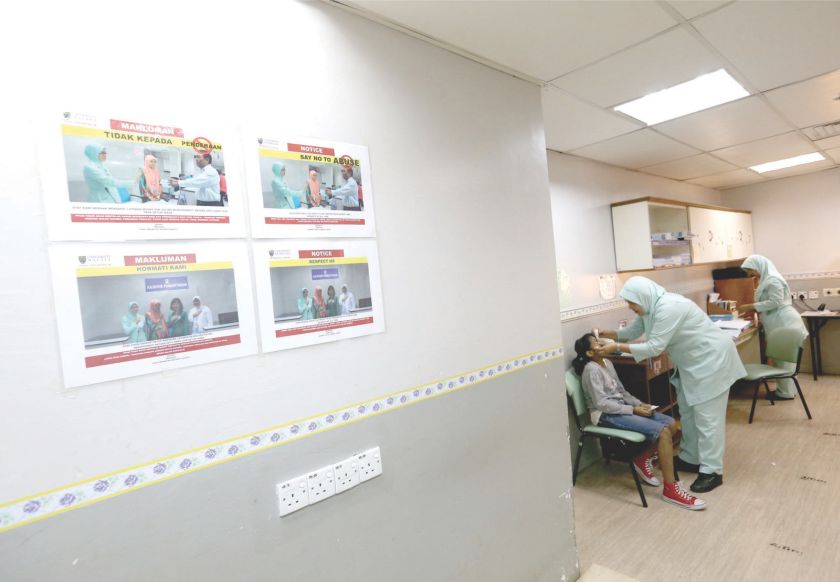
PETALING JAYA, May 23 — Not a stranger to abuse including by patients and their next-of-kin, University Malaya Medical Centre (UMMC) has come up with a zero tolerance abuse policy.
The hospital has also issued a stern warning to its staff that intimidation of and by superiors and colleagues is unacceptable.
Notices have been put up in wards, pharmacies and corridors warning everyone against violence and verbal abuse.
One reads: “Our staff have the right to be treated with dignity and respect all the time.
“UMMC will not tolerate verbal or physical abuse. Legal action will be taken against the perpetrators. You may be denied services.”
UMMC director Prof Dr Tunku Kamarul Zaman Tunku Zainol Abidin said: “UMMC has always been on the receiving end which resulted in us implementing the policy to ensure a safe environment in the facility.”
He said abuses came not only in the physical form, but also in psychological or verbal forms.
The policy, which was approved and enforced in September 2014, covers all levels of interaction.
Dr Tunku Kamarul said the rules covered complaints involving staff and superior and vice versa, and patient and family members against staff and vice versa.
He said 21 cases of staff abuse were recorded from April 2012 to February this year.
The hospital sees between 3,000 and 3,500 patients daily and the annual patient load is more than 1.2 million.
“We have been getting fewer complaints since the policy was implemented,” he said.
Issues between staff members were dealt with by an internal inquiry, he said.
This included Universiti Malaya staff who sought treatment at UMMC.
There is also the avenue of sending staff to anger management courses, depending on the severity of the abuse.
Counselling for abused staff is also available, although for now such issues are resolved through peer support.
Malay Mail recently reported public hospitals were buckling under the strain of patients and their families intimidating their staff.
Universiti Kebangsaan Malaysia Hospital is drafting new operating procedures and educating employees on legal options available to them when it comes to handling such abuse.
The Health Ministry is also looking at new regulations to handle such issues in facilities under their purview.
Dr Tunku Kamarul said patients or next-of-kin roughed up staff because they were facing personal issues or did not understand the hospital’s stand when it came to treatment.
While treatment may be denied in extreme cases, emergency cases will not be affected.
He said what the hospital authorities could do was to “remove” the negative, aggressive behaviour from a hostile scenario.
Medical staff could opt out of treating a patient, allowing a colleague to take over, or employees who felt they were defamed were free to take the matter to court on their own.
If push comes to shove, police at UMMC will be called in to handle the situation. A police report is lodged when there is a need.
Dr Tunku Kamarul related two cases to highlight negative behaviour that warranted such policy.
One involved a group of people who threatened to beat up staff with sticks if their family member was not treated.
“There was another case which involved two gangs fighting and one of them was brought to the emergency department,” he said.
“The members of the other gang threatened our medical team member while he was resuscitating the victim.”
After the situation was resolved, a police report was lodged.
“These standard operating procedures ensure there is no abuse. It is not 100 per cent perfect but it seeks to be fair to everyone,” he said.


