


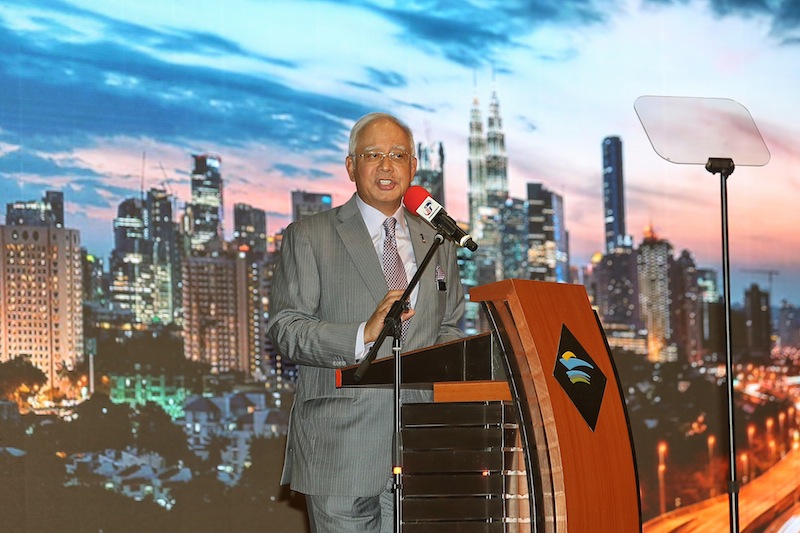
KUALA LUMPUR, Jan 29 ― Putrajaya should have resized the federal Cabinet and done away with underperforming ministries to cut expenditure instead of introducing measures to fatten consumer pockets in order to prop up the local economy, political analysts said after yesterday’s Budget 2016 revision.
Institute of Democracy and Economic Affairs (Ideas) chief executive Wan Saiful Wan Jan said he was expecting the government to trim the Cabinet’s waistline, claiming it would have been a good way to help boost federal coffers.
“I was hoping to see radical cuts in government spending because when (the government's) coffers shrink, it only makes sense to slash redundant expenditure such as certain ministries and ministers that are underperforming,” he told the Malay Mail Online when contacted.
He labelled yesterday’s revisions populist measures and said reducing workers’ contributions to the Employees Provident Fund (EPF) and giving out 20kg of rice monthly to hardcore poor families would not contribute much to economic growth.
Wan Saiful pointed out that lower EPF savings would result in a bigger problem in the future for retirees.
“While I laud the attempt of the government to create more disposable income for workers I, however, don't see how this will benefit all because if a worker does not know how to save, it is going to be problem when he or she retires,” he said.
Political analyst Khoo Kay Peng agreed with the view.
“The EPF reduction is meddling with the people's retirement plan and this is not good at all,” he said.
Khoo said that he had also expected more specifics on how Putrajaya planned on tightening its belt, citing as examples the abolition of posts like special envoys to the government.
“These special envoys, like (Datuk Seri S) Samy Vellu, what is he doing? His portfolio clashes with other ministries... so I feel removing a position as such would have been a better move,” he said.
Professor Shaharuddin Badaruddin of Universiti Selangor (Unisel) expressed disappointment that the budget revisions failed to offer more goodies to middle-income earners who form the majority of the Malaysian population.
“These are the people earning between RM4,000 and RM5,000. What do they get?” he said.
He noted that Putrajaya had reduced scholarships offered by the Public Service Department (PSD) and questioned the move, saying it would not have created much of a dent to the government’s finances.
“There are not many PSD recipients so whether they cut 30 or 20 students from this programme I don’t really see this as an issue,” he said.
Putrajaya trimmed its spending plans and cut its growth forecast for 2016 yesterday amid the continued plunge of global oil prices that hit Malaysia’s revenue.
Among others, Prime Minister Datuk Seri Najib Razak announced that the recalibrated budget will see a cut in operating and development expenditure of around RM7 billion to RM9 billion.
To boost private spending, the prime minister announced tax relief of RM2,000 for individual taxpayers earning monthly salaries of RM8,000 and below, giving them an additional RM475 million in their pockets, and lowered the employee contributions to the EPF by three percentage points, increasing private consumption expenditure by an estimated RM8 billion a year.
The original Budget 2016 tabled last October had been based on an estimated US$48 (RM202.46) oil price per barrel.
The revised government budget now assumes an oil price of between US$30 and US$35 per barrel.


