














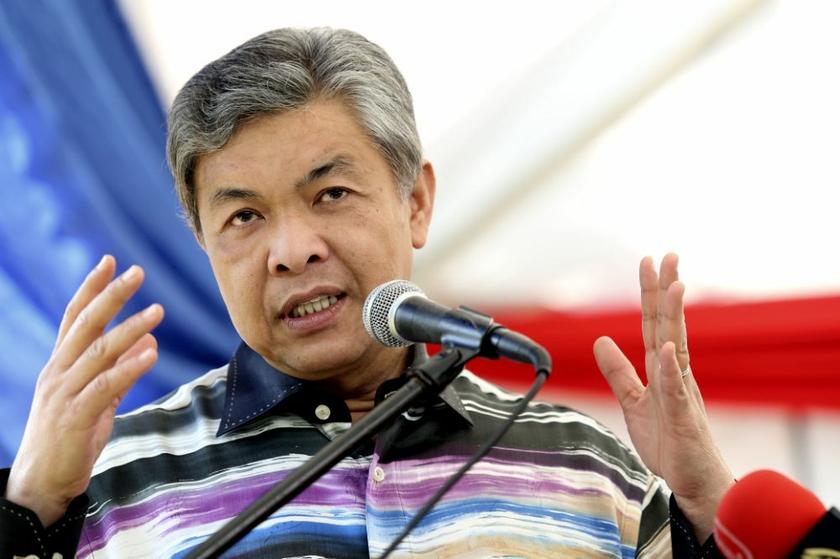


KUALA LUMPUR, Jan 26 — Deputy Prime Minister Datuk Seri Ahmad Zahid Hamidi cast doubt today over the methodology used in the recently-released Pew Research Centre survey that claimed 11 per cent of Malaysians are Islamic State (IS) sympathisers.
He said although it is true that there are IS sympathisers in Malaysia, the report’s conclusion that as many as 3.1 million Malaysian Muslims quietly support the terror group was questionable, and cautioned against accepting the survey results without dispute.
“I am not disputing the survey but I don’t think it was done empirically,” Zahid, who is also home minister, told reporters after closing the International Conference on Deradicalisation and Countering Violent Extremism.
“To my observation, of course there are IS sympathisers. But to say 3.1 million Malaysians support them, we cannot swallow that as a whole. I think we need to look at the methodology of the survey,” he added.
Zahid was quick to stress, however, that what matters now is that the government, with international cooperation, is doing its best to contain the IS threat.
“It’s what we do now. Our role in the international arena and I can say we are doing our best to fight them”.
A Pew Research Centre study last year on the attitude of Muslims towards IS showed that 11 per cent of Malaysians support the Muslim militant group that has claimed responsibility over the January 14 bombings in Jakarta, Indonesia, that saw four civilians and four terrorists killed.
Earlier today, Zahid in his closing speech at the conference said Putrajaya has been promoting moderation to counter the rising threat of Islamic extremism.
In its analysis of the recent Jakarta bombings, however, London-based weekly The Economist claimed that while Indonesian social movements are attempting to counter jihadist influence, the Malaysian government has completely politicised Islam until there is little space for more peaceful interpretations.
Yesterday, Prime Minister Datuk Seri Najib Razak reasserted his administration’s full commitment to combat Islamic extremism domestically and in the region.
He also said he will not apologise for implementing preventive detention laws despite criticism that the new enactments contravened human rights.