




KUANTAN, Jan 13 — The Felda land schemes developed by the late Tun Abdul Razak Hussein more than 50 years ago are a major contribution of the second prime minister to society.
The schemes have provided a comfortable life to the scores of poor people recruited as settlers.
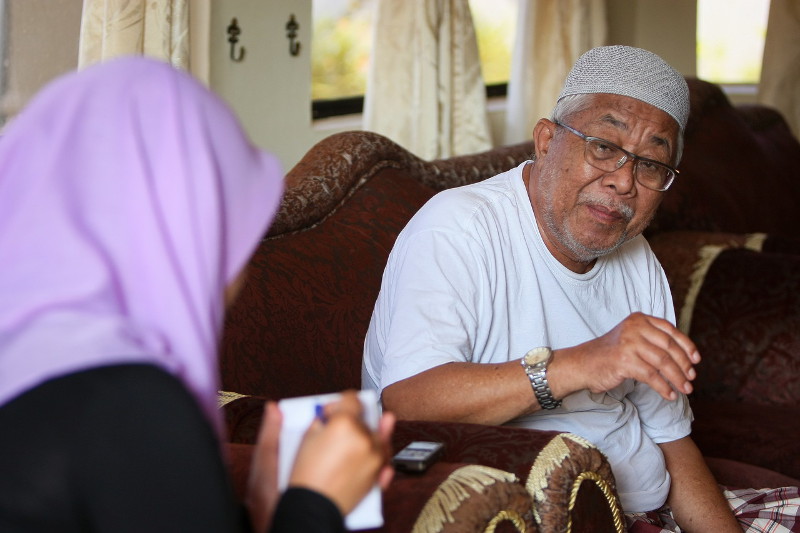
One such settler is Mustaffa Ismail, 70, of Felda Bukit Sagu 1 here. He acknowledged that life was much better now than before he joined the scheme in 1982.
Mustaffa, who was a rubber tapper in Pokok Sena, Kedah, said he had taken the right decision to migrate from the rice bowl state to Pahang 34 years ago to become a Felda settler.
“When I arrived at this Felda scheme 34 years ago, oil palm smallholdings were nothing much to shout about but I toiled in the plantation to earn a lucrative income.
“I am grateful to the government for having given me the 10-acre (4.05-hectare) plantation and my family now enjoys a more stable and better life,” he told Bernama.
Mustaffa, who also serves as an imam at Felda Bukit Sagu 1, said his income from the plantation had even reached RM6,000 a month. His income as a Felda settler had enabled him to educate his two daughters into lawyers, he said.
The elder daughter, Nor Hidayah, has set up a law firm in Kuantan while the younger, Nor Munirah, is a civil and syariah lawyer. “If I had not joined Felda, I could not have even dreamt of such a life. I could not have imagined seeing my daughters as lawyers,” he said.
Another settler, Melah Busu, 56, of Felda Bukit Sagu 2, also expressed her appreciation of Tun Razak’s endeavour that had enabled her to enjoy a more comfortable life after joining a Felda scheme in 1988.
“In the past, it was difficult for Malays living in the villages to earn a decent living. Income was an uncertainty. It was fortunate that we were selected to join the Felda schemes and given 10 acres of land each,” she said.
Azhari Ismail, 62, a first-generation settler of Felda Kemahang I in Tanah Merah, Kelantan, said Felda schemes now had roads, water and electricity supply, comfortable homes, primary and secondary schools, clinics, mosques, retail shops and recreational areas - a much-improved environment than that of the 70s.
Recalling his experience of carving out a plantation from jungle in 1973, Azhari said the settlers were forced to sleep in longhouses, drink well water and use kerosene lamps at night.
He said he was grateful to Tun Razak for having opened up the land schemes because his family enjoyed a better life and all his four children were able to go to university.
Fellow settler Lijah Hassan, 57, said: “We are thankful to Felda, introduced by the late Tun Razak, for having helped us to improve our life and seeing three of our five children through university.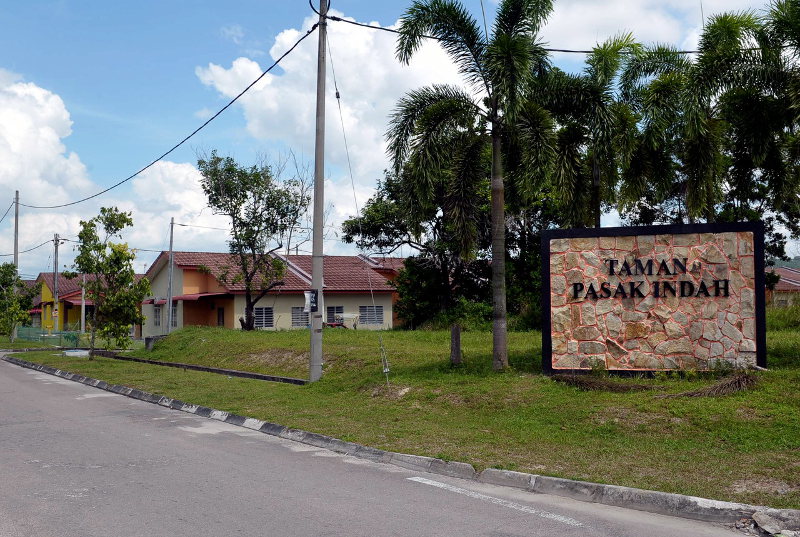
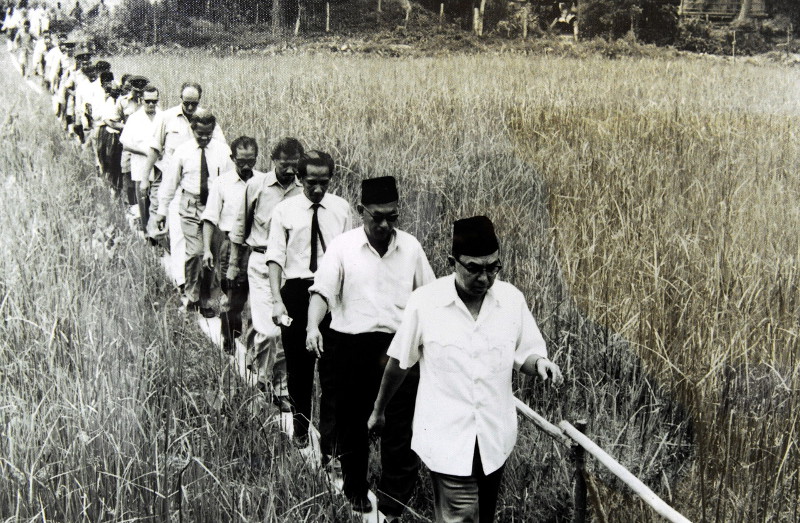
“If not for Felda, we would have remained growers of banana and tapioca.” Ali Mohamed, 64, a settler at Felda Pasak, Kota Tinggi, Johor, said he watched on television Tun Razak’s visit to a Felda scheme where the late prime minister, with a walking stick, walked across a wooden bridge.
It went to show the greatness of a man who was prepared to go down to the ground to meet the common people despite coming from a renowned family, he said.
“Tun Razak’s vision to place the Malays in an urban setting by opening up the Felda scheme is most appreciated. His struggle for us has brought much benefit in the long term and is greatly appreciated,” he said.
Felda Pasak village chief Wahab Hussin, 54, said many children born in the Felda schemes were professionals now, thanks to the education programme implemented by Tun Razak when he opened the land schemes.
Felda Pasak was opened in 1966 on 1,285 hectares for the cultivation of oil palm (80 per cent) and rubber (20 per cent) by 3,000 people who also engaged in the breeding of goats and cows and the business of frozen foods.
Felda was established on July 1, 1956, on the initiative of Tun Razak to, among others, help the poor and develop the rural areas and improve the national economy through the export of rubber and palm oil. — Bernama


