




KUALA LUMPUR, Dec 13 — An international environmental advocacy group has suggested that the proposed Sungai Besi-Ulu Kelang Elevated Expressway (SUKE) be reviewed after its study of an Environmental Impact Assessment (EIA) on the project found it would adversely affect the environment.
The Environmental Advocate Law Alliance Worldwide (ELAW) said the report failed to highlight the hazards of air pollution that residents along the highway would have to endure.
In feedback to the Say No to SUKE (SNTS) committee which submitted the EIA to the Eugene (Oregon) based agency, ELAW said the report also did not provide enough information about how the project would impact air quality, a “critical” issue.
“Without such information, the document cannot provide decision-makers with a basis to reach a rational decision about whether the environmental costs of the project exceed the claimed benefits of the project,” it said after studying the EIA submitted by SNTS.
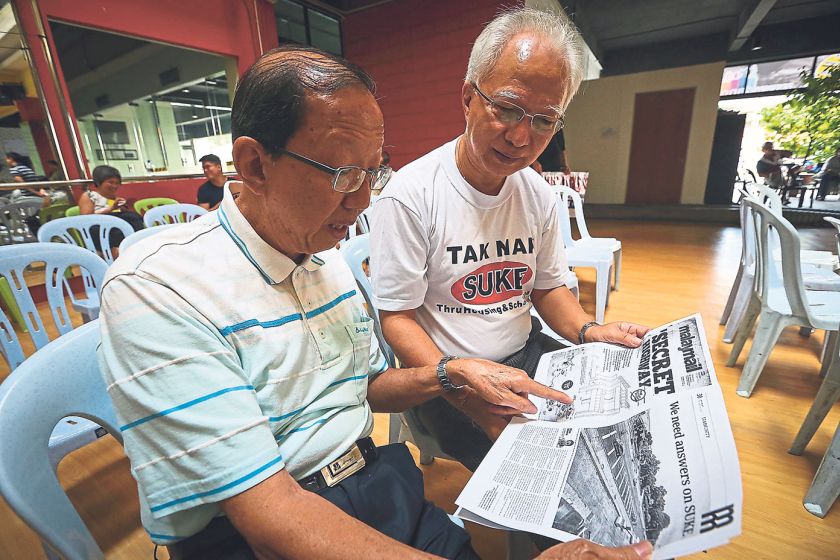
ELAWs finding were provided to the media yesterday by SNTS protem chairman Agos Hasan during a public briefing for residents in the affected areas.
Agos told reporters that the report referred to the EIA as a “flawed document” that failed to assess how the project would impact air quality.
He said it went on to state that it should be obvious that the report was a generic statement without relevance to how the project would impact air quality, specifically within the project area.
“Without providing quantitative information on how the project would impact air quality and how this would impact the respiratory health of children and preventable death from coronary heart disease in adults, the document cannot be a reasonable basis for deciding whether the claimed benefits of the project exceeded its potential human costs.”
The 31.8km highway to be carried out by Projek Lintasan Kota Holdings Sdn Bhd (Prolintas) has met resistance by residents in Ampang and Cheras who just three months ago were unaware of the project.
Malay Mail had highlighted the fact that thousands of them were in the dark over the three-lane dual-carriage expressway that is expected to cut through more than 60 housing areas between Sri Petaling and Ulu Kelang.
Residents had wanted to know why the project, expected to be carried by June, had been shrouded in secrecy.
Agos said the report failed to highlight the hazardous air pollution residents along the alignment of the highway would have to endure.
“Residents in the impacted area of the proposed highway such as in Ampang and Bukit Mandarina will be exposed to 150 API (Air Pollutant Index) daily, three times the national limit.
“The project will also affect three major schools in Ampang, which are SMK Dato Razali, SJK(T) Ampang and SK Ampang. Students who are exposed to such a high level of air pollution daily may have health problems such as asthma and heart disease.”
According to Agos, sound pollution could also be expected to be above the accepted national level and may lead to more health issues.
“The maximum permissible dBA (sound level) for land in a new development is 65 dBA. The noise level for the project is expected to be between 87 and 96 dBA for those living within 20m of the highway.
“If the project goes through, residents who live close to the highway will suffer four years of high noise pollution levels. This might cause stress which could lead to numerous other health issues especially to young children and the elderly,’’ he added.
According to Agos, the Town and Country Planning Act of 1972 clearly stated that for a project to be approved for construction, it should first be gazetted in the intended local town plan. SUKE was not listed in both the Ampang Jaya town and Kuala Lumpur city plans.
“What is worst, the EIA report shows that 64 per cent of the public do not know of the expressway and even to this day, public engagement by relevant agencies is almost nil.
“We are gearing up to take legal action against the Selangor government and Ampang Jaya Municipal Councils and will be be submitting affidavits to the courts in January.’’
More than 80 residents from Ampang, Taman Bukit Ampang, Taman Seri Ampang, Taman Permai, Taman Len Sen and Bukit Mandarina attended the briefing.


