


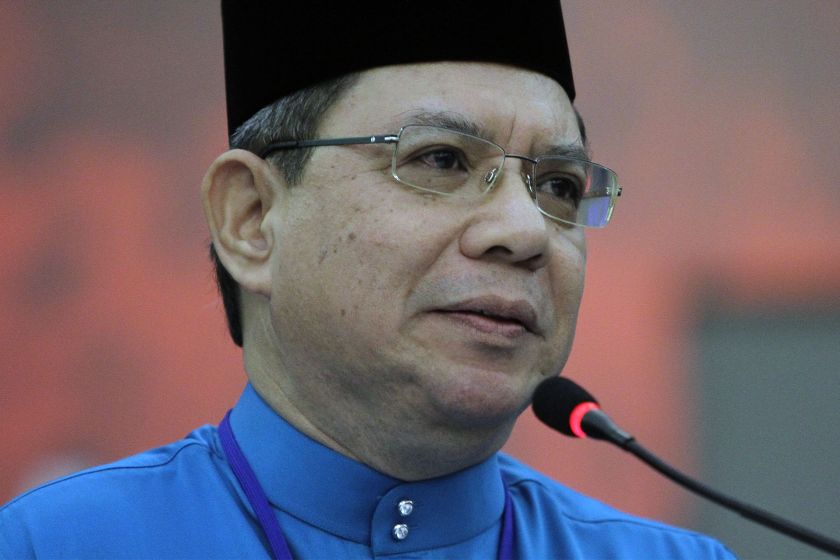
KUALA LUMPUR, Dec 11 — Pakatan Harapan says it will come up with concrete rules on decision-making and common policies as it strives to avoid the mistakes that led to the break-up of Pakatan Rakyat.
Pakatan Harapan chief secretary Datuk Saifuddin Abdullah said the federal opposition pact comprising PKR, DAP and Amanah will produce a “Pakatan Agreement” by next month, which details the Do’s and Dont’s for coalition parties and party members and the role of the presidential council as the highest decision-making platform.
A “Pakatan Common Policies” document will also be ready by mid-2016 and will detail the pact’s ideology and policies.
“We must present ourselves no longer simply as a coalition of reformists and opposition only, but as a government in waiting,” Saifuddin told Malay Mail Online this week.
“We have to put our house in order. Hence, the urgent need of having the Pakatan Agreement, something not done during Pakatan Rakyat days,” the PKR member added.
Saifuddin noted that while Pakatan Rakyat—comprising PKR, the DAP and PAS then—had a common policy framework, the now-defunct opposition pact which split up over conflicts between secular DAP and Islamist party PAS, did not formalise decision-making rules that will now be laid out in black and white in Pakatan Harapan’s Pakatan Agreement.
The Pakatan Common Policies document, on the other hand, will contain the pact’s “motherhood” statements which are to uphold the Federal Constitution and Rukunegara; to promote mature and progressive democratic and developmental thoughts, policies and programmes; to be in sync with today’s new realities both locally and globally; and to be futurist in its outlook.
Pakatan Harapan’s Common Policies will also comprise of detailed policies and specific programmes on areas like cost of living, employment, and household income, as well as ensure that states controlled by their pact—Penang and Selangor—do better to prove that the pact is able to govern.
“Pakatan’s presidential council has agreed to strengthen the Pakatan secretariat and conduct a monthly meeting (every first Tuesday),” said Saifuddin.
He said the Pakatan Harapan presidential council held a retreat on December 4, where they invited Ibrahim Suffian, director of independent pollster Merdeka Centre, to share his latest findings on current issues and public perception of political parties in the country.
Saifuddin, however, declined to disclose details of the survey.
But Malay Mail Online managed to see part of the survey which showed that more Malays were happy with PAS than with Umno, while the Chinese were more dissatisfied with the Malay ruling party than with PAS.
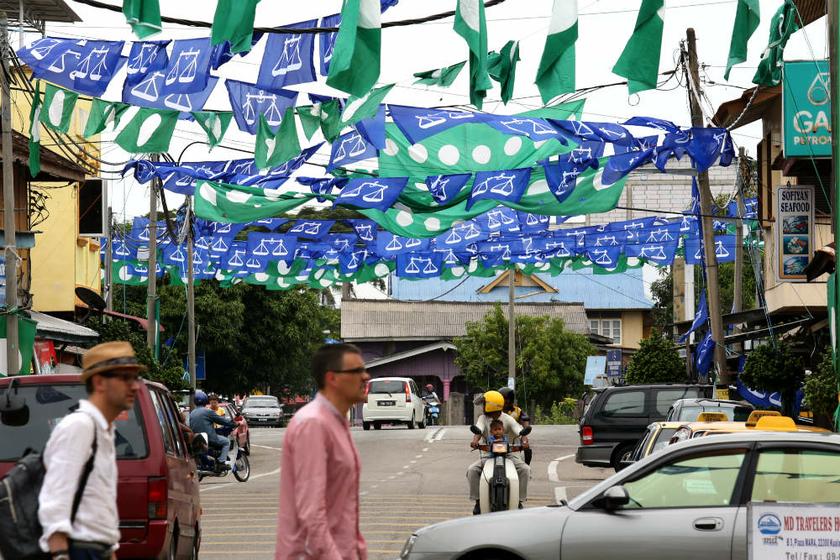
According to the independent pollster’s survey, which was conducted from November to December this year, 42 per cent of Malays were happy with PAS, higher than the 35 per cent of the predominant ethnic group that was happy with Umno.
In contrast, 32 per cent of Malays polled were dissatisfied or angry with PAS, less than the 54 per cent of Malays who expressed the same sentiments towards Umno.
For the Chinese, 66 per cent were dissatisfied or angry with PAS, compared to 77 per cent who felt the same towards Umno.
PAS and Umno shared equal support in rural areas, with each registering 31 per cent approval, as well as among the impoverished, with 36 per cent and 38 per cent of those earning a household income of less than RM2,000 a month saying they were happy with PAS and Umno respectively.
Dislike for both Umno and PAS increased as earnings grew, with 78 per cent and 59 per cent of those earning a household income of more than RM7,000 saying they were dissatisfied or angry with the Malay and Islamist party respectively.
More than half of civil servants, or 57 per cent, said they were dissatisfied or angry with Umno, compared to 37 per cent who expressed the same sentiments towards PAS, indicating that government servants may not be a stable vote bank for Umno as previously thought.
Slightly more youths preferred PAS to Umno, with 28 per cent of those aged between 21 and 30 years saying they were happy with the Islamist party, compared to 24 per cent who said the same about Umno.
Saifuddin told Malay Mail Online that the survey results were not surprising.
“But it was very important because it is factual and no longer based on intuition; and enables us to better strategise our next move,” he said.


