


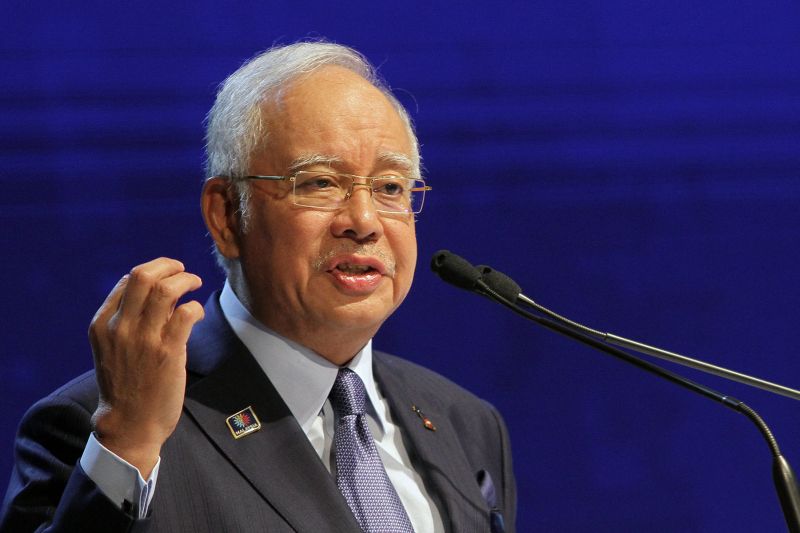
KUALA LUMPUR, Dec 6 — Prime Minister Datuk Seri Najib Razak reiterated tonight that Malaysia is not a failed state, amid fears from the public of eroding quality of life and civil rights.
In his closing address at the National Undergraduates Leadership Conference here, Najib reassured the public that the country has instead been a success story under ruling party Umno, something that Malaysians should be proud about.
“Under Umno’s leadership, the crux of the administration helmed by Umno, we can see that with every passing day, our country is fast progressing and is far from what can be assumed as a failed state.
“Malaysia is not a failed state, Malaysia is a success story that we can be proud of,” he said, adding that many world leaders who visited Malaysia recently for the Asean Summit respected the government’s leadership.
“When the world’s big leaders came to Malaysia, though we are a medium-sized nation, but they showed that they respect the leadership of Malaysia,” he added.
In August, reiterating the same sentiment, Najib said Malaysia and its government may not be perfect given the current problems plaguing the nation, but it is not “failed state” or a “rogue nation” as claimed by critics.
The prime minister cited Malaysia’s scoring of the highest margin in the Global Islamic Economy Indicator 2014-15 ranking against 70 other Islamic nations as evidence that his administration is steering the country in the right direction.
He also cited Malaysia’s “top spot” in the Global Competitiveness Report and the World Bank Report of Doing Business.
Former deputy prime minister Tan Sri Muhyiddin Yassin had recently cautioned that Malaysia could turn into a “failed state” if the government fails to boldly tackle a looming national crisis fuelled by political and economic instability.
Muhyiddin listed the factors that could cause Malaysia to be a failed state as an unstable global economic climate, plunging ringgit value, extraordinary political turmoil, price hikes and rising living costs.
However, Najib claimed critics of his administration had “vested interests”, and expressed regret that many of the country’s youths trusted such propaganda more than their own government.
He also called those who spread such alleged propaganda as the “enemies of Islam”.


