




PUTRAJAYA, Oct 1 — The Court of Appeal today convicted R. Yuneswaran for breaching the Peaceful Assembly Act (PAA) when he failed to give a 10-day notice ahead of a rally held in 2013.
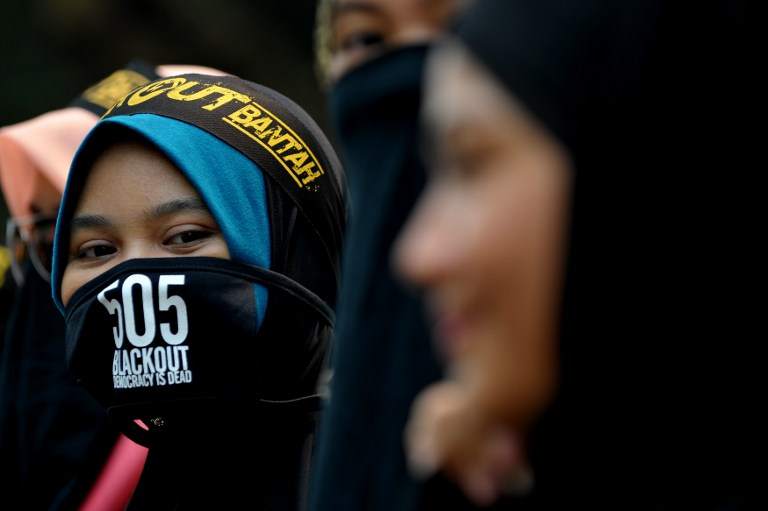
Yuneswaran was ordered to pay RM6,000 in fine for failing to give police 10-days’ notice ahead of the May 5, 2013 public gathering he helped organise, which PKR has since dubbed the “Black 505 rally”.
“We are more than satisfied that there is sufficient evidence to support the conviction of the respondent,” Court of Appeal President Tan Sri Datuk Seri Md Raus Sharif, who chaired the three-man Bench, said in pronouncing Section 9 (5) of the PAA to be constitution.
Yuneswaran’s lead lawyer, Sivarasa Rasiah told reporters later that today’s judgment went against the precedent set by the same court previously that had acquitted PKR Youth chief Nik Nazmi Nik Ahmad, who was similarly charged under Section 9 (5) of the PAA.
However, it was a different panel of judges in the Court of Appeal had ruled the provision in the PAA to be unconstitutional.
“It’s clear from what this court said, this court doesn’t agree with the Nik Nazmi judgement,” Sivarasa later said following the conviction.
“They just made the decision that they don’t agree with the Nik Nazmi judgement and Nik Nazmi’s case states that Section 9 (5) is unconstitutional, but here the court ruled that it is in fact constitutional,” he added.
Last April, the Court of Appeal ruled it unconstitutional to criminalise spontaneous public assemblies in breach of a 10-day notice required under Section 9(1) of the PAA, and also ordered that Section 9(5) — which imposes a maximum RM10,000 fine for non-compliance — be struck out for running counter to the Federal Constitution.
Today’s ruling, however, effectively reverses the ruling and makes rally organisers and participants susceptible to be arrested and charged should they be part of an illegal rally.
“So the effect of the decision now, unlike Nik Nazmi, is that you must give a 10 day notice and if you give a notice of only nine days, it’s already an offence,” Sivarasa said.
Sivarasa said two key issues were left out by today’s appellate court panel when delivering its judgment: the precedent set with the Nik Nazmi case and the legality of spontaneous assemblies, which are often exempted from needing advance notice in other countries.
The lawyer said only the Federal Court can override an existing ruling that is related to the constitution and not any other subordinate courts.
“The one that can overrule is the Federal Court, and if the prosecutors don’t like the Nik Nazmi ruling they should find another PAA case and bring it to the Federal Court level and then invite the Federal Court to overrule Nik Nazmi. That’s allowed.
“That’s the right process but not for one Court of Appeals to overrule another Court of Appeals, they are the same level,” he said.
Sivarasa said that he was unsure if his client would challenge the appellate court decision, adding that they would have to study the judgment first.
Dozens of civil activists and politicians have been investigated under the PAA following the various rally held this year, eight of whom were charged under the act for their involvement in the #KitaLawan rally.


