


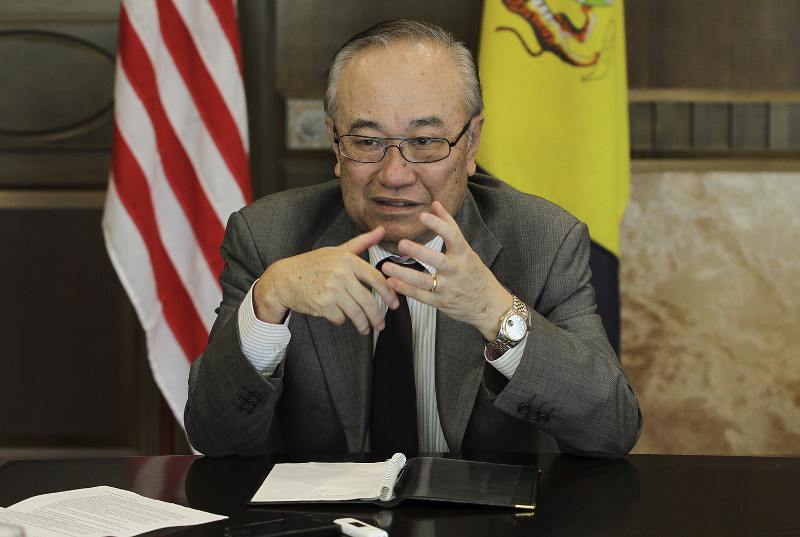
PUTRAJAYA, Aug 15 ―Malaysia has “reasonably” strong institutions that have enabled progress and economic growth compared to other countries like in South America, minister Datuk Paul Low said, despite the recent purported crackdown on the Malaysian Anti-Corruption Commission (MACC) and the removal of critics from the federal Cabinet.
“We’re not a basket case,” the minister in the Prime Minister’s Department in charge of integrity and governance told Malay Mail Online in a recent interview.
“We’ve not gone the way of South American countries. We still have strong institutions,” Low added, referring to Malaysia’s institutions like the judiciary, the Auditor-General’s Chambers, the MACC, the police, Bank Negara and the Enforcement Agency Integrity Commission (EAIC).
London-based publication The Economist reported last March that two-thirds of Latin American countries ranked in the bottom half of Transparency International’s Corruption Perceptions Index 2014, with Venezuela coming in at 161st out of 175 countries.
Malaysia, in contrast, ranked 50th.
Malaysia, however, has seen the sacking of the Lord President during the 1988 judicial crisis in the Mahathir administration.
Under Prime Minister Datuk Seri Najib Razak, Attorney-General Tan Sri Abdul Gani Patail was removed from office last month during a special taskforce’s investigation on corruption allegations involving state investment arm 1Malaysia Development Berhad (1MDB).
Just days later, Abdul Gani’s replacement Tan Sri Mohamed Apandi Ali reportedly told the MACC that the taskforce was no longer necessary.
Several MACC officers have also been questioned by the police and have had their offices and homes raided amid the anti-graft agency’s investigation on former 1MDB subsidiary, SRC International, on suspicion of leaking documents.
Two senior MACC officers who had criticised the apparent crackdown on the anti-corruption agency were transferred to the Prime Minister’s Department last Friday. Their transfer orders were cancelled Monday, however, amid public outrage.
Against this backdrop, Low said although he still believes Malaysia’s public institutions are strong, he admitted that they have been, “to a certain degree, undermined”.
“The level of independence has been compromised to suit political interests. I would say our institutions used to be much better,” he said.
“Cases that should have been investigated are not investigated, cases that need to be prosecuted are not prosecuted. There can be selective upholding the rule of law.
“There can be decisions in judgment that doesn’t seem right, I suppose. There may be certain transactions that were made in the financial area that causes us to have huge loss of money. There were bailouts,” the minister added, without naming specific incidents.
Malaysia has been under the rule of Barisan Nasional since independence, with a relatively weak opposition until the last general election in 2013 when the 13-party coalition lost the popular vote.


