


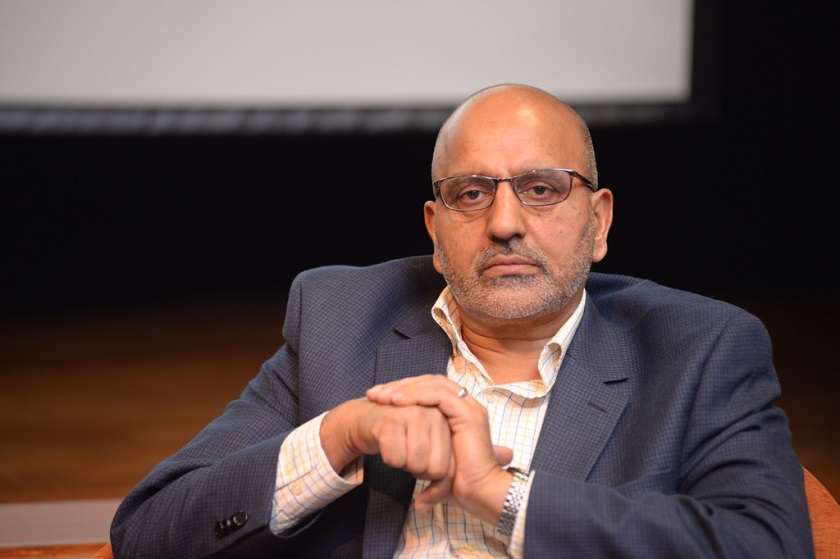


GEORGE TOWN, Dec 10 — Politicians are to blame for the “self-constructed” insecurity experienced by Muslims, according to Carnegie Scholar Professor Ebrahim Moosa.
The leading Muslim academic was pointing out the incongruity in the oppression perceived by Muslims despite the group numbering some 1.2 billion and their control of enormous wealth and natural resources such as oil.
“It was used as a kind of scare tactic and that happens all the time (and) everywhere, even the Christians do this, too,” he said in his talk on “Developing a philosophy of pluralism” organised by Penang Institute here.
He cited United States as an example, saying that evangelists there frequently warn of a purported Muslim takeover or fabricate threats stemming from minorities.
Moosa said that as long as Muslims do not have a strong grasp of their own history, tradition and values, they will continue to be susceptible to politicians to use religion as a tool for support.
He added that education was also important in helping Muslims see through political ploys.
The scholar then expressed disgust at Muslim preachers from India and South Africa who spread insults against Christians and the Bible, among others, saying this was not what is taught by Islam.
“Muslims ought to have better sense than to subject themselves to that kind of ridicule so I am glad to know that some of those elements are banned in Malaysia even though I don’t think you should ban them, but boycott these talks and let them talk alone,” he said.
The professor from Notre Dame University’s Kroc Institute for International Peace does not agree to the use of “tolerance” for a multi-cultural society.
He said there is a need for different religious and ethnic groups to appreciate each other’s traditions by experiencing it so that they will begin to understand themselves clearly.
“It is by understanding others that we begin to understand ourselves better,” he said.
Since the so-called political tsunami of Election 2008, race-based politics has gradually waned but found a new lease on life — or so critics contend — under the guise of Islamism.
This is facilitated by the ethno-religious identity of the Malays, which is inexorably tied to Islam by dint of the constitutional wording that describes Malays as Muslims.
The use of religion as means to curry favour with the electorate was also palpable in the tussle for “Allah”, the Arabic word for God that Muslims here consider to be exclusive to Islam, with the fervour waxing and waning in tandem with elections.
Muslims here are also regularly warned of a multitude of threats to themselves and their faith, which Islamic authorities say come from myriad sources.


