


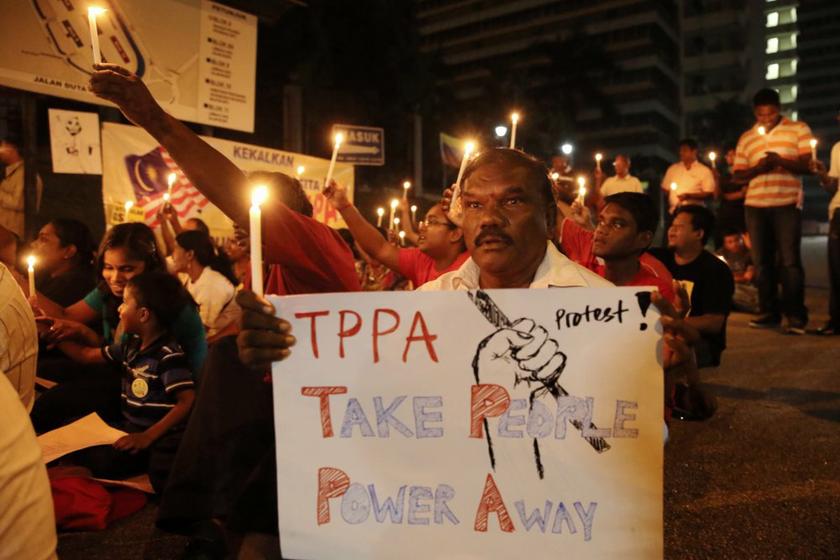


KUALA LUMPUR, April 25 — A coalition of mostly medical groups here are worried that Malaysia will “barter” away access to affordable medicine for Malaysians when Prime Minister Datuk Seri Najib Razak meets with US President Barack Obama this weekend.
Noting that the proposed Trans-Pacific Partnership Agreement (TPPA) will be on the agenda when both heads of state meet, Malaysian AIDS Council’s Fifa Rahman said the coalition fears that Malaysia would cave to pressures from the US to accept the TRIPS-plus provisions in the trade pact.
If Malaysia concedes to the TRIPS-plus provisions, it would bump up medical costs for patients here, Fifa said.
Pointing to other trade agreements in the past, Fifa said countries have been known to “concede” to clauses on medicine when the heads of states meet for negotiations.
“We are worried about that because in the past, in negotiations, medicine have been conceded for things like defence materials, throw in a couple of submarines and everything is all go.
“So we don’t want that to happen. We want Malaysian patients to have access to medicine especially because the (income) disparity is so high,” she told a press conference at the Malaysian Medical Association (MMA)’s office here today.
She said Malaysia was one of the countries with the widest income gap between different communities.
Fifa was speaking on behalf of a coalition of over 20 non-governmental organisations (NGO) including the MMA, Malaysian AIDS Malaysia and the National Cancer Society Malaysia.
Fifa said Malaysia should also reject any offers by US to be temporarily exempted from the TRIPS-plus provision until the country achieves high-income nation status.
“We would like to emphasise that transition periods do not make this an acceptable deal, especially since Malaysia may reach high-income GDP status in the next three to five years,” she said.
MMA’s president Datuk Dr NKS Tharmaseelan, who was also present at the press conference, voiced the coalition’s fears that Malaysia would agree to proposals in the TPPA to allow “evergreening” of patents for medicines.
If Malaysia gives its nod to drug companies continuously extending the patent period by making minor tweaks to their products, Malaysians would have to keep paying more for branded medicine, he said.
Tharmaseelan said this would be in comparison to generic drugs, which would usually cost a fraction of drugs still under patents.
On Tuesday, International Trade and Industry Minister Tan Sri Mustapa Mohamed confirmed the TPPA was part of the agenda in Obama’s weekend visit, but dismissed suggestions that it is meant to pressure Malaysia into signing the free trade agreement which critics have claimed would benefit the world superpower.
Mustapa said Putrajaya remains firm on key issues including intellectual property rights, protection of the Bumiputera economic agenda and state-owned enterprises, delicate subjects that have slowed negotiations.
Addressing Parliament during its September sitting last year, the minister said the Malaysian government would not succumb to any pressure from the US and would only sign the agreement on its own terms.


