




KUALA LUMPUR, April 24 — Putrajaya plans to enact a fresh law to regulate all non-Muslim houses of worship in the country, a move aimed at resolving recurring conflicts sparked by the haphazard construction of holy structures.
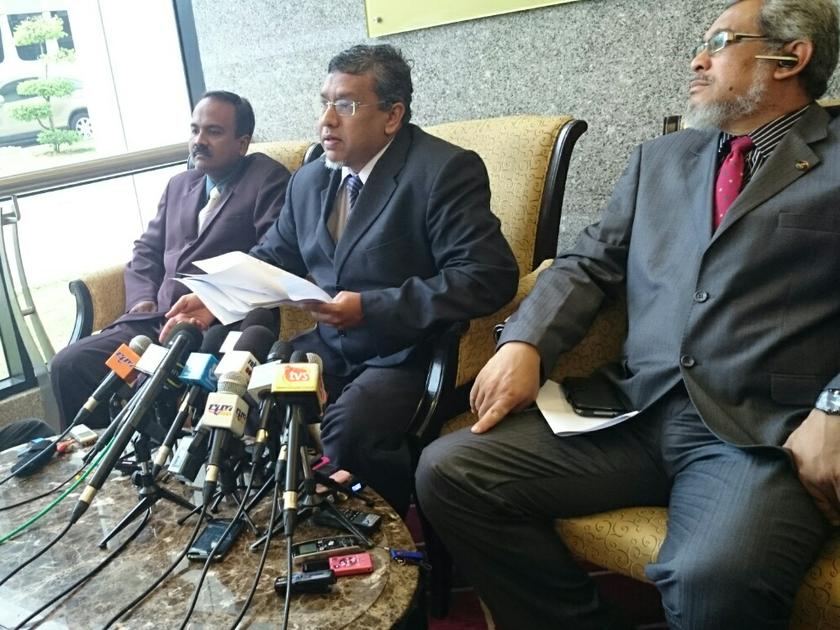
Though met with some divergent views, the idea — a bipartisan initiative led by the Federal Territories Ministry — earned support from the over 20 federal lawmakers who attended a recent briefing in Parliament, according to several Pakatan Rakyat MPs contacted by The Malay Mail Online.
PAS’ Shah Alam MP Khalid Samad said the lawmakers were told that the plan is to set up a precise regulatory system that will manage the entire process of setting a house of worship, including the application, registration and the gazetting of land.
“Currently there isn’t any clear Act pertaining to it, that’s why people have a lot of problems with respect to it.
“You have cases of shophouses being turned into churches, and so on and so forth, so the government should have a stand on how to handle houses of worship,” he said.
It is understood that the ministry is actively reaching out all stakeholders — from local councils to the religious groups themselves — to better understand the present situation and gather input on what the proposed law should cover.
DAP’s Ipoh Barat MP M. Kulasegaran said it was timely for the federal government formalises a system to manage non-Muslim houses of worship, though he agreed it may take some time to work out the details before it can be implemented across the country.
“We’re looking at possibly implementing it at the federal territories level first, but with the view of eventually implementing it nationwide,” he said.
Subang MP R. Sivarasa, however, noted that enacting a law may not be the best solution to the issue, stressing that it ultimately boils down to enforcement of clear policies by the government of the day.
The PKR lawmaker said Putrajaya could learn a thing or two from how the Selangor state government has managed the issue, especially when it comes to legalising houses of worship that have sprung up in urban areas out of necessity.
“I think these houses of worship aren’t really asking for money, though I don’t think they’d mind some financial assistance. The issue is legal security, whether they can be sure that they can legally operate out of a shophouse.
“That’s what we’ve done in Selangor by legalising all of these houses of worship that have already been there for a long time,” he said.
Khalid agreed that it would be tough to find a single set of guidelines that suits everyone’s needs, especially with the numerous religious denominations and groups co-existing in the country.
He noted, however, that this is also one of the rare moments that the government has made a substantive move towards being inclusive in the drafting process of a law.
“To my knowledge, when it comes to trying to come up with an enactment, I would say this is probably the first time we are seeing a bipartisan approach and discussions with all the stakeholders.
“It’s good. At least we are all willing to sit down and discuss and come to a solution,” Khalid said.
Disputes over the location of houses of worship have been a recurring affair, particularly in the Klang Valley where there is rapid commercial development over increasingly scarce land.
Most affected by the issue, however, is the Hindu community which has seen numerous cases over the years where temples that were not gazetted as official places of worship were torn down to make way for big ticket projects in the city.
One of the more recent cases was the demolition of a large part of the 101-year-old Muneswarar Kaliyaman Hindu temple in November last year, as it was situated on land meant for the construction of a 31-storey office building to be built by Menara Hap Seng Sdn Bhd.
Just two months earlier, historians and the public were up in arms when it was discovered that a property developer had demolished a 1,200-year-old temple ruin in Lembah Bujang, Kedah to make way for a residential project.
In August 2009, a group of protesters brought along a severed cow’s head and stepped on it in front of the Selangor state secretariat building, after the state government proposed to build a temple in the mainly Malay-Muslim neighbourhood of Section 23 in Shah Alam.
The plan was to relocated the 150-year-old Sri Maha Mariamman Hindu temple from Section 19 to the intended location.
Twelve of the protesters were found guilty for illegal assembly a year later and fined RM1,000 each by the Shah Alam Sessions court.


