


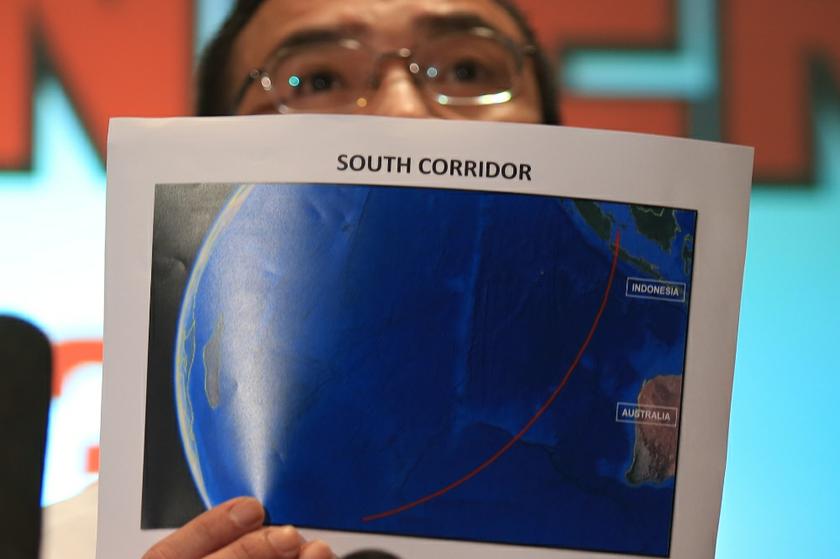


SEPANG, March 19 — Malaysia is to give “some priority” to the search for the missing Malaysia Airlines flight MH370 in the vast expanse of the southern corridor, which makes it a bigger challenge, Datuk Seri Hishammuddin Hussein said today.
The acting transport minister conceded that operations concentrated in the southern arc were hobbled as only two countries had the capabilities to search the area, but added that both Australia and Indonesia have expressed willingness to take the lead.
“Some priority is given to that area,” Hishammuddin said in a news conference here.
He added that he had spoken to Australian and French officials on the possibility of deploying assets capable of detecting the Boeing 777’s black box in the sea.
“But as far as primary radar is concerned the only two countries in the southern corridor that can assist us is Indonesia and Australia and both have indicated that they are willing to lead in the search and rescue operations,” Hishammuddin said.
The search for MH370 on the southern route has so far drawn a blank but sources still believe the missing plane headed in that direction, possibly to the furthest possible end of the corridor identified by authorities on Saturday.
International news agency Reuters reported that investigators believe the southerly route — which stretches from Indonesia to the Indian Ocean — is the spot where MH370 may have either crashed or landed without detection.
The latest information strengthens earlier points raised over the impossibility that flight MH370 had flown the northern arc now plied by searchers, which stretches from northern Thailand to the border of Kazakhstan and Turkmenistan in central Asia.
Despite the new revelation, Hishammuddin maintained that both corridors remain “equally important”, adding that search and rescue operations will continue in both areas.
“They are both equally important but the southern corridor is much more challenging,” he said.
Hishammuddin, who is also defence minister, said there are plans to deploy more assets and technical experts to assist the operation.
Investigators have charted two divergent paths for MH370 after the aircraft was last determined to be airborne over the Indian Ocean after making an air turn-back 200 nautical miles off the coast of Kelantan, based on a final “electronic handshake” detected by satellite at 8.11am on March 8.
From the data, investigators used the plane’s available speed range to deduce that it could be in one of two corridors: a northern arc from northern Thailand to the border of Kazakhstan and Turkmenistan in central Asia, or a southern one from Indonesia to the southern Indian Ocean.
But experts believe the plane could not have flown through the busy northern arc without being detected.
The view was further bolstered when several nations along the northern corridor said none of their military radars have picked up signals from any unidentified aircraft encroaching on their airspace.


