




KUALA LUMPUR, March 19 — The search for the missing Malaysian jet in the southern Indian Ocean was narrowed after new analysis of its fuel reserves, as authorities said they were trying to retrieve deleted data on a flight simulator belonging to the pilot.
An assessment by the US National Transportation Safety Board allowed the search to be focused on an area about the size of Italy, the Australian Maritime Safety Authority said in an e-mailed statement. That’s about half the size of the zone planned yesterday, said John Young, the agency’s general manager of emergency response.
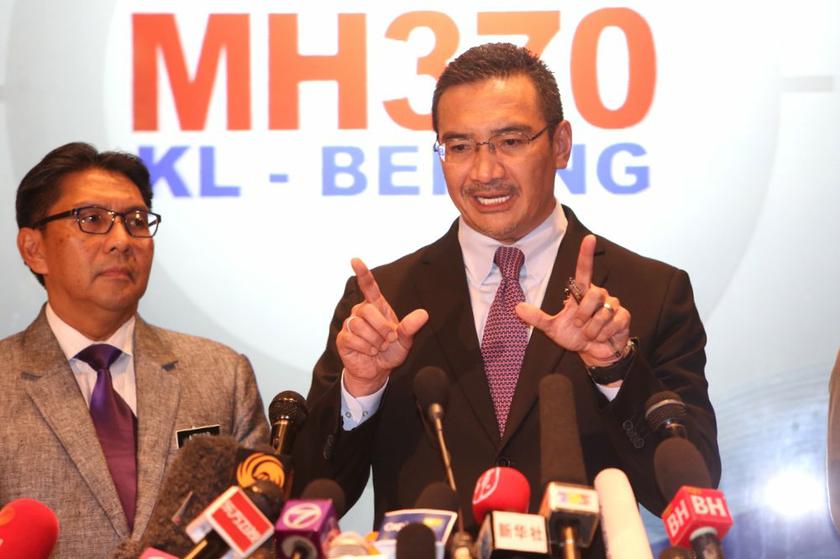
Malaysia has brought in local and international experts to examine the simulator, Acting Transport Minister Datuk Seri Hishammuddin Hussein said. Some data had been deleted and “forensic work” to retrieve it was underway, he said. The data log was cleared on February 3, Tan Sri Khalid Abu Bakar, the country’s police chief, said today.
“The passengers, the pilots and the crew remain innocent until proven otherwise,” Hishammuddin said. “For the sake of their families, I ask that we refrain from any unnecessary speculation that might make an already difficult time even harder.”
Grave fears
A Royal Australian Air Force AP-3C Orion aircraft, which made the first sortie to the zone yesterday, covered about 65,000 square kilometres under good search conditions without seeing any signs of debris, he said.
“We still have grave fears for anyone that might have managed to escape the aircraft in the southern ocean,” he said in a video posted on the agency’s website. “It remains a big area.”
Another Australian Orion was being added to the search today alongside an Orion variant operated by the New Zealand Air Force and a US P-8 Poseidon surveillance plane, for a total of four aircraft, Young said.
NTSB analysis on the plane’s fuel reserves and the distance it could have flown narrowed the search area to about 305,000 square kilometres.
After a futile search in the Andaman Sea that produced 400 radar contacts and no sign of aircraft debris or other clues, the US Navy reassigned the P-8 Poseidon. It’s the US’s top maritime-search plane, capable of flying for eight to nine hours at altitudes of 5,000 feet. It also has the ability to dip to 1,000 feet to get a closer look.
US satellites
The search for the Malaysian jet, which lost contact with air traffic control less than an hour after leaving Kuala Lumpur at 12:41am on March 8 en route to Beijing, is the longest in modern passenger-airline history. The previous record was the 10-day search for a Boeing Co. 737-400 operated by Indonesia’s PT Adam Skyconnection Airlines, which went missing off the coast of that country’s Sulawesi island January 1, 2007.
The Boeing 777-200 plane operated by Malaysian Airline System Bhd. was carrying 49.1 metric tonnes of fuel when it took off, giving a total take-off weight of 223.5 tonnes, according to the Subang Jaya-based company.
Australia yesterday said it was searching an area in the southern Indian Ocean that’s about 1 1/2 times the size of California for the missing jet as Malaysia asked the US to use its satellites to help in the search.
China, Kazakhstan
Malaysia, leading the multi-nation effort to find the aircraft, divided the search into a northern zone and a southern region, with a combined span of 2.25 million square nautical miles, Hishammuddin said in Kuala Lumpur yesterday.
China and Kazakhstan have agreed to lead the search areas closest to their countries in the northern zone. The US has the best ability to assist in the southern corridor, he said.
Much of the area Australia is scouring is within the Roaring Forties, a region between the 40th and 50th degrees of latitude south known for strong winds and wave conditions, according to charts provided by the Australian Maritime Safety Authority.
Investigators are combing through data after the plane was deliberately steered off its course and disappeared from radar.
The jet made its last satellite contact at 8:11am on March 8, according to Prime Minister Datuk Seri Najib Razak. Malaysian officials, who have said they can’t rule out hijacking or sabotage, are also exploring the possibility of a pilot suicide.
The plane’s transponder beacon, which helps radar locate aircraft more precisely, and a text-to-ground messaging system were shut before the plane turned off its course.
Satellite pings that weren’t turned off showed Flight 370 operated for almost seven hours after last making contact, Najib has said. That may have taken the plane more than 3,000 miles from where it was last tracked and pushed it to the limits of its fuel load, if it was airborne the whole period. — Bloomberg


