


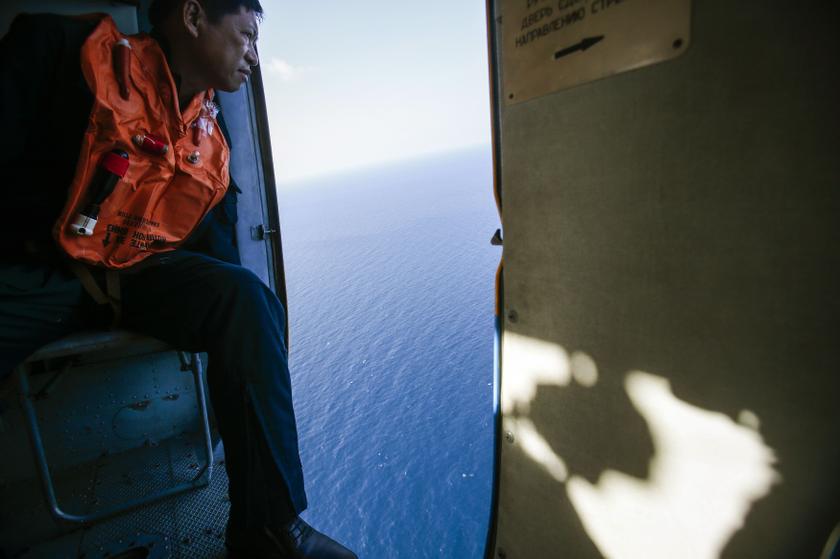


KUALA LUMPUR, March 13 — The paradox that missing Malaysia Airlines flight MH370 may have flown for another four hours after it vanished from radar presents a chilling possibility that it could be thousands of miles away from where rescuers have scoured for days.
But the revelation by Boeing, the manufacturer of the still-missing 777 airliner, begs the question of why nobody has any idea where the Beijing-bound plane carrying 239 people might be.
A search zone that covered the 100 nautical miles northeast of Kota Baru, Kelantan was enlarged yesterday to include over 440,000 square kilometres.
Now, search and rescue workers face the prospect that this may become millions more.
But the revelation begs the question of why no country observed the plane en route to any number of possible destination, which estimates put as far west as the Indian Ocean, the border of Pakistan or even the Arabian Sea.
During a press conference yesterday, Royal Malaysian Air Force chief Tan Sri Rodzali Daud said primary radar operated by the military could observe aircraft even if their transponders had malfunctioned or were disabled, as is suspected with MH370.
In the regularly contested waters in ASEAN, a surfeit of primary and secondary radar locations dot the landscape as the countries jealously guard their territories.
Did none other than Malaysia observe what would have been a blatant intrusion by an unidentified aircraft? And if any did, then questions must be asked if any reacted militarily.
This two painfully conflicting pieces of information will now force rescuers to grapple with difficult decisions.
Do they now focus efforts on identifying possible locations of where the plane may have landed if it did fly for a total of five hours after departing Kuala Lumpur International Airport.
Or do they simply broaden the search area now, further stretching the resources of the 12 nations hunting for signs of the plane.
Earlier efforts had been thrown into disarray by a now-refuted claim that the RMAF watched MH370 as it flew to the Straits of Malacca, but Boeing’s nugget today reintroduces the possibility that efforts may have been wasted in the wrong locations.
It also requires serious consideration that hijacking and foul play may be involved.
US counter-terrorism officials are now pursuing the theory that flight MH370 may have been hijacked after someone on the plane deliberately switched off the onboard transponders to escape radar detection.
Local police and Interpol are combing through the personal backgrounds of passengers and crew of the missing Malaysia Airlines flight MH370, and have confirmed they are taking a close look at a 35-year-old passenger of Uighur descent.
An unnamed source had told the daily that Malaysian police and Interpol are focusing their attention on this man because of the skills he possessed.
The Uighurs are a Turkic ethnic group primarily living in the Xinjiang Uighur Autonomous Region in China.
It was reported that the group that killed at least 29 people and wounding 143 with long knives and daggers, in the Kunming railway station on March 1, were allegedly Muslim separatist militants from the western region of Xinjiang, suspected to be of Uighur descent.
Like earlier revelations, however, the information from Boeing has only served to take the watching world further away from a solution to the “unprecedented mystery” that is the disappearance of flight MH370.
Definitive answers to all the burning questions might only be found when the black boxes from the plane are recovered, as Acting Transport Minister Datuk Seri Hishammuddin Hussein yesterday pointed out.
He also volunteered that this could take “days or months”.
But it appears now that even that may be on the optimistic end of the spectrum.


