


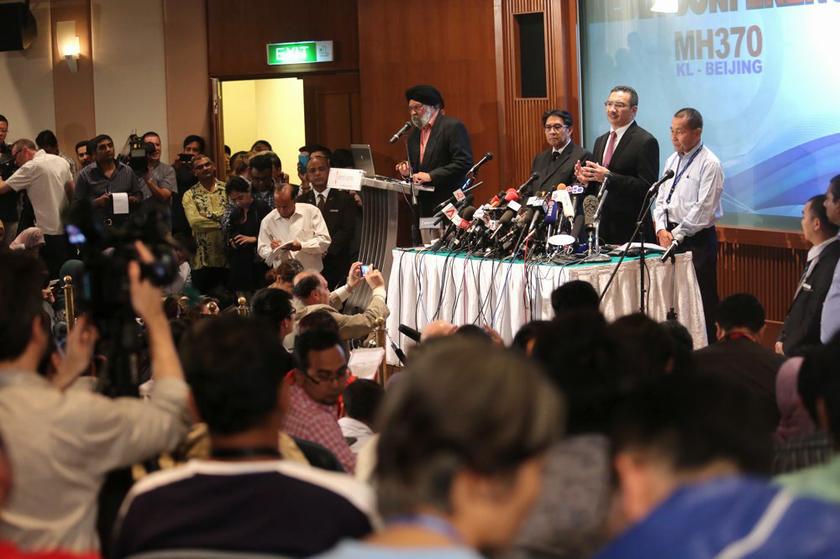


This comes as Malaysia’s handling of the crisis was described by a former chief of the United States National Transportation Safety Board (NTSB) today as the “worst” the industry has seen.
The aviation authority’s former managing director Peter Goelz in an interview on CNN said Malaysia, despite being a signatory to an international treaty on aviation, has not abided by the procedures outlined.
The Convention on International Civil Aviation, also called the Chicago Convention, was established by the International Civil Aviation Organization (ICAO) and signed by 52 countries in December 1944.
Annex 12 of the convention states that a country must organise and aid any search and rescue operations regardless of the nationality of the aircraft operators or the victims.
Hishammuddin also denied that Malaysia had delayed its operations when search efforts were expanded to include the Straits of Malacca and Andaman Sea.
“Some claimed that Malaysia has slowed down the search. That is totally not true. In fact, we have intensified the search,” said Hishammuddin.
“We have extended the search area because it is our duty to follow every lead and we owe it to the families. Trust me when I say we will not give up.”
Malaysia’s military has traced what could have been the jetliner missing for almost five days to an area near India’s Andaman and Nicobar islands, hundreds of miles from its last known position, the country’s air force chief said yesterday.
Malaysian air force chief Tan Sri Rodzali Daud told a news conference that an aircraft was plotted on military radar at 2.15am, 320km northwest of Penang Island off Malaysia’s west coast.
MH370 disappeared without sending any distress calls at 1.30am, less than an hour after taking off from Kuala Lumpur for Beijing.
Military radar recorded a plane that could have been the MAS flight turning back to the Straits of Malacca before losing the data plot at 2.15am when the plane was at 29,500 feet.


