


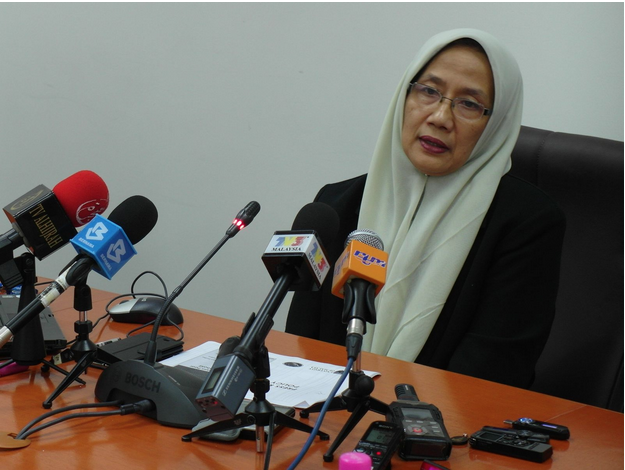


KUALA LUMPUR, March 5 — To successfully help the poor, Putrajaya must formulate a policy that will eventually replace direct financial aids, an academic from University of Malaya’s Centre for Poverty and Development Study (CPDS) said today.
Associate Prof Dr Fatimah Kari also said that Putrajaya’s subsidy reforms must take into account the rural and urban poor, the two demographics that have been badly affected by the rationalisation policies.
“I personally don’t believe in BR1M… I do hope that the government will announce an exit policy out of BR1M,” said Fatimah, referring to the government’s cash handouts for Malaysians on low wages.
The payouts aren’t going to have much of an impact on households nor on long term plans to reduce poverty, she aid
Fatimah, who heads CPDS, had earlier presented the centre’s study on the impact of subsidy cuts to Malaysian economy and the poor households.
The study found that the cuts would have the biggest impact on the Malay and Bumiputera community, by increasing poverty especially among the urban poor.
Rather than cash handouts, Fatimah suggested a comprehensive system of social security protection encompassing access to public health, education and job creation.
The study suggested that Putrajaya must update its urban poverty profile to consider the structural transformation of the Malaysian economy over the past five years.
As the urban poor have to compete for limited low-paying jobs in addition to rising cost of living, the study suggested community-friendly programmes for target groups.
The study also confirmed that the reform measures has increased inflation rate by 0.8 per cent, despite a potential increase in real gross domestic product (GDP) by 0.6 per cent.
CPDS mooted policies that focus more on increasing supply of agricultural and food production in order to drive prices down.
The latest data available from the Economic Planning Unit in 2012 showed that there are only 1.7 per cent of Malaysians under the poverty line, down from 3.8 per cent in 2009.


