


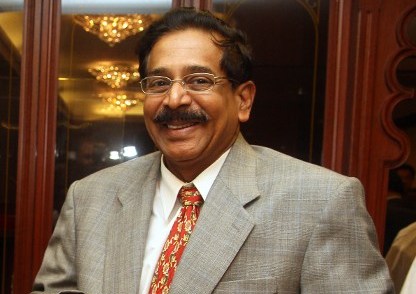


MALACCA, Dec 1 — The government needs to formulate an Indian Community Redevelopment plan to improve the socio-economic status of the community in the country, said MIC president Datuk Seri G. Palanivel.
For this purpose, he proposed the government allocate RM3 billion to be channelled for training, education and business loans for the Indian community.
Palanivel (picture) said what was being provided by the government currently was insufficient to enable the Indian community to be freed from the shackles of poverty as it only had a 1.3 per cent share of the country’s equity despite making up eight per cent of the population.
“It is not adequate to solve the major problems faced by the Indian community.
“What is needed is a redevelopment plan for the Indian community, a large injection of infrastructural projects, grants and funds which will propel the Indian community into national mainstream development,” he said in his policy speech at the 67th MIC annual general meeting at Hotel Equatorial here today.
The AGM is to be officially opened by Prime Minister Datuk Seri Najib Razak after the policy speech.
Palanivel said he was confident the new dimension in investment will spawn multiplier effects which could help overcome problems on education, religion and crime that had been prevalent among the local Indian community for generations.
According to him, to ensure its success, MIC had outlined several projects, among them investments in properties which had the potential for good returns, technology companies and smart agricultural projects based on the Steinbeck model in California which not only offered alternative employment opportunities to plantation workers but also ownership of the estate they are working in.
He said MIC was now on the right track to ensure all programmes planned could be implemented well and gave good returns.
“We are not talking about assistance for entrepreneurs who want to open barber shops or stalls. On the other hand, I want to see Indian entrepreneurs to be involved in businesses based on the latest technology such as nanotechnology, green technology or research on quantum computer technology,” he said.
He said even though MIC appreciated the government’s contribution and special allocations for the Indian community, for example the RM200 million in the 2014 Budget, but it was only 0.08 per cent of the RM264 billion budget.
In this regard, Palanivel, who is also, natural resources and environment minister, also caught the attention of the 1,500 delegates when he asked the government to return to the quota system in the intake for public universities.
He stressed that the meritocracy system practised now had failed.
“The time has come for us to return to the quota system where students would be given places at universities based on the population. The system of meritocracy in use now has failed.
“The total number of Indian university students now is 1,742 out of a total of 51,673 students in public universities. This is less than 2 per cent of the total.
“The number needs to be raised to 4,000 students a year to reflect the actual population of the Indian community. Otherwise, how are we to explain to the people,” he said amidst thunderous applause from the delegates.
Palanivel also wanted the 1,500 places in matriculation courses to be offered to Indian students to fulfill the promise made by the government to the Indian community earlier.
“I want an evaluation to be made quickly on the method of offering matriculation courses and if need be, the Education Ministry could cooperate with the MIC to fill these places,” he said.
He added that the Indian community would continue to voice their disatisfaction on the failure of the MIC and the government on the promise on places in matriculation courses.
Similarly to improve the quality and infrastructure of Tamil schools, Palanivel sought an annual special allocation of RM12 million to help about 8,000 children under the ‘Reach and Teach’ programme with additional classes in the afternoon in Tamil schools.
Palanivel also proposed that vocational training be systemically offered to unemployed or unskilled Indian youths.
Palanivel said in winning the hearts and minds of the Indian community, MIC was now heading towards a new dimension by featuring more young and highly educated leaders. — Bernama


