




KUALA LUMPUR, Nov 20 — PKR’s Rafizi Ramli accused Malaysia’s anti-graft agency today of protecting corrupt politicians when it allegedly refused to disclose to Parliament the number of reports it had received against them over the last four years.
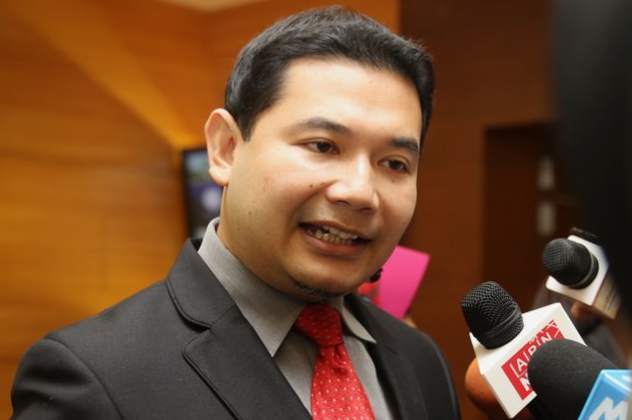
Citing the parliamentary reply from Datuk Paul Low to his oral question yesterday, Rafizi (picture) noted that the minister in charge of integrity and corruption had not given a complete answer.
Rafizi said he had asked the minister to disclose the number of corruption complaints had been made against politicians since 2010, the number of investigations opened, and of these, how many had been referred to the Attorney-General and how many had resulted in court charges.
“The answer given by the minister was short and refrained from answering the actual question,” the Pandan MP complained.
According to the first-term parliamentarian, Low had only revealed that between 2010 and August 2013, the Malaysian Anti-Corruption Commission (MACC) had detained nine politicians and among them, five were charged in court.
Rafizi said his questions were meant to prove that the MACC had investigated many politicians in the past but their probes were rejected by the A-G.
As such, he said the statistics on the number of cases rejected by the A-G was important to prove that the country’s top lawyer is responsible for protecting the powers that be.
“However, the refusal of the MACC and the minister in the Prime Minister’s Department (Low) to reveal the number of cases have been opened against politicians and the number of investigation papers have been sent to the A-G shows that the MACC has been lacking in its fight to combat corruption among politicians.
“From the parliamentary reply, I can surmise that the MACC as well protects corrupt politicians, much like the A-G,” he said.
Even more worrying, Rafizi added, is Low’s claim that only five politicians were charged over the period of four years.
This, he said, was despite the fact that the general public perceives that corruption is most rampant among politicians.
Rafizi cited a parliamentary reply to fellow PKR MP Azmin Ali to his question on corruption statistics last week and noted that according to Putrajaya, the charge rate of corruption cases between 2011 and 2013 were between 75 per cent and 89 per cent.
He noted that the number of cases that made it to court were 520 in 2011, 401 in 2012 and 162 between January and June this year.
If compared to the number of politicians probed and charged (nine probed and five charged) over the span of four years, Rafizi said the stark contrast clearly proves the MACC’s “fear” when handling cases involving corrupt politicians.
“The high charge rate also proves that the MACC has the ability to gather sufficient evidence. If the MACC scored such a high charge rate for the regular citizens, why do they give the excuse of insufficient evidence when the case involves politicians?” he asked.


