


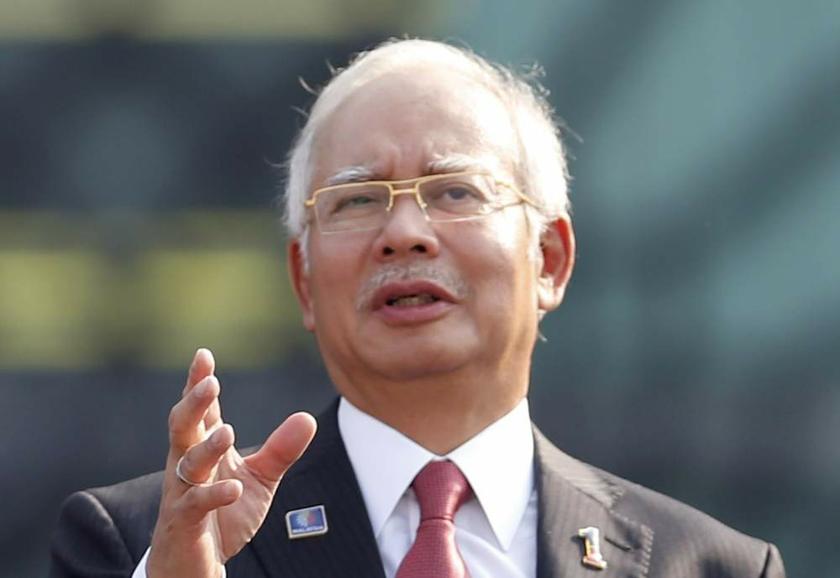


PUTRAJAYA, Aug 19 — Prime Minister Datuk Seri Najib Razak assured the public today that Putrajaya will not introduce laws that restrict rights and liberties in its bid to rein in crime.
Despite a growing chorus of demands for his administration to reinstate preventive laws, Najib (picture) disagreed with the supposed merits of powers to detain individuals without trial that he has done away with.
“We try to find the best balance with respect to human rights and public interest,” Najib told reporters after a Ministry of Finance Aidilfitri open house here.
“The government is looking at the issue so that individual rights will not be affected, and at the same time public interest is defended. This is a balance that we need to achieve for a more matured society.”
Najib’s remarks follows a warning by former prime minister and his staunchest critic on the repeal, Tun Dr Mahathir Mohamad, who said that Malaysians would have to pay the price they wanted to enjoy a more liberal brand of democracy.
Last week, Dr Mahathir claimed that the absence of preventive laws could lead to the chaos similar to what is currently taking place in Egypt.
“The only problem with preventive laws is that crime has not been committed yet,” Najib said.
“How do you arrest somebody if that person has not committed a crime? If on a mere suspicion, it’s insufficient ground to arrest somebody on the basis of preventive laws.”
“I think Malaysians are nice people, they don't like killing each other except that killings nowadays are more frequent. Everyday somebody gets shot.
“But that's the price of freedom. The price of being free is you must accept..the price of freedom, of liberalism, of being able to say what you like the price is people get killed, people get shot,” he said.
The former prime minister believed such laws are still needed to maintain order. He has blamed the worsening racial tension in Malaysia on the absence of the laws.
Najib also defended the repeal of preventive laws today, pointing out the problem with preventive detention.
“The only problem with preventive laws is that crime has not been committed yet,” Najib said.
“How do you arrest somebody if that person has not committed a crime? If on a mere suspicion, it’s insufficient ground to arrest somebody on the basis of preventive laws.”
Najib's remarks comes as Malaysia will use a section of its Crime Prevention Act (CPA) for the first time to hold suspects without filing charges in a crackdown on violence following a wave of killings, according to a copy of an internal police memo seen by Bloomberg News on Saturday.
The police will use Section 105 of the act to detain suspects for as long as 24 hours without charging them, and operation is likely to start today.
Home Minister Datuk Seri Ahmad Zahid Hamidi and Inspector-General of Police Tan Sri Khalid Abu Bakar had previously stirred controversy when they indicated that the return of preventive detention laws would help the police carry out their crime-fighting duties more effectively.
Recently, Zahid had repeated his assertion that the police force had lost its bite in the repeal of laws that once allowed them to detain suspected criminals without trial.
With violent crimes on the rise and suspicions linking the sudden spate of shootings to gangland turf wars and firearms smuggling, the Home Minister appeared insistent on the need for preventive detention as a vital aid to assist crime busters.
Putrajaya had abolished the Emergency Ordinance (EO) and the Internal Security Act 1960 (ISA), both of which allowed for preventive detention without trial, a feature that has been criticised by its detractors for allegedly infringing on human rights.
On July 26, Prime Minister Datuk Seri Najib Razak gave his assurance that his administration would be “mindful” of human rights when drafting new laws to combat crime.
However, Najib had earlier this month pledged Putrajaya’s commitment to consider “anything” the police needs to fight serious crime, noting the sudden rise in gun-related incidents lately.


