


BERLIN, March 29 — The first service on a revived night train between Paris and Berlin arrived in the German capital on Friday morning, winning plaudits from its passengers.
Among them was 25-year-old French student and train enthusiast Victor Falzon, who had long dreamed of visiting Berlin but was reluctant to fly for environmental reasons.
“When we saw that a new line was opening, we said to ourselves: ‘This is the moment!’” he told AFP after stepping off the train at Berlin’s Central Station.
The new service has been launched without public subsidy by the Dutch-Belgian European Sleeper company, founded in 2021.
It replaces the Paris-Berlin night train which started with great fanfare in late 2023, in a joint venture by the French company SNCF, Germany’s Deutsche Bahn, and Austria’s OeBB.
That service was suspended in December 2024 after the French government ceased a 10 million euro ($11.5 million) subsidy for the line, rendering it unviable.
The collapse of the previous night train route between the two capitals prompted “pyjama protests” at several European stations.
Little wonder then that train buffs have welcomed the new service so warmly.
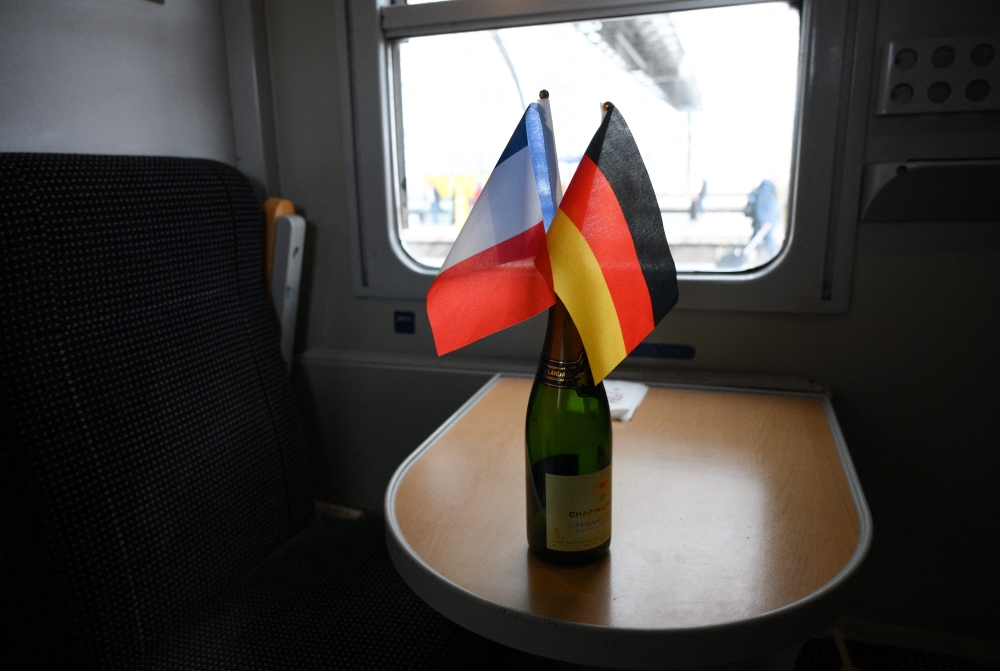
Falzon remembered with a smile that “every time we pulled into a station, people were waiting for us with flags”.
What with the scenery rolling past and the excitement of the trip, he and his friends “had trouble falling asleep”.
Falzon admitted that the cabin was “a little cramped” with five passengers.
“But that’s the train vibe!” he added.
‘More sustainable’
Ulrike Jendrezok, 55, was on her way back home to Germany after a Paris stay with her two children and told AFP the journey was “comfortable and straightforward”.
“We had dinner, talked and played games, then made up the beds late at night, and we slept well,” said Jendrezok, a doctor.
She had rushed to book tickets as soon as sales opened for her very first night-train trip.

In low season, one-way fares start at €39.99 (RM184.78) for a seated ticket and €59.99 (RM277.19) for a couchette.
At peak travel times in summer, the train will run with 14 carriages, carrying up to 700 passengers.
While the old SNCF service ran via Strasbourg, European Sleeper has opted for a route via Brussels, hoping that this will prove more profitable.
One of European Sleeper’s two co-founders Chris Engelsman told AFP that “there is much more demand” from the Belgian capital in comparison to Strasbourg.
With Middle East war sending energy costs soaring, Engelsman says that train travel on such routes may prove to be the “more sustainable” option in both an economic and an environmental sense.
European Sleeper is financed by a community of over 6,000 investors, with shares starting at €160 (RM739.21), and hopes to break even by the end of 2026, Engelsman said.
One of the investors, 54-year-old Briton Zoe Falk, was also on board on Friday, having travelled from the United Kingdom on the Eurostar.
Armed with her folding bike, she said she planned to enjoy Berlin’s historic sites and “many vegetarian restaurants”.
European Sleeper already runs another service linking Brussels, Rotterdam, Amsterdam, Berlin, Dresden, and Prague three times a week.
Tickets are on sale for an upcoming third line running from Brussels to Milan via Cologne.
The company is also planning a Brussels-Barcelona route, which is not expected to go via Paris but “probably via Avignon, Montpellier and Perpignan,” said Engelsman. — AFP


