


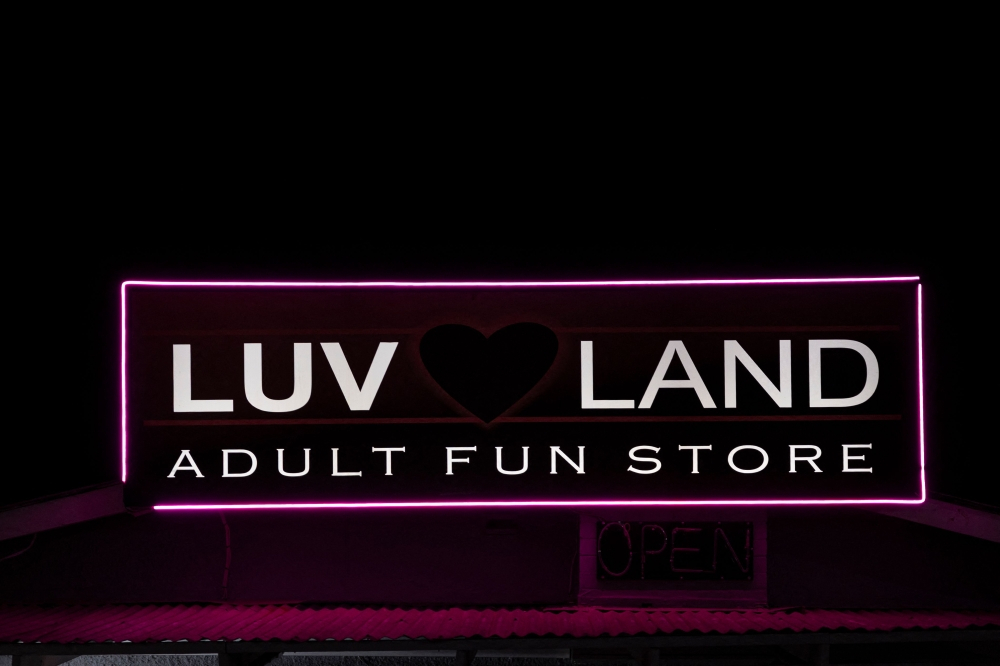


JOHANNESBURG, Dec 23 — The poster is fixed to lampposts all along the main street of an upscale Johannesburg neighbourhood: a finger pressed to full red lips, the word “Luvland” split by a heart.
At the corner of the street is one of the brand’s 80 South African boutiques. On a continent where sex shops are few and far between, if not banned outright, South Africa is an outlier.
The country’s flourishing sex store sector developed from the ambitions of a few flamboyant entrepreneurs, a wave of sexual liberation at the end of apartheid 30 years ago, and the influence of Larry Flynt, the scandalous US porn king of the 1970s.
“During the apartheid era, we were a very staunch Calvinistic society,” said Sharon Gordon, 64, a one-time human rights lawyer who became an industry pioneer in the 2000s with her luxury Lola Montez brand.
“The Church governed most things. Pornography was illegal. You went to jail for it,” she said.
“Then 1994 comes, we have our first elections, and a whole lot of stuff is legalised. Pornography is legalised, cross-cultural marriage is legalised, gay marriage is legalised, abortion is legalised,” she told AFP.
Women, couples
South Africa’s once-seedy sex stores, which mainly provided porn for men to take away or consume in on-site viewing booths, underwent a makeover in the 2010s.
Today they are “adult stores” that cater to women and couples and often resemble cosmetic boutiques, offering sex toys in discreet packaging, massage oils, naughty board games and lubricants.
Pornography, just a click away since the internet revolution, is absent and there are no cubicles.
Patrick Meyer, a spry septuagenarian with tattoos, an earring and a rock-star vibe, was a forerunner of the transformation, which accompanied the rapid expansion of his Luvland brand.
After a brief stint in the telephone sex business, his partner at the time secured from Flynt the South African rights to distribute Hustler magazine.
The pair went on to open Hustler outlets, which they later sold.
Meyer returned to the industry in the 2010s, buying the Luvland franchise and its dozen outlets and embarking on an image overhaul.
Inspired by the massive success of the 2011 erotic romance novel “Fifty Shades of Grey”, Meyer took out the porn booths and put in glass shelving.
“My stores looked good for women to come in and couples,” he said.
The brand is aiming to build up to 100 stores in the coming years, offering physical spaces—alongside its online trading—for customers who want to check out merchandise before purchasing, Meyers said.
His in-store sales staff can provide information of how the items work and the risks involved, and even broader questions about sexuality, he said.
The outlets also attract spontaneous, walk-in customers, said the businessman in his Johannesburg warehouse where some of his 250 employees packed orders ahead of Christmas and the long summer holiday.
New and curious
Gordon and Meyer said their clientele is almost exclusively from the minority white population, about 4.5 million of 63 million people, perhaps a factor in the South African exception.
Owner of the HunnyBunn store, 35-year-old Dominic Mabaso is working on spreading sex store appeal to the black population, breaking through barriers he ascribes to religion and culture.
“I see more black people buying toys... they feel safer in a space where I’m a black person and I’m telling you, ‘Guys, it’s okay’,” he told AFP.
“I’m giving you a breakdown, educating you, starting you small, maybe letting you know that a sex toy doesn’t have to be a big deal,” he said.
At the Love Expo fair near Pretoria in late November, two low-key lovebirds scanning the aisles for Christmas gifts were among the new converts.
“It’s my first time coming here... it is because of curiosity,” said 30-year-old Evans, giving only his first name. “I like to try new things with her,” he said.
“There’s so much stigma around sexual liberation,” said Sandy, 35. “I am looking to break that, to say, ‘Let’s break this chain.’” — AFP


