














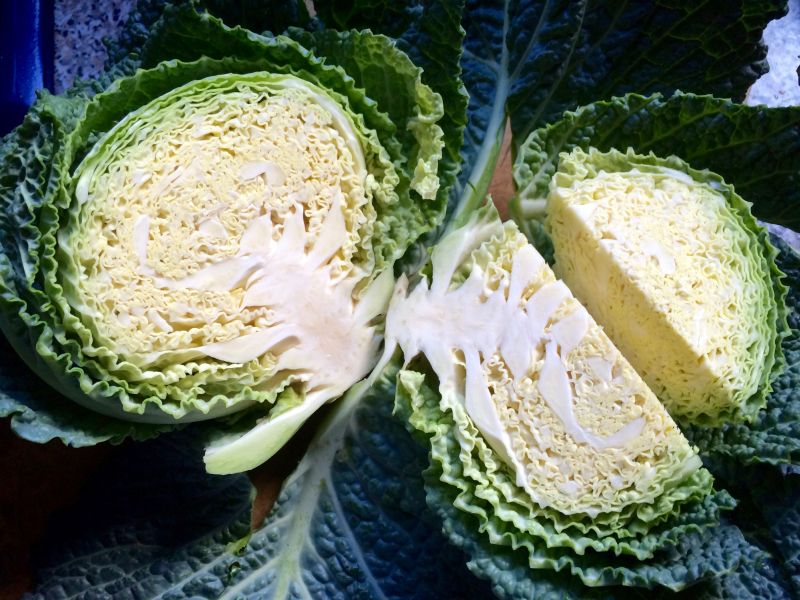


NEW YORK, Feb 26 ― For years, I thought Savoy cabbage was a specialty of the great London hotel of that name, a way of cooking the vegetable that transformed it into a dish fit for kings. Even today, frilly Savoy cabbage remains, in my eyes at least, the classiest brassica on the block, a glamorous, swanky sibling to pale, pointy spring or hard white winter cabbages. Less aggressive than kale, more versatile than red, a good Savoy bursting with squeaky-clean health and goodness, is a far cry from the flabby cabbage-swamp clichés of British school dinners that linger long in collective memory.
The evolution of the great family of brassica cabbage cultivars, which also includes broccoli, cauliflower and Brussels sprouts, originated in spindly, “headless” plants that were known throughout the ancient world. The Greeks cultivated such headless cabbages, believing they originally came from the sweat of Zeus, chief of the Gods (it must have been something to do with their, er, pungent smell when over-cooked).
However, generations of children who have been told to eat their greens to a refrain of cabbage-is-good-for-you (an unpopular, as opposed to a popular saying) can really blame the Romans. Cato, in the 2nd century BC, devoted a long passage to the plant in “De Re Rustica.” And Pliny the Elder, in “Historia Naturalis,” described a swollen-stemmed plant (perhaps another brassica, kohlrabi) and an exaggerated reference to “headed” cabbages 30 centimetres (about 12 inches) across, as well as 87 cabbage-related medicines.
The lore about cabbage
Over the centuries, cabbage has been credited with many medicinal properties, from curing snake bites, to growing hair on bald spots and preventing drunkenness (wrong!).
Savoy, as a newly developed variety with a loose “head,” came to prominence in medieval Germany, the great center of cabbage culture, although the name suggests an earlier French or northern Italian origin, with a possible link to Catherine de' Medici.
Slow-growing Savoys are particularly good after the first frosts. They are hardy enough to stay in the ground through the winter, and bring a swathe of colorful, ruffled cheer to the stews, casseroles and thick soups of the winter months. Cabbage soup is a rustic favorite still in France and Germany, cooked with pickled pork or confit goose and duck.
The flavour of Savoy is nutty, and the texture crisp and firm (when not, of course, boiled lifeless), although a slow braise with rich flavourings, such as beef stock, Marsala wine and thyme, can also work well. Its natural colour ranges from acid yellow to Day-Glo lime and from vivid emerald to deep forest green. The wrinkled leaves are supple and strong enough to be stuffed with meat and rice and rolled, before being bathed and baked in rich tomato and sour cream sauces spiked with caraway seeds or paprika. One of the greatest spectacles of the East European repertoire is a stuffed whole cabbage winched like a missionary's head from a cannibal's pot.
Simplicity of cabbage
But you don't have to attempt this culinary equivalent of climbing Mont Blanc to enjoy a Savoy. If you wish, and have time, soak the leaves in cold water for a few hours before cooking to crisp them up further, then simply remove the tough central stalk and chop roughly. Steam or cook in plenty of water at a rolling boil with the lid off to retain the bright green color for a few minutes before tossing in butter, sea salt and black pepper. Or, just slice and cook briefly in butter. Leftovers can make a splendid bubble and squeak (see recipe below).
Savoy is also excellent and surprisingly sophisticated when shredded and stir-fried with seasonings such as red chile, sesame, garlic, ginger and soy sauce. It also goes well with aniseed flavours such as tarragon, fennel and Chinese five-spice powder.
The Savoy is the cabbage that even cabbage-haters can learn to love. If all else fails, try calling it an adorable petit choux, because everything sounds better in French, of course. Even cabbage.
Stir-fried Savoy cabbage
A quick and vibrant dish that perks up the taste buds. Add garlic and/or 5-spice powder if you like, but the key thing is not to overcook it.
Prep Time: 10 minutes
Cooking Time: 5 minutes
Total Time: 15 minutes
Yield: 2 servings, as a side dish
Ingredients
Half a small Savoy cabbage
1 tablespoon sesame oil
4 green onions, sliced
1 tablespoon fresh ginger, finely chopped
1 small fresh red chile, de-seeded and finely chopped
Soy sauce to taste
Directions
1. Shred the cabbage leaves, wash and drain well. Set aside.
2. Heat the oil in a wok until sizzling, then add the green onions, ginger and chile. Stir-fry briefly, then add the cabbage.
3. Stir-fry over medium heat for about 5 minutes until the cabbage is tender but still has a little crunch.
4. Season with soy sauce and serve immediately.
Buttery braised Savoy cabbage
An excellent dish to serve with meatballs or chops.
Prep Time: 20 minutes
Cooking Time: 15 minutes
Total Time: 35 minutes
Yield: 4 servings, as a side dish
Ingredients
1 Savoy cabbage
3 tablespoons butter
1 onion, chopped
2 large tomatoes, skinned, de-seeded and chopped
1 tablespoon paprika
2 tablespoons freshly chopped fennel leaves or dill leaves
Juice of half a lemon
Salt and black pepper
2 tablespoons toasted almonds
Directions
1. Discard the very coarse, outer leaves of the cabbage, then cut into quarters and then into thin strips.
2. Melt the butter in a large saucepan and stir in the onion, tomatoes and paprika.
3. Add the cabbage, fennel and lemon juice and mix well together. Season with salt and pepper.
4. Cover the pan and simmer for about 10 minutes or until the cabbage is tender. Add a splash of water or a little more butter if the cabbage mixture seems to be drying out.
5. Sprinkle with the toasted almonds just before serving.
White fish, green cabbage
A surprisingly delicate dish that gives an interesting edge to simply baked white fish.
Prep Time: 10 minutes
Cooking Time: 25 minutes
Total Time: 35 minutes
Yield: 6 servings
Ingredients
6 thick fillets of white fish
1 large Savoy cabbage cut into wedges
1/3 cup butter
Juice of half a lemon
2 two-ounce tins of anchovies in olive oil
14 fluid ounces sour cream
Black pepper
1 bunch of parsley, chopped
Directions
1. Preheat the oven to 200 degrees celcius.
2. Arrange the fish in a well-buttered oven dish. Sprinkle with the lemon juice and dot with flakes of butter. Cover with foil and bake for 20 minutes.
3. Steam or microwave the cabbage wedges until tender.
4. Put the anchovy fillets and their oil into a small pan. Gently mash with a wooden spoon over low heat until the anchovies disintegrate. Add the sour cream and black pepper and stir well. Simmer for a few minutes.
5. Arrange the fish and cabbage wedges on a warm serving platter or individual plates. Pour some of the sauce over the fish and scatter with parsley. Serve the remaining sauce separately.
Bubble and squeak
Originally, this old-fashioned British dish of cooked potatoes and cabbage fried together, was made with leftover beef and cabbage. Potatoes appeared in 19th-century recipes and the beef was discarded. The name supposedly refers to the noise made by the vegetables as they fry in the pan.
Prep Time: 10 minutes (30 minutes if not using leftovers)
Cooking Time: 40 minutes
Total Time: 50 minutes
Yield: 8 servings, as an accompaniment
Ingredients (Amounts are variable, depending on how much leftovers you have.)
1 small Savoy cabbage, shredded, cooked and set aside
2 pounds leftover mashed potatoes
1 onion, thinly sliced
4 to 5 tablespoons butter, drippings or goose fat
Salt and pepper
Directions
1. Mix the cabbage and potatoes together.
2. In a large frying pan, heat some of the fat and fry the onion slowly until soft. Mix into the cabbage and potatoes. Season well.
3. Add the remaining fat to the pan and spoon in the cabbage, potato and onion mixture. Press down with a wooden spoon or spatula until it makes a flat cake. Fry over medium heat until the bottom crisps.
4. Stir to mix the crust into the vegetables, pack down again and then fry to make another crust. Continue until the crisp brown pieces are well mixed with the cabbage and potato. This should take about 20 minutes. Serve hot. ― Zester Daily/Reuters