

















SINGAPORE, Feb 20 — Turning on the tap will become more costly from July, when the first of two rounds of water price hikes takes effect. Water prices will go up by 30 per cent by July next year, said Finance Minister Heng Swee Keat in his Budget 2017 speech today.
For the average household living in a public flat, this will mean forking out roughly S$9 to S$15 (RM28 to RM47) more a month before the government’s additional U-Save vouchers. After the additional U-Save subsidies, one- to two-room flat households would see their water bill go down by S$1, while an executive flat household would see a smaller increase of about S$11 in its water bill.
Currently, Housing and Development Board households pay about S$26 to S$49 a month for water.
Earlier this month, Minister for the Environment and Water Resources Masagos Zulkifli had announced that water prices would go up after remaining unchanged for 17 years, but did not provide details. Water has been under-priced and the increases are due to higher operational costs and greater investments in water infrastructure, such as more desalination plants.
The average person uses about 151 litres of water a day and national water agency PUB aims to cut consumption to 147 litres per day by 2020, and 140 litres per day by 2030.
The increase in price consists of increases in the water tariff and water conservation tax, as well as in the waterborne and sanitary appliance fees for used water.
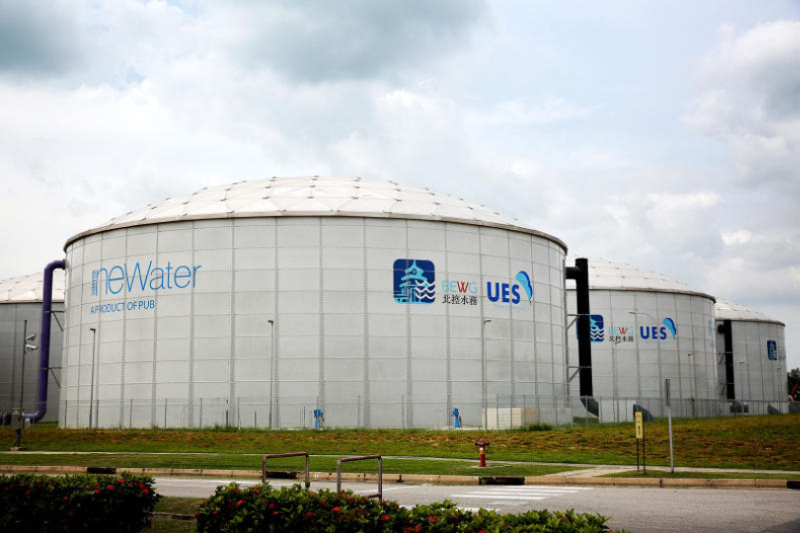
For non-domestic users such as building owners and industry, water prices will similarly increase. From S$2.15 per cubic metre, the price will hit S$2.74 per cubic metre from July next year. Those who use NEWater will have a new water conservation tax imposed, that is 10 per cent of NEWater tariffs. This is to encourage water conservation, the PUB said.
Singapore’s water comes from four “national taps”. About half is imported from Malaysia, and the rest is from local catchment areas, NEWater (treated waste water) and desalination.
Singapore consumes about 430 million gallons of water per day, with homes consuming 45 per cent and the non-domestic sector taking up the rest.
By 2060, total water demand could almost double, with the non-domestic sector accounting for about 70 per cent. By then, NEWater and desalination will meet up to 85 per cent of Singapore’s future water demand, according to the PUB. — TODAY