















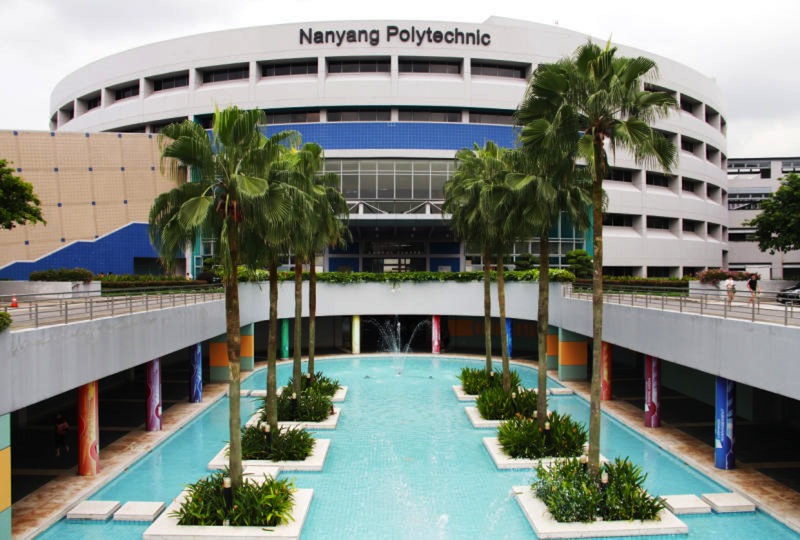


SINGAPORE, July 26 — Nanyang Polytechnic (NYP) has been rapped by the Auditor-General’s Office (AGO) for what was described as a “disregard for financial controls and proper governance”, in the AGO’s audit of ministries and statutory boards for FY2015/16.
Conflict of interest situations were identified at the polytechnic, a statutory board, where some Board of Governors members with vested interests in a subsidiary of NYP were involved in decision-making processes on matters related to the subsidiary — at one point approving a funding model more generous than what was instructed by the government.
The subsidiary, called NYPi, was able to receive funds from NYP without repayment being required.
Moreover, NYP did not charge market rate for premises used by NYPi, and had given funding in excess of what was approved by the Board of Governors.
This resulted in hidden subsidies and excess funding totalling S$8.38 million (RM25.049 million) given to NYPi between 2007 and March last year, said the AGO in a report released on today.
The AGO’s audit for FY15/16 covered the government financial statements incorporating the accounts of all 16 ministries and eight organs of state, and selective audits involving test checks for issues like financial irregularities were also carried out for some statutory boards.
The “more significant” audit observations — those entailing significant monetary value for example — are covered in the report, which was submitted to President Tony Tan.
This year’s audit covered six ministries and six statutory boards.
The AGO said overall, there were instances of inadequate financial controls over government operations, including those outsourced to external operators.
There were also inadequate controls over collecting of fees, resulting in revenue loss to the government, and management of public funds were weak in certain areas audited.
In addition there were lapses in oversight of external entities which administer schemes and loans, as well as in managing contracts, which resulted in late payment to contractors.
Inadequate oversight of schemes outsourced to external operators was also flagged as in issue in previous years, but they continue to occur, and the AGO said there was a need for public sector entities to pay greater attention to this area.
Government bodies that were called out for weaknesses in these areas include the Housing and Development Board (HDB), for not ensuring parking fees were collected, and the Ministry of Foreign Affairs, which continued to subscribe to phone lines that were no longer needed, \resulting in wastage amounting to S$80,744.
The Ministry of Education, meanwhile, did not ensure tuition fee loans and study loans due at National University of Singapore and Nanyang Technological University were promptly recovered, amounting to S$224.04 million as at June 30 last year.
And in 16 out of 30 cases test-checked by the AGO, the universities did not take prompt action on scholars who were not serving their required bonds.
The AGO noted that the entities audited have taken its observations seriously, and have indicated they are ready to rectify the lapses and prevent future occurrence.
In a statement, NYP noted that NYPi was fully owned by NYP and not an unrelated third party such as a private sector contractor.
“None of the decisions cited in the audit observations yielded personal gain for any of the individuals involved, as they had no bearing on their remuneration or benefit,” the polytechnic said.
However, acknowledging improvements in its processes were needed, it is putting in place a governance framework for its Board of Governors members on the handling of transactions with NYP’s subsidiaries. Also, NYP has stopped funding NYPi and the latter has been a self-sufficient entity since April.
The MOE said in a statement that it takes the breaking of scholarship bonds seriously, and measures have been to reduce the default rate, such as tracking the service bond records more closely, and recovering damages from those who intentionally default.
As such, default rates have come down significantly over the last three years — among international students, just 1 per cent had intentionally defaulted.
It also said it was working closely with university and banks to ensure prompt follow-up of loans in arrears. — TODAY


