


JULY 13 — For decades, the phrase “cancer vaccine” was the punchline of oncology conferences. We poured billions into stimulating T cells against tumours, only to watch those T cells get exhausted, ignored, or lost. The dream felt like a cruel joke: the immune system, which so elegantly clears viruses, seemed blind to the mutinous cells arising within us.
But if the 2026 review by Haanen, Schumacher, Kagan, Fritsch, and Wu in Nature Medicine makes one thing painfully clear, the joke is over. We are not just entering the era of cancer vaccines; we are realising that our previous failures were due to treating vaccines like simple drugs rather than complex biological reprogramming events.
The review systematically dismantles the old approach: taking a handful of overexpressed, self-antigens, mixing them with a blunt adjuvant, and injecting them into a patient with late-stage, macro-metastatic disease. No wonder it failed. Those antigens were weakly immunogenic, the tumours had already perfected immune exclusion, and the patients had no T cells left to prime.
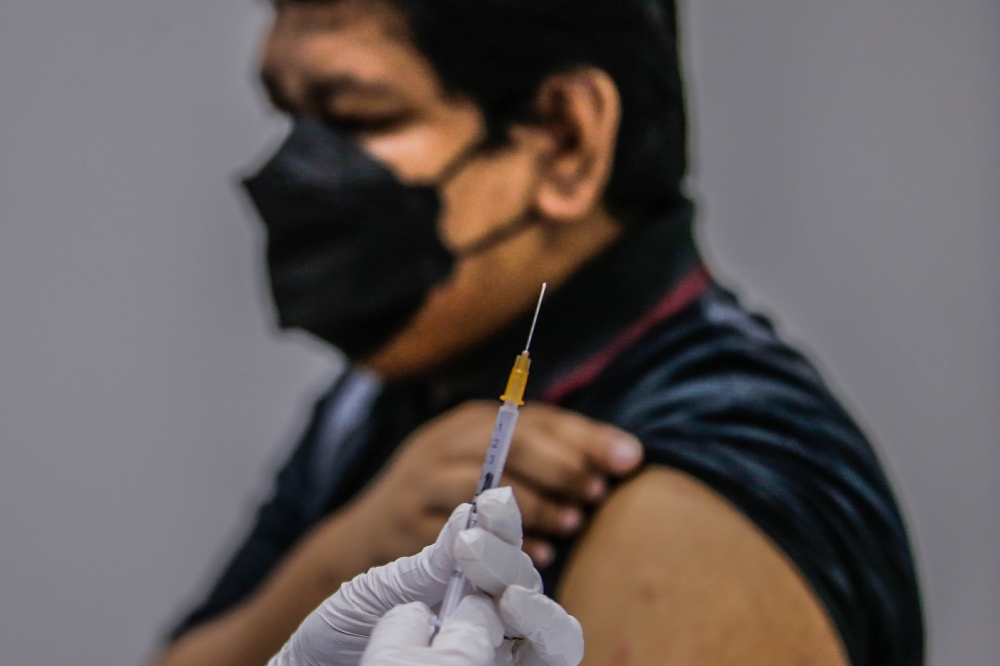
Haanen et al. argue that the clinical inflection point came from two parallel revolutions: neoantigen discovery and personalised manufacturing. By sequencing a patient’s tumour and using algorithms to predict which mutant peptides will bind to their unique HLA molecules, we can now manufacture a truly personal vaccine. The 2026 consensus is clear: shared antigens are out; private neoantigens are in.
Perhaps the most fascinating discussion in the paper concerns the delivery vehicle. For years, we squabbled over RNA, peptides, or viral vectors. The authors don’t pick a winner — instead, they highlight a more profound insight: the vaccine is only as good as the danger signal it carries.
Jonathan Kagan’s contributions on innate immunity are critical here. A neoantigen peptide injected alone is ignored. But when packaged into a lipid nanoparticle (LNP) with an innate agonist, that same peptide becomes a red alert. The 2026 finding is that where and how you deliver the antigen matters more than the antigen itself. LNPs that drain to the lymph node and are picked up by resident dendritic cells are now the gold standard. Anything less is just expensive noise.
The authors do not shy away from the clinical trial data showing that vaccines in bulky, end-stage disease still largely flop. Why? Because the tumour microenvironment (TME) actively destroys T cells. You cannot prime an army into a battlefield that is already a graveyard.
The breakthrough trials cited in the review are the adjuvant (post-surgery, no detectable disease) and neoadjuvant (pre-surgery) settings. When you vaccinate a patient who has micrometastatic disease but no macroscopic immunosuppressive mass, the results are staggering. Pathologic complete responses are emerging. This flips the standard oncology algorithm on its head: don’t cut first, vaccinate first.
The most provocative prediction from Haanen, Schumacher, and Wu is that the next five years will blur the line between vaccines and cell therapy. They point to in vivo reprogramming — using LNPs to deliver mRNA encoding not just antigens but also chimeric antigen receptors (CARs) directly into a patient’s T cells.
Imagine: a single infusion that turns your own lymph nodes into a factory for CAR-T cells, without the US$500,000 price tag or the toxic chemotherapy preconditioning. The authors suggest that by 2028, “vaccine” will mean a multi-epitope mRNA-LNP that simultaneously expands neoantigen-specific T cells and deploys a bispecific T cell engager to overcome the TME.
Despite the scientific brilliance, the review hints at a clinical development crisis. Personalised cancer vaccines take 30-60 days to manufacture. For a patient with metastatic melanoma or pancreatic cancer, that is an eternity. The authors call for a new regulatory paradigm: “just-in-time” inventory of pre-manufactured neoantigen libraries. Instead of making each vaccine from scratch, we would have a warehouse of common neoantigen cassettes ready to match to a patient’s HLA type within 48 hours.
This requires a level of coordination between pharma, regulators (FDA, EMA), and hospital systems that currently does not exist. We have the science to cure many solid tumours. We lack the logistics.
Cancer vaccines are no longer a hypothesis. They are a clinical reality for melanoma, non-small cell lung cancer, and glioblastoma. But they demand a radical shift in how we run trials. Stop testing them on patients with 10 prior lines of therapy. Stop using aluminium-based adjuvants from the 1920s. And for God’s sake, start measuring immune responses in the lymph node, not just in the blood. The immune system has remembered every virus you ever fought. It is time to teach it to remember cancer. The tools are finally in hand. The only question is whether our clinical infrastructure is brave enough to use them. Many predict this will augur a new era for cancer.
* Professor Datuk Dr Ahmad Ibrahim is affiliated with the Tan Sri Omar Centre for STI Policy Studies at UCSI University and is an Adjunct Professor at the Ungku Aziz Centre for Development Studies, Universiti Malaya. He can be reached at [email protected].
** This is the personal opinion of the writer or publication and does not necessarily represent the views of Malay Mail.


