


MAY 30 — The war in Ukraine has entered a new and unsettling phase.
For the first time in years, Ukraine appears to be regaining limited tactical momentum after enduring a prolonged period of attrition.
Reports from the BBC and assessments by the Institute for the Study of War suggest that Ukrainian forces are now inflicting greater costs on Russian supply networks than at any point since 2023.
The significance of this development lies not in the amount of territory captured.
Neither Russia nor Ukraine has achieved a decisive breakthrough despite more than four years of brutal warfare. Rather, the significance lies in how warfare itself is changing.
According to verified footage, Ukrainian drones have repeatedly struck vehicles carrying food, fuel, ammunition and supplies along routes connecting Russia to Crimea and other occupied territories.
The attacks are no longer confined to front-line positions. They are increasingly directed against the logistical arteries that sustain military operations.
The emergence of advanced drone systems, including artificial intelligence-enabled targeting platforms such as the Hornet system, marks a profound shift in the character of war.
Distance, once a source of protection, is becoming irrelevant. Supply convoys that were once considered relatively secure are now vulnerable hundreds of kilometres from active battlefields.
This development should concern the entire world. Military history has always emphasized logistics. Armies march on supplies.
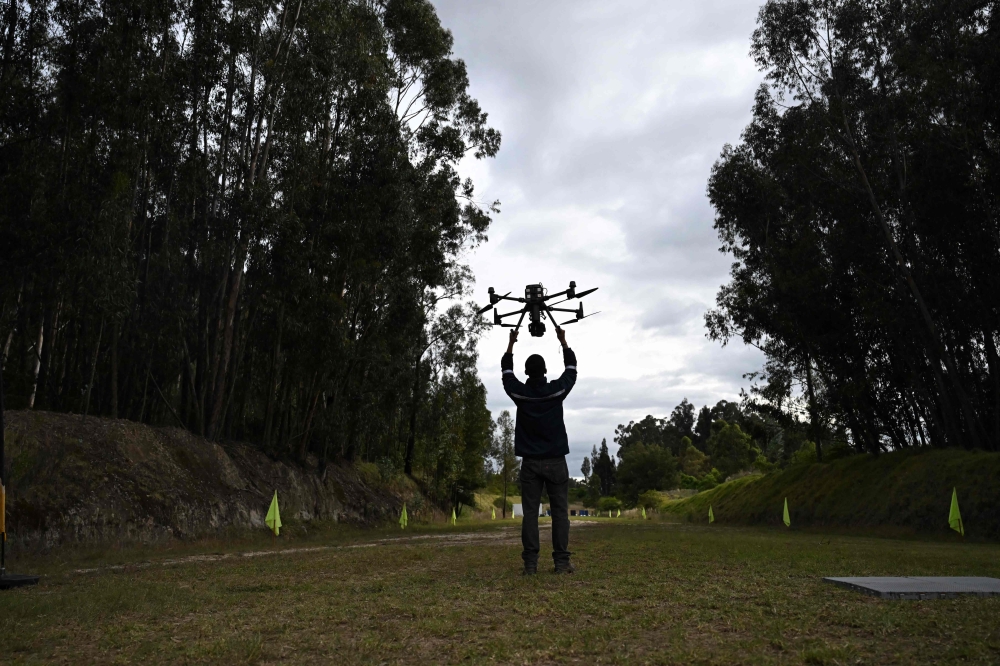
Yet the ability of relatively inexpensive drones to locate, identify and destroy logistical targets with increasing autonomy changes the strategic equation. A truck carrying fuel can now become a target as easily as a tank.
A convoy transporting ammunition can be detected and struck with unprecedented precision.
The result is that warfare becomes more pervasive and less predictable.
The widespread diffusion of drone technology means that capabilities once monopolized by major powers are now available to smaller states and even non-state actors.
What began as a technological advantage for a handful of countries is becoming a global phenomenon. The implications extend far beyond Ukraine.
Across West Asia, drones have already transformed conflict dynamics.
Across the Red Sea, autonomous and semi-autonomous systems have altered maritime security calculations. In parts of Africa, armed groups are experimenting with commercial drone technology.
In Asia, military planners are rapidly integrating artificial intelligence into surveillance, targeting and command systems. The cumulative effect is not a more peaceful world. It is a more dangerous one.
Many advocates of artificial intelligence once argued that enhanced precision would reduce casualties.
They envisioned a future in which technology would make war more discriminate and therefore less destructive.
There is some truth to this claim. Precision-guided systems can reduce collateral damage compared to indiscriminate bombardment.
Yet this argument overlooks a deeper reality. When technology lowers the cost of conducting military operations, it can also lower the threshold for initiating them.
If governments believe they can inflict damage without risking large numbers of soldiers, they may become more willing to resort to force.
If military commanders can attack targets remotely, political leaders may perceive conflict as more manageable than it actually is.
The danger is not merely technological. It is psychological.
The growing normalization of remote warfare creates a perception that violence can be controlled. History suggests otherwise.
The First World War was expected to be short. It became a catastrophe. Strategic bombing during the Second World War was supposed to break enemy morale. Instead, it often hardened resistance. Nuclear weapons were intended to prevent major war, yet they generated decades of terrifying brinkmanship.
Now artificial intelligence and drone warfare are creating a new illusion of control.
The reality is that every technological innovation generates countermeasures.
Russia adapts. Ukraine adapts accordingly. Leading to a serious tit for tat. Casualties climb. New electronic warfare systems emerge.
More sophisticated drones follow. Each innovation prompts a response from the other side. The cycle continues.
What begins as a quest for military advantage often becomes an endless spiral of retaliation and revenge.
Indeed, revenge has become an underappreciated factor in modern warfare. Every successful strike generates pressure for retaliation.
Every attack on infrastructure invites a counterattack. Every battlefield setback creates incentives for escalation. Technology accelerates this process.
A drone operator thousands of kilometres away may never see the human consequences of a strike. Yet the victims and their communities experience those consequences directly.
The emotional drivers of conflict — fear, humiliation, anger and vengeance — remain as powerful as ever.
Artificial intelligence may calculate probabilities, but it cannot eliminate human emotions. Nor can it replace diplomacy.
This is the lesson that policymakers in Europe, Asia and North America must absorb. The fascination with technological superiority should not obscure the fundamental reality that wars ultimately end through political settlements rather than battlefield algorithms.
No drone can negotiate a ceasefire. No autonomous system can reconcile competing historical narratives. No artificial intelligence model can rebuild trust once it has collapsed.
The world therefore faces a paradox. As technology becomes more advanced, the need for diplomacy becomes even greater.
For Asean, this lesson is particularly important. South-east Asia has thus far avoided becoming a major battlefield for great-power rivalry. The region's relative peace owes much to habits of dialogue, consultation and confidence-building.
Mechanisms such as the Association of South-east Asian Nations, the Asean Regional Forum and the East Asia Summit were designed precisely to prevent strategic competition from escalating into open conflict.
Those institutions may appear slow and imperfect. Yet they remain indispensable.
The experience of Ukraine demonstrates what happens when military competition overtakes diplomatic engagement. The longer conflicts persist, the more technology becomes a force multiplier for destruction rather than stability.
The drums of war are beating ever louder across multiple regions of the world.
From Eastern Europe to West Asia, from maritime chokepoints to cyberspace, the tools of warfare are becoming smarter, faster and deadlier.
Human wisdom, unfortunately, is not advancing at the same pace.
The challenge before humanity is therefore not merely to develop more sophisticated technologies.
It is to develop stronger diplomatic institutions, deeper habits of restraint and a renewed commitment to political dialogue.
Otherwise, the age of drones may become not an era of precision and stability, but one of perpetual retaliation, permanent insecurity and endless war.
* Phar Kim Beng is a professor of Asean Studies and director, Institute of Internationalisation and Asean Studies, International Islamic University of Malaysia.
** This is the personal opinion of the writer or publication and does not necessarily represent the views of Malay Mail.


