


MARCH 13 — In universities, the pen is meant to be a tool for thinking, questioning, and writing critically. Yet in Malaysia, we are increasingly witnessing a worrying phenomenon in which academic writing, public analysis, and scholarly commentary to the media can bring a scholar to the police station. This situation raises a broader question, what is the real space for academic freedom in this country?
A recent case reported by the media revealed that an academic was called by the police to give a statement regarding views expressed in the South China Morning Post in 2024. Previously, several other scholars have gone through similar experiences, not because they committed crimes, but because they wrote, spoke to the media, and participated in public discourse.
In this context, the case of former Universiti Malaya Associate Professor of Law, Azmi Sharom, is often cited as an important reference point. In 2014, he was charged under the Sedition Act for expressing an academic opinion about the 2009 Perak constitutional crisis in a media interview. The case became a symbol of what many described as the “sedition dragnet”, a wave of investigations and prosecutions targeting individuals who voiced critical opinions.
What is striking about the Azmi Sharom case is that he merely explained an academic interpretation of a constitutional issue in the context of a media interview, something that should form part of a scholar’s role in society. Yet that statement ultimately brought him to court.
The case opened up a broader discussion about the role of universities in society. Universities are not merely institutions that produce graduates. They are spaces where ideas are debated, theories are tested, and power is questioned intellectually. Without academic freedom, universities lose their core function as centres of critical thought.
Yet Azmi Sharom is not the only example. In my own experience as an academic and writer, I was once called by the police to provide a statement regarding an article I wrote and opinions I expressed in the public sphere. At the time, in 2015, the analysis was simply a critical commentary on a series of arrests that occurred following the #KitaLawan rally, something entirely common in academic writing or media interviews. Nevertheless, an investigation was still carried out under legal provisions related to defamation.
This experience reveals an important reality. In Malaysia, the line between academic discourse and legal investigation can sometimes become very blurred. A scholar may be summoned to a police station not for committing a clear criminal offence, but simply for writing or offering commentary to the media about public issues.
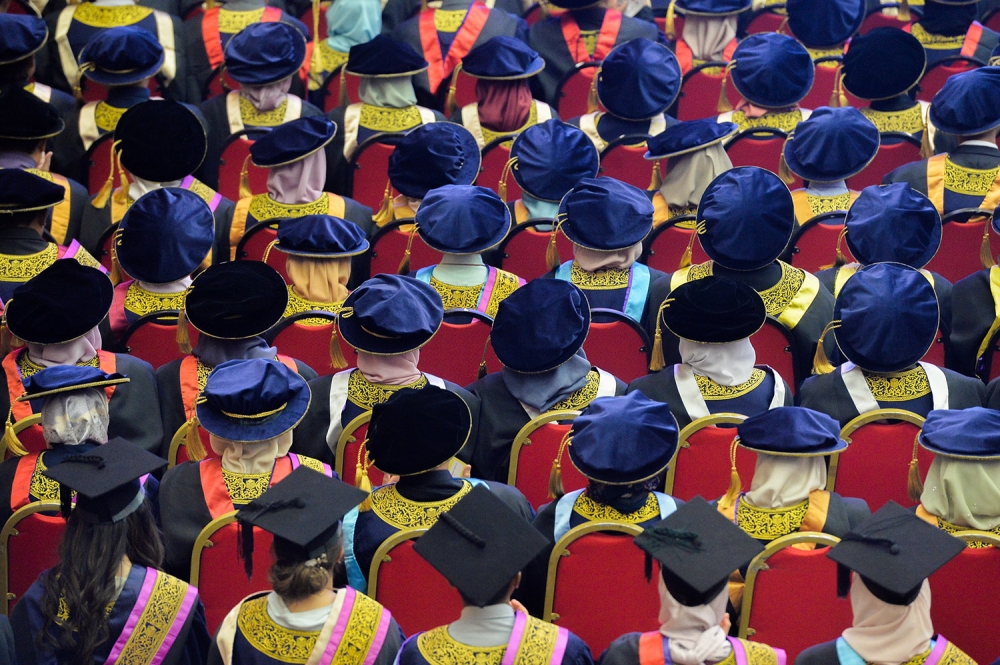
This is where fundamental questions about academic freedom arise. Academic freedom does not mean freedom without responsibility. Academics remain bound by research ethics, scholarly integrity, and verifiable facts. However, academic freedom means that scholars should have the space to express critical analysis, whether through writing, research, or media commentary, without fear of political pressure or disproportionate legal threats.
The problem is that in many situations in Malaysia, existing laws such as the Sedition Act or other provisions related to speech can create a “chilling effect.” This effect occurs when academics begin to censor themselves out of concern about legal or institutional consequences.
As a result, many important questions are no longer asked. Sensitive issues are no longer openly analysed. Intellectual discourse becomes increasingly narrow.
This runs counter to the very purpose of universities. Universities should be the safest spaces for debating ideas, including uncomfortable ones. If universities themselves cannot accommodate critical discussion, society will lose an important arena for understanding political and social realities more deeply.
What is perhaps more troubling is the symbolism behind these cases. When an academic is summoned for questioning because of what they wrote or said to the media, the message sent to the academic community is clear, be careful about what you write and speak.
In the long run, this can reshape the intellectual culture of a country. Younger generations of scholars may choose to avoid controversial topics. Research becomes safer but less meaningful. Universities gradually shift from spaces of critical thought into institutions that produce only “harmless” knowledge.
Ironically, many countries today are competing to become global education hubs. Malaysia shares the same aspiration. Yet a country’s academic reputation does not depend solely on university rankings or the number of international students. It also depends on the extent to which intellectual freedom is protected.
The case of Syaza Shukri, Azmi Sharom, my own experience, and several other cases demonstrate one clear point. In Malaysia, the crisis of academic freedom often unfolds quietly. It does not always appear as an official ban on research. Instead, it emerges through investigations, institutional pressure, or legal threats that make scholars think twice before writing or speaking openly in the public sphere.
Yet history shows that ideas cannot be completely controlled. Scholars write and speak because it is part of their intellectual responsibility. Universities exist because societies need spaces to understand the world critically.
Ultimately, the question is not merely about a scholar being summoned by the police or an article being questioned. The question is larger, do we want universities that simply repeat official narratives, or universities that dare to ask difficult questions?
If even the pen and voice of a scholar can become the subject of investigation, then we must ask, what is it that power truly fears?
It is not the writing itself, but the ideas contained within it.
* Khoo Ying Hooi, PhD is an Associate Professor at Universiti Malaya and one of the founders of the Southeast Asia Coalition on Academic Freedom (SEACAF).
** This is the personal opinion of the writer or publication and does not necessarily represent the views of Malay Mail.


