


FEBRUARY 26 — Sustainable finance integrates environmental, social and governance (ESG) considerations into lending and investment decisions to strengthen long-term resilience and inclusive growth. As Malaysia advances toward its 2050 net-zero target, sustainable finance has shifted from a niche agenda to a central pillar of the low-carbon transition.
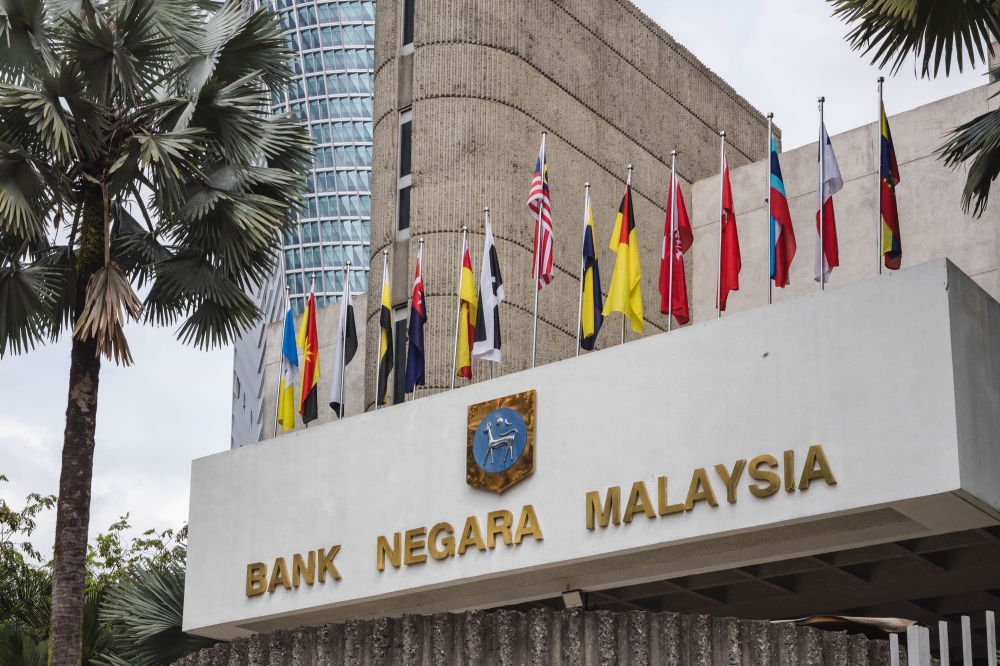
This shift is driven by Bank Negara Malaysia and the Securities Commission Malaysia through the Joint Committee on Climate Change (JC3), a regulator–industry platform advancing climate resilience and financial system greening.
In December 2025, JC3 launched the Sustainable and Transition Finance Guidance, outlining principles for banks to assess borrowers at both asset and entity levels, strengthening the evaluation of sustainability performance and transition pathways. Together with the Climate Change and Principle-based Taxonomy (CCPT) and the Sustainable and Responsible Investment (SRI) Roadmap, these initiatives translate climate ambition into operational lending standards and steer financial institutions toward climate-aligned financing.
Financial institutions are expanding green, transition and sustainability-linked facilities for SMEs. For example, SME Bank Malaysia, under its Sustainability Roadmap 2.0, targets RM10 billion in sustainable financing by 2030, with cumulative disbursements rising in recent years. Commercial banks have also launched SME-focused programmes aligned with national transition priorities.
At the policy level, the direction is clear. On the ground, however, access remains uneven. The gap between national ambition and practical inclusion persists, particularly for smaller, resource-constrained businesses.
Growing visibility, uneven understanding
Although awareness of sustainable finance is improving, familiarity does not always translate into clarity. Some SMEs still view it as long-term or stable financing rather than borrowing tied to measurable sustainability outcomes and performance indicators.
SMEs in renewable energy or embedded within multinational supply chains tend to have a better understanding of sustainable finance, shaped by exposure to sustainability requirements, disclosure expectations and green financing frameworks.
For these SMEs, sustainable finance can serve as a strategic growth enabler, supporting investment, strengthening market positioning and facilitating expansion within the low-carbon economy. In contrast, service-based and smaller family-owned businesses often have a more indirect connection. Limited needs for environmental capital expenditure reduce perceived relevance, while others associate sustainable finance mainly with export compliance or anticipated regulatory pressures rather than immediate business priorities.
The divergence is clear: greater visibility does not automatically translate into readiness or capacity to access sustainable finance.
Operational challenges beyond awareness
Even among SMEs that understand sustainable finance, operational constraints remain significant. Unlike large corporates, SMEs typically operate with lean management structures and limited administrative depth. Dedicated sustainability personnel are rare, and ESG responsibilities are often layered onto existing roles.
These human capital gaps weaken ESG data capability. Sustainable finance applications require measurable indicators, defined targets and structured documentation. Yet operational metrics — such as energy use, emissions intensity, resource consumption or workforce indicators — are frequently tracked informally. Older facilities may lack digital monitoring systems. As a result, without credible baselines and reliable data systems, proposed targets appear aspirational rather than operational.
Although banks do not expect comprehensive sustainability reports from SMEs, they do require sufficient evidence to assess climate alignment and transition risk. Preparing even basic documentation demands time, technical literacy and coordination.
Moreover, sustainability-linked facilities typically involve ongoing monitoring and reporting. Compliance throughout the loan tenure therefore becomes an additional operational burden, particularly for resource-constrained firms.
Information gaps deepen access constraints
Beyond internal constraints, informational asymmetry further limits access. While sustainable finance instruments are available, SMEs often lack clear, practical guidance on how sustainability criteria are interpreted in lending decisions.
Eligibility conditions may be publicly stated, yet the depth of documentation expected, inconsistent ESG assessment metrics among lenders and the complexity of application procedures often remain unclear.
SMEs may therefore struggle not because they lack initiatives, but because they lack clarity on evaluation standards. In some cases, this lack of clarity discourages firms from applying. Without structured engagement channels, smaller businesses may perceive sustainable finance as administratively complex and technically opaque.
When sustainability meets credit fundamentals
For lenders, sustainability without financial strength is insufficient. Despite the expansion of green and sustainability-linked facilities, loan decisions remain grounded in conventional credit risk assessment. Banks require SMEs to demonstrate solid financial performance before environmental initiatives can translate into approved financing.
Core lending criteria — financial track record, stable cash flows, adequate collateral, debt servicing capacity and business longevity — continue to underpin loan approvals.
For many SMEs, particularly those that are young, asset-light or operating with thin retained earnings, this represents the most significant hurdle. Even projects with clear environmental merit and alignment with sustainability objectives may fall short of credit thresholds.
Sustainable finance therefore poses a dual challenge for SMEs: they must demonstrate measurable environmental performance while simultaneously satisfying conventional credit risk requirements, where financial strength remains decisive.
From availability to accessibility
Sustainable finance is a significant catalyst for SME transformation and Malaysia’s broader climate transition. Yet the shift from availability to accessibility remains incomplete.
The barriers are structural, not merely conceptual. Expanding financial instruments alone will not resolve these challenges. Frameworks must better reflect SME realities by incorporating calibrated risk-sharing mechanisms and documentation requirements proportionate to firm size, capacity and risk exposure.
Ecosystem-level support should also provide practical, technically grounded guidance to help SMEs establish baselines, collect relevant ESG data, develop credible sustainability performance targets and manage ongoing reporting requirements.
Only with clearer institutional alignment, targeted capability support and risk-sensitive design for SMEs can sustainable finance move beyond policy to become an inclusive engine of SME transition.
* Dr Rozaimah Zainudin is an Associate Professor at the Department of Finance, Faculty of Business and Economics, Universiti Malaya, and may be reached at [email protected]. Dr Karren Lee-Hwei Khaw is an Associate Professor at the School of Business, Monash University (Malaysia).
*This is the personal opinion of the writer or publication and does not necessarily represent the views of Malay Mail.

![On Aug 20, 1963, the Federation of Malaya Parliament enacted Act No. 26 of 1963 which became operational on Sept 16, 1963. This “Malaysia Act” rewrote the Merdeka Constitution [of 1957] and substantially restructured the constitutional framework of Malaya. — Picture by Yusof Mat Isa](https://cdnx.premiumread.com/?url=https://www.malaymail.com/malaymail/uploads/images/2026/09/14/362456.jpg&w=400&q=100&f=jpg&t=6 "If laws of Sabah and Sarawak passed or made before Malaysia Day are State laws, they are subject to Article 75 of Federal Constitution — Hafiz Hassan")


