


FEB 13 — When we hear the word “tuberculosis” (TB), many of us picture a scene from a black-and-white movie with a sickly character coughing into a handkerchief in a crowded, dusty room.
We like to think of it as a disease of the past, something our grandparents worried about.
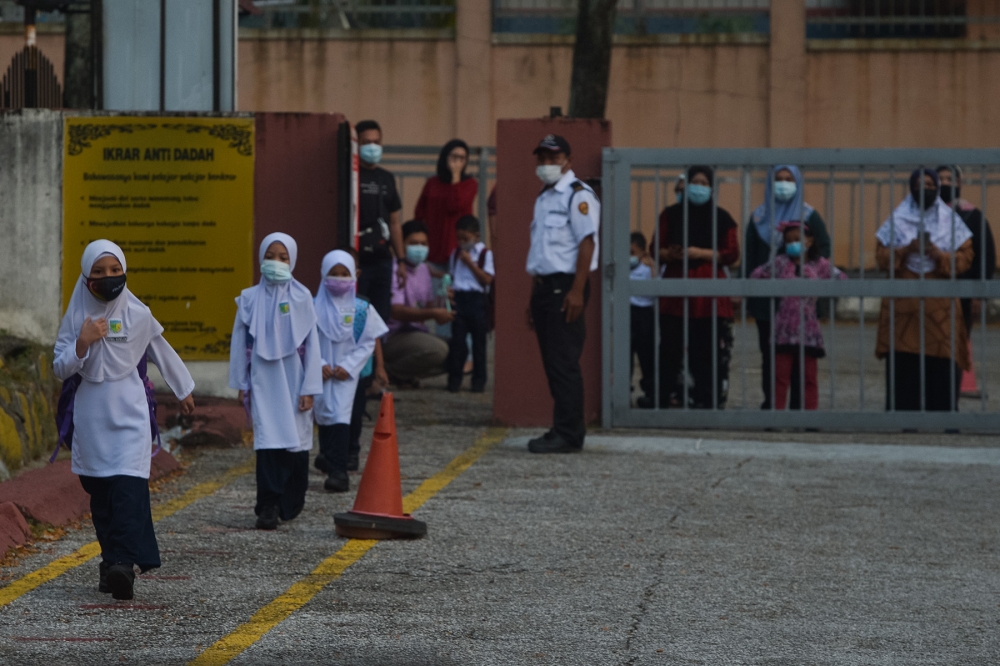
But the news recently from Kota Tinggi, Johor, where six school students were confirmed to have active TB, has reminded us that TB is still very much present.
As a paediatrician, I foresee the anxiety this news could create. Parents are already asking: Is my child safe at school? Should I keep them home? The fear is real, but let’s replace that with the power of understanding.
The emotional reality: It’s usually not ‘kid-to-kid’
The most terrifying headline for a parent is “Outbreak in School.” We immediately imagine a classroom where one sick child infects the whole row.
Here is the scientific reassurance you need: TB in children is very different from TB in adults.
Children are often what we call “paucibacillary”, they carry a much smaller load of bacteria.
Unlike adults, young children rarely have the lung force to cough up infectious phlegm deep from their chests.
This means that in the vast majority of cases, children do not spread TB to other children.
Almost every time we find a child with TB, we find an adult in their close circle (a parent, a grandparent, a caregiver) who has been coughing for months.
The child is the victim, not the vector. The recent cases in Johor were detected through contact tracing, which means the health authorities were doing their job: finding the adults, and then checking the kids.
The ‘silent’ signs: It’s not always a cough
If you are waiting for your child to cough up blood before you worry, you are waiting too long. In children, TB is a master of disguise. It doesn’t always attack the lungs loud and clear.
As parents, you should be vigilant for these subtler signs:
- The “static” weight: If your child is eating well but not gaining weight, or worse, losing it, please take note. Seek medical advice.
- The lost spark: Is your active child suddenly lethargic? Do they stop playing earlier than usual? A child who is “too tired to play” is a red flag.
- The mystery fever: A low-grade fever that comes and goes for more than two weeks, without a runny nose or flu symptoms.
- Lumps and bumps: Swollen glands, particularly around the neck (cervical lymphadenopathy), that don’t go away with standard antibiotics.
The BCG shield: A helmet, not a force field
“But Doctor, my child has the BCG scar! Aren’t they immune?”
I hear this often. The BCG vaccine, that little scar on the left arm most Malaysians have, is a miracle of public health.
But we must be realistic about what it does. Think of BCG as a helmet. It protects the brain. It is excellent at preventing the most deadly forms of TB in babies, like TB Meningitis (infection of the brain) or Miliary TB (disseminated infection).
Without BCG, these conditions would be fatal. However, like a helmet, it doesn’t stop you from getting “bruised.” It does not fully prevent TB in the lungs.
A vaccinated child can still get pulmonary TB if exposed to a heavy load of bacteria. Do not let that scar make you complacent.
When to seek help
The stigma of TB is our enemy. I have seen families hide a diagnosis because they are ashamed, only to infect their own children and grandchildren.
If there is an adult in your house with a cough that has lasted more than two weeks, especially with night sweats or weight loss, send them to a Klinik Kesihatan immediately.
It might just be a smoker’s cough, but if it is TB, treating that adult is the single best way to protect your children.
If your child has been identified as a “close contact” by the Health Department, please let them do their work.
We may need to do a skin test (Mantoux) or a chest X-ray. If the doctors suggest a course of preventive antibiotics (prophylaxis), take it. It is not a punishment; it is a shield.
The bottom line
The cases in Johor are under control. The students are being treated, and they will recover.
TB is fully curable, even in children. Let this be a reminder that TB is still living among us. It thrives in silence and stigma.
We defeat it not by closing schools, but by opening our eyes. Malaysia has a robust TB control programme with established school and contact screening protocols.
Watch for the signs, check your own cough, and trust the science.
* Dr Naveen Nair Gangadaran is a paediatrician at Hospital Tuanku Ja’afar Seremban.
* This is the personal opinion of the writer or publication and does not necessarily represent the views of Malay Mail.


