








GENTING HIGHLANDS, Feb 13 — The Operations Evaluation Panel (PPO) of the Malaysian Anti-Corruption Commission (MACC) has found no indication that cases were deliberately delayed or ‘shelved’, with most investigation papers meeting the agency’s set deadlines.
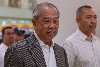
Its chairman, Datuk Ahmad Rosli Mohd Sham, said a key focus of the panel is the percentage of investigation papers completed within the prescribed timeframe, including cases capped at a 12-month investigation period.
“It is rare for me or other PPO members to question why a case did not meet the target. Only when it does not will we request an explanation. So far, there have been no issues.
“It is not a matter of deliberately delaying action, dragging investigations, or shelving cases. We have not found any evidence of that,” he told reporters during the Journalism Workshop: Understanding MACC’s Role in Combating Corruption here.
Commenting on the PPO’s role, Ahmad Rosli added that the panel not only monitors operational efficiency but also reviews cases classified as “no further action” (NFA) to ensure no investigative gaps are overlooked.
“The evaluation looks at several aspects, the first being whether there are any weaknesses in the investigation that need to be addressed.
“If an investigation fails to consider a particular angle, we provide instructions or advice to explore it further, including situations where the probe may not reveal a corruption offence but could uncover other potential violations,” he said.
Earlier, during a talk with local media, he revealed that from 2009 until last year, the MACC submitted 1,869 investigation papers classified as NFA to the PPO.
Of these, the panel agreed with 1,760 NFA decisions, while 136 cases were directed for review.
Ahmad Rosli also noted that the MACC is receptive to the panel’s feedback, including recommendations to strengthen the expertise of its investigators.
“When we provide comments, the MACC does not become defensive or try to justify itself. They take our feedback into account,” he said. — Bernama