JANUARY 29 — I notice this most clearly when I am driving. Especially when I’m on my own.
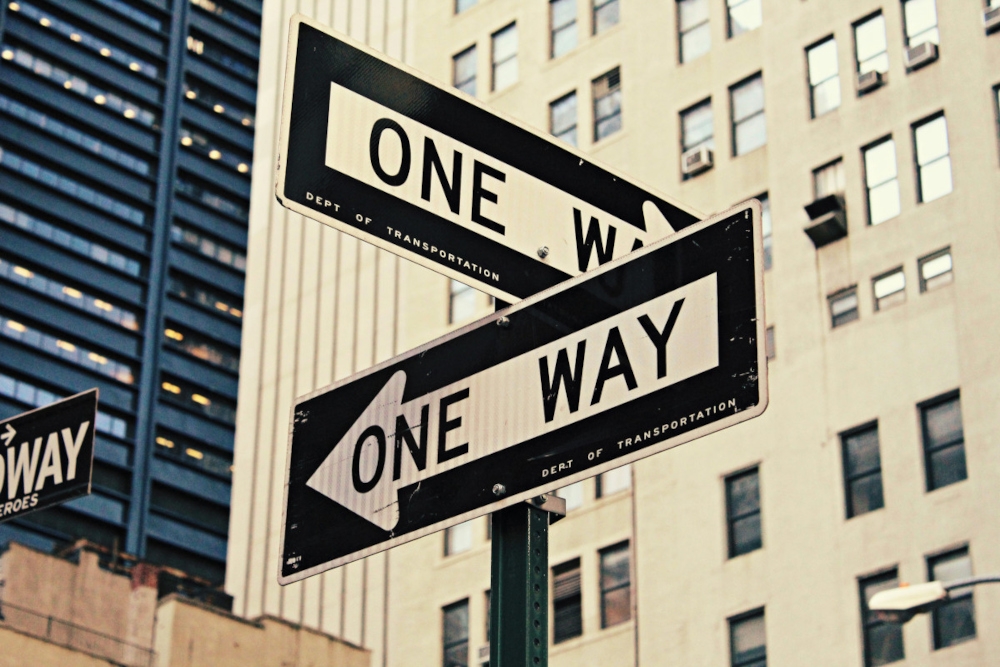
You know the kind. Very late afternoon, sky already dimming, traffic building up just enough to make every decision feel slightly consequential. You reach a junction you have passed hundreds of times. One lane usually moves faster. The other looks clearer today. You hesitate for a second longer than usual, weighing a choice that does not really matter, yet somehow feels like it does.
You signal, choose a lane, and commit.
Sometimes you arrive earlier. Sometimes later. Most of the time, it evens out. But the discomfort in that brief pause, that moment of not knowing, is familiar. And I think it mirrors how many of our bigger decisions actually feel. Ordinary. Uncertain. Made without the benefit of clarity.
We like to tell ourselves that big choices should come with conviction. That we should feel ready before we move. But more often than not, readiness is something we invent after the fact. In real time, we stand in partial information, hoping that the direction we choose will make sense later.
This is where fear and faith quietly enter the picture. Both show up when outcomes are unseen. Both ask us to imagine what lies ahead. Fear imagines loss, regret, embarrassment, or failure. Faith imagines meaning, growth, resilience, or simply the ability to cope. Neither offers proof. Both rely on belief.
What surprised me, over the years, is how similar they feel in the body. The same tightness. The same pause. The same sense of risk. The difference is not in how loudly they speak, but in where they point us.
Fear urges us to wait. To delay. To stay where we are until the picture becomes clearer. Faith, on the other hand, does not promise safety. It simply suggests movement. Not reckless movement, but honest movement. One step, taken with awareness that certainty may never come first.
For a long time, I thought choosing nothing was the safest option. If you do not decide, you cannot be wrong. If you wait long enough, maybe the right answer will reveal itself. But life does not quite work that way. What I learned, sometimes the hard way, is that indecision is still a decision. It just hands control over to fear without admitting it.
Staying still can feel responsible. It can look patient. But often, it is simply fear dressed up as caution.
I see this pattern everywhere now. In people who delay difficult conversations with family members because they fear discomfort, only to watch relationships drift. In students who wait for absolute clarity before choosing a path, not realising that clarity often arrives after commitment, not before. In professionals who stay in roles they have outgrown, telling themselves they are being sensible, while quietly losing energy year after year.
Faith, as I understand it now, is not about optimism. It is about orientation. It asks a simple question: am I choosing this because I trust my ability to respond to what comes next, or because I am trying to avoid the possibility of pain?
Am I choosing to restart my studies at Universiti Malaya at the age of 23 because the path ahead is clear, or because staying where I was had quietly become more frightening? That distinction matters.
There is a line by Rumi that I often return to: “Why are you so busy with this or that or good or bad, pay attention to how things blend.” I read it as a reminder that movement, of blending, itself has value. That being on the road, even uncertain, even imperfect, is different from standing at the junction indefinitely, rehearsing outcomes that may never happen.
By now you should have realised that life rarely presents us with clear right or wrong answers. More often, it asks whether we are willing to move without full visibility. Whether we trust ourselves enough to handle consequences we cannot yet imagine. Whether we believe that not knowing is still a valid place to begin.
So now, when I am at that familiar junction, when both lanes look equally uncertain, I no longer wait for clarity. I signal, choose, and keep moving.
I know I may arrive home a little earlier, or a little later. I may learn something useful, or something uncomfortable. But I also know this: staying at the junction has never taken anyone anywhere.
At some point, movement itself becomes an act of trust.
* Ir Dr Nahrizul Adib Kadri is a professor of biomedical engineering at the Faculty of Engineering, the Director of UM Press, and the Principal of Tuanku Bahiyah Residential College, Universiti Malaya. He may be reached at [email protected]
** This is the personal opinion of the writer or publication and does not necessarily represent the views of Malay Mail.