


JANUARY 28 — At a time, when the world has witnessed a retrenchment in global democracy, it is astounding that Malaysia is still practicing it. To the extent that Myanmar falsely claims to believe in democracy too — it doesn’t — to gain some semblance of electoral legitimacy, the junta has had to resort to sham elections.
So obvious were the false elections that all member states of Asean have neither acknowledged nor accepted the polls that began on December 8 2025 and are about to complete by the end of January 2026.
It is a credit to Malaysia to claim that Myanmar elections are illegal. Although it was Foreign Minister Datuk Seri Mohammad Hassan that stated the position of Malaysia and Asean most clearly, such a statement could not have resonated across the region indeed the world without the authority of Prime Minister Anwar Ibrahim.
Anwar has been globally deemed as the best chair in Asean for decades. As and when his foreign minister speaks up, the view and value reflects that of Anwar. Why?
Instead of appealing for global attention, Putrajaya had dedicated much of its time in 2025 in enlisting world leaders to visit, indeed, to attend the Asean and Related Summits in Kuala Lumpur. There were more than 330 meetings among leaders and Senior Officials alike in 2025 alone.
To be sure, Malaysia has just entered 2026. This is the year of Visit Malaysia too. There is every reason to make Malaysia look strong and good beyond the stellar performance of the Ringgit.
Yet from the get-go there has been no efforts to avoid all kinds of legitimate questions in the Malaysian Parliament. Instead of evading various questions, the debates in the Parliament have remained vigorous and helpful.
As and when certain policy overshoots have been, for instance, such as the original goal to conduct an early assessment of year 1 students, at the age of six, Anwar has shown complete willingness to scrap the test completely. Much to the relief of young parents and students alike.
Obviously, this is a government that can tune in to the complaints of the people.
Therein another episode in the Parliament which is one worthy of deeper rumination. Rather than an all-out attacks against the government of the day. How?
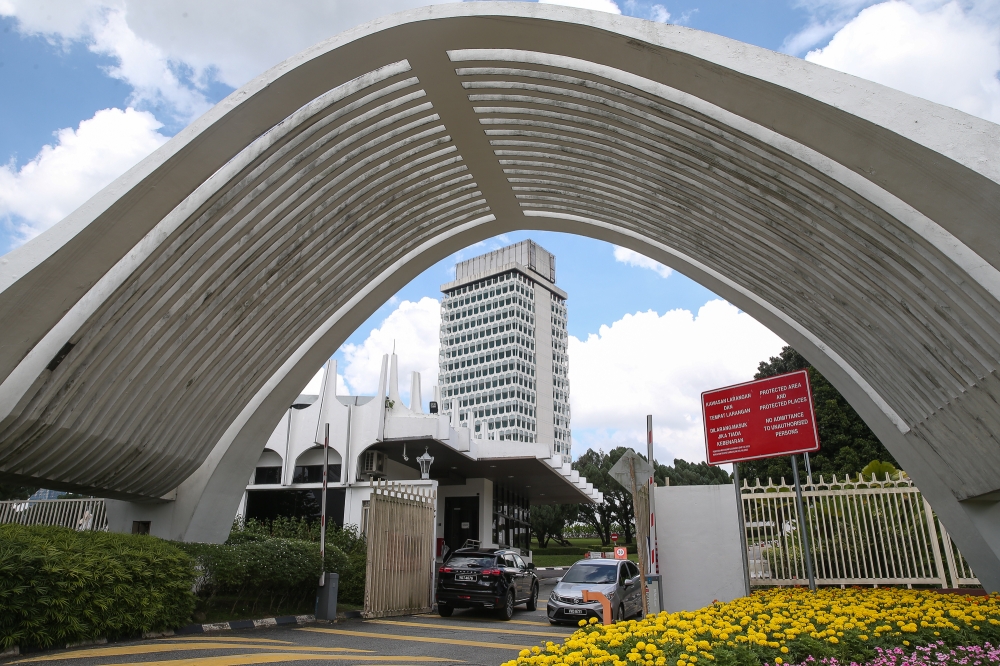
On January 26, 2026, Parliament witnessed a debate that many citizens might overlook as “routine politicking.”
But the exchange — led by former economy minister Rafizi Ramli — was anything but routine: it was a vigorous exercise in parliamentary accountability, a reminder that Malaysia’s democratic institutions can still function effectively when checks and balances are exercised in practice.
Rafizi raised a critical issue: the government’s reported revenue of RM322 billion for 2024 may be overstated because it includes RM33.3 billion in tax refunds that have yet to be refunded to taxpayers.
That’s not just accounting jargon — it affects how fiscal health is perceived, how policy is judged, and how public trust in government figures is maintained.
Under Malaysia’s cash-based accounting system, revenue is tallied on collections without deducting refunds owed.
Critics argue this makes deficits look smaller than they truly are.
In Parliament, Rafizi questioned whether these figures reflected inefficiencies or strategic presentation by the government.
In response, the government cited steps to increase refund allocations and improve timeliness.
This exchange matters because it shows Parliament doing its job: probing numbers, demanding transparency, and compelling the executive to explain itself — precisely what checks and balances in parliamentary governance are meant to achieve.
Why this matters for democracy:
At its best, parliamentary governance is not about harmony or applause; it’s about accountability. It’s about a legislature ensuring the executive doesn’t get a free pass on matters of public money, policy, and performance.
When members from across the spectrum press ministers with uncomfortable questions, they are not engaging in “politics” for its own sake — they are enacting the constitutional role of oversight.
In Malaysia’s system, although Parliament does not operate in full institutional autonomy (a challenge reformers continue to highlight), the fact that such debates occur publicly, that government leaders must respond to them, and that they are reported in the public domain, are all signals that the machinery of parliamentary oversight is alive and functioning.
Checks and balances still matter:
Parliament’s power to question the executive on financial matters stems from deeper principles enshrined in a constitutional democracy: that no branch of government is above scrutiny.
The legislature cannot make or execute policies alone — but it can demand clarity and accountability from those who do. That’s the essence of checks and balances.
Globally, systems that separate powers between executive, legislature, and judiciary rely on such checks to prevent abuses.
Even when governments hold significant influence over parliament’s operations, vigorous debate over budgets, revenue reporting, and policy direction demonstrates that democratic oversight is active — not dormant.
From numbers to norms
The specific issue of tax refunds may seem technical, but the principle at stake is fundamental: public finances must be presented accurately and honestly so that lawmakers — and through them, the public — can make informed choices.
When Parliament challenges figures and forces ministers to justify policies, it strengthens democratic norms.
This episode also shows that meaningful checks and balances don’t require perfection, just engagement.
Parliament may still seek greater administrative independence and reforms (such as an independent parliamentary service), but the existing structures can still produce substantive oversight when MPs exercise their mandate responsibly.
Conclusion:
Malaysia’s parliamentary governance is still at work — not because the system is flawless, but because it still works when representatives hold the executive accountable.
The debate over government revenue — far from being a dry budgetary squabble — underscores a living democracy in action.
Checks and balances are not static reforms to be admired only on paper; they are practices — carried out in debates, questions, and responses — that keep the heartbeat of parliamentary governance strong.
As long as this accountability continues, Malaysia’s democratic institutions will remain alive, relevant, and responsive to the people they serve.
* Phar Kim Beng, PhD is the Professor of Asean Studies at International Islamic University of Malaysia and Director of Institute of International and Asean Studies (IINTAS).
** This is the personal opinion of the writer or publication and does not necessarily represent the views of Malay Mail.


