


JANUARY 27 — I recently visited the newly refurbished Seri Negara and left with a strong sense of pride, not just in the building itself, but in what the restoration represents.
What stood out was how alive and welcoming the place felt, and how our journey of nationhood was romanticised, in a good way, with a clear sense of purpose.
Young families were walking through the grounds, parents introducing their children to a piece of our shared history, young couples giggling and posing for their social media.
Moments like these remind us why learning history matters. Not history as a textbook subject, but living history that can be walked through, touched, and experienced. When children see where our nation’s story unfolded, it gives context to who we are today and a clearer sense of where we are going.
This was not heritage preserved for display, but heritage returned to public life, reclaimed as part of the city’s everyday rhythm. Kudos to the Government, especially Prime Minister Datuk Seri Anwar Ibrahim, for envisioning this idea for the public.
The speed and efficiency of the restoration also deserve recognition. In a time when public projects are often associated with delays and diluted intent, Seri Negara stands out as an example of disciplined execution. Credit is due to the nation’s sovereign wealth fund, Khazanah Nasional Berhad for taking on this task—one that is complex, unglamorous, and often underappreciated—and seeing it through with professionalism and care.
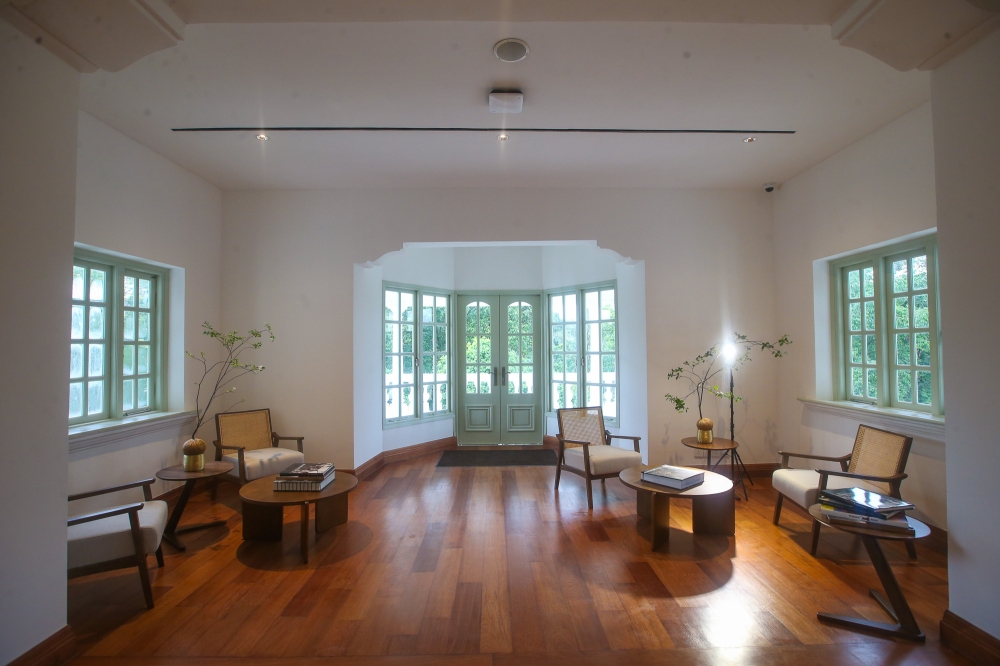
It is easy to talk about heritage. It is far harder to invest in it seriously, to restore it properly, and to do so without turning it into a superficial showcase.
Investing in heritage is also an investment in national confidence. When we take our own story seriously, we signal to the next generation that Malaysia’s past is not something to be apologetic about, but something to be understood, appreciated and built upon.
Khazanah has shown that with the right mandate and capability, a national institution that is a sovereign wealth fund focusing on investing sustainably for Malaysia’s future can act as a true custodian of history and national identity.
In doing so, it also plays a catalytic role in generating multiplier effects across the economy, adding long-term value to national growth and taking on the harder, less immediately visible investments in pursuit of the greater good.
I also subsequently read about the broader Warisan KL initiative spearheaded by the Government with partners, where the public and private sectors—not just Khazanah—are collaborating to rejuvenate key heritage sites and areas across the identified Warisan Kuala Lumpur vicinity. Seri Negara is part of this wider effort, alongside landmarks such as Bangunan Sultan Abdul Samad, which has been restored and will reopen soon, Merdeka 118 area and Stadium Merdeka, DayaBumi Complex, and Medan Pasar, to name a few.
This approach sends an important signal. Nation-building today is not just about new towers or headline projects, but about modernising Malaysia while preserving the places that anchor our identity. Seri Negara shows that development and heritage need not be in conflict. With the right institutions and partnerships, they can reinforce one another—quietly, effectively, and with lasting impact.
Seri Negara does more than preserve bricks and mortar. It quietly teaches history in a way no classroom can, by allowing Malaysians to experience the spaces where our nation took shape. That experience builds pride, and pride shapes the kind of future we choose to build.
More importantly, these new spaces are open to the public and must continue to be accessible for people from all walks of life. Heritage is meant to be shared and lived, not remain static, stuck in the past, and is the preserve of the elites.
Thank you to Khazanah and the Government for renewing that sense of pride in me as a patriotic Malaysian. I am optimistic that efforts to revive heritage icons and sites will go along way in helping the nation forge a united identity that will confidently power us into the future.
*This is the personal opinion of the writer or publication and does not necessarily represent the views of Malay Mail.


