











DECEMBER 27 — If the Five Power Defence Arrangements (FPDA) has survived the Cold War since 1971 and remained relevant even after the collapse of the Soviet Union in 1991, its institutional durability deserves renewed attention today. FPDA has endured not because it is rigid, but because it is adaptable.
Unlike formal alliances bound by automaticity, FPDA has evolved quietly.
It shifted from deterrence and consultation to confidence-building, interoperability, and practical cooperation.
That flexibility now positions FPDA for renewed relevance in an era defined less by conventional war and more by climate-induced insecurity.
The year 2025 marked a turning point.
It was not simply another year of geopolitical tension. It was a year of environmental reckoning across South-east Asia.
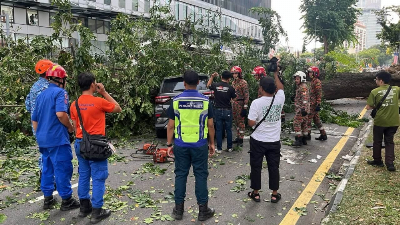
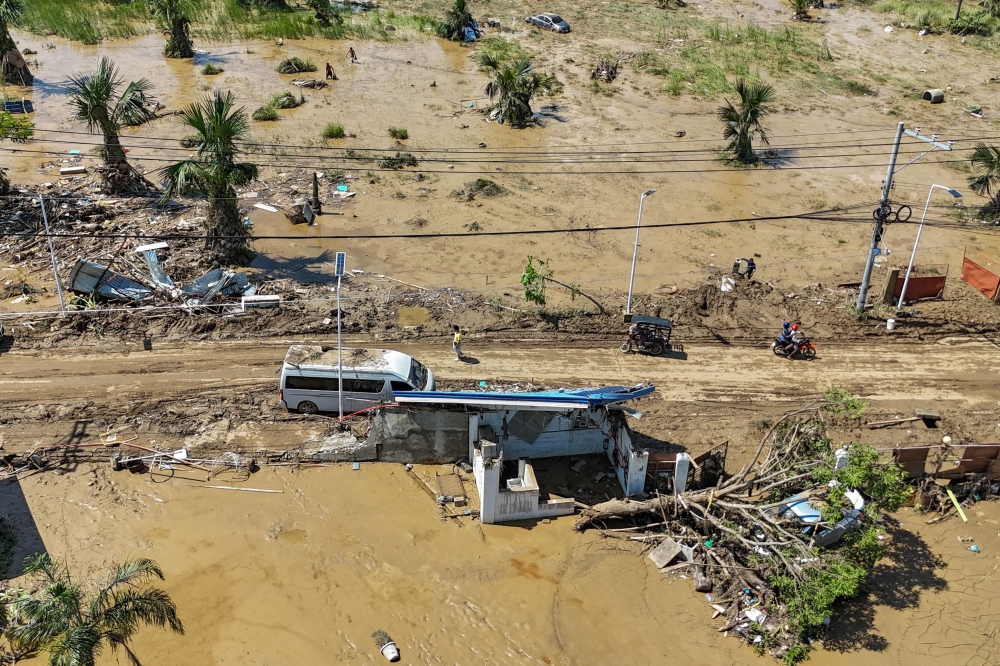
Extreme weather events became structural rather than episodic. Typhoons battered the Philippines. Floods paralysed large swathes of Vietnam.
Indonesia faced devastating floods, landslides, and forest fires. Thailand experienced rainfall unseen in generations.
Climate change is no longer a distant scenario. It is an operational reality confronting governments, militaries, and societies simultaneously.
In this context, humanitarian assistance and disaster relief (HADR) can no longer be treated as a secondary mission. It is now central to national security and regional stability.
States that fail to respond effectively to disasters face cascading consequences — social unrest, economic disruption, weakened borders, and fertile ground for transnational crime.
For Association of South-east Asian Nations (Asean), this poses a direct test of credibility.
Asean’s legitimacy will increasingly be judged not by declarations and communiqués, but by whether it can protect lives, restore infrastructure, and stabilise societies under extreme stress.
HADR, therefore, is not charity.
It is strategic necessity.
This is where FPDA’s relevance increases sharply from 2026 onwards.
FPDA’s greatest strength lies in habits of cooperation built over decades — joint exercises, shared planning assumptions, and interoperable command-and-control structures.
These capabilities matter most when disasters strike.
Flooded airports, damaged ports, collapsed power grids, and mass displacement require rapid coordination.
Speed, logistics, and trust cannot be improvised during crisis. They must already exist.
FPDA provides exactly that institutional muscle memory.
Among FPDA partners, Australia plays a pivotal role. Australia is not merely an external supporter with assets to deploy.
It is a resident Indo-Pacific power with deep experience in disaster response, civil–military coordination, and large-scale logistics.
Australia’s airlift capabilities, naval platforms, engineering units, medical teams, and surveillance assets are precisely the tools South-east Asia will require more frequently.
Its experience responding to bushfires, floods, cyclones, and regional disasters gives it operational credibility, not just political goodwill.
Equally important is Australia’s strategic temperament. It is capable without being domineering. It is present without being coercive.
In an era of intense great-power rivalry, Asean needs partners that strengthen resilience without forcing binary alignments.
Australia’s engagement through FPDA offers Asean a functional and non-exclusive framework. It enhances capacity while preserving autonomy.
The growing importance of HADR does not dilute traditional defence cooperation. On the contrary, it reinforces it.
Disaster response strengthens military readiness across logistics, communications, situational awareness, and civil–military coordination.
Every successful HADR operation builds trust among armed forces.
That trust carries over into crisis prevention, de-escalation, and confidence-building during periods of political tension.
From 2026 onwards, FPDA exercises must further prioritise complex, multi-domain HADR scenarios.
These should include simultaneous disasters across multiple states, disrupted supply chains, mass displacement across land and sea, and coordination with civilian agencies and humanitarian actors.
Such exercises would directly complement Asean-led mechanisms rather than compete with them.
They would reinforce Asean centrality by providing practical capabilities Asean institutions alone cannot generate quickly enough.
Critically, FPDA offers Asean something rare in today’s fractured strategic environment: continuity.
While many security frameworks rise and fall with political cycles, FPDA has persisted across eras, governments, and ideological shifts.
That continuity matters in a decade where climate shocks will be relentless and cumulative.
Asean does not need more slogans about resilience.
It needs reliable partners, proven mechanisms, and operational depth. FPDA — especially with Australia at its core — provides all three.
As climate insecurity becomes the defining challenge of South-east Asia, HADR will no longer sit at the margins of defence policy.
It will sit at its centre.
From 2026 onwards, FPDA’s quiet endurance may prove to be one of Asean’s most strategic assets.
* Phar Kim Beng is a professor of Asean Studies and director at the Institute of International and Asean Studies (IINTAS).
** This is the personal opinion of the writer or publication and does not necessarily represent the views of Malay Mail.