NOVEMBER 25 — “Flood after flood” — that is how residents in Thailand and Vietnam describe the unrelenting storms that have drenched their countries this month.
Hat Yai, a major southern Thai commercial hub familiar to Malaysians, has been declared a disaster zone. Central Vietnam is1 underwater again before its previous floods have even drained. And meteorologists warn that Malaysia is next in line as the same monsoon surge drifts southward. What used to be understood as a predictable wet season has now become a region-wide chain reaction of climatic instability, exposing the fragility of Asean’s preparedness in the face of intensifying meteorological shocks.
The recent floods are not random or isolated. They reflect a deeper structural problem: the monsoon has changed. Warmer seas, delayed monsoon patterns, and La Niña-like atmospheric behaviour are producing heavier, more erratic rainfall across the region. Yet climate dynamics alone do not account for the devastation. It is the combination of climate change and inadequate flood-management systems that turns heavy rain into humanitarian crises. Across Thailand, Vietnam, and soon Malaysia, old drainage networks, outdated dams, and uncoordinated water-release schedules are worsening the damage.
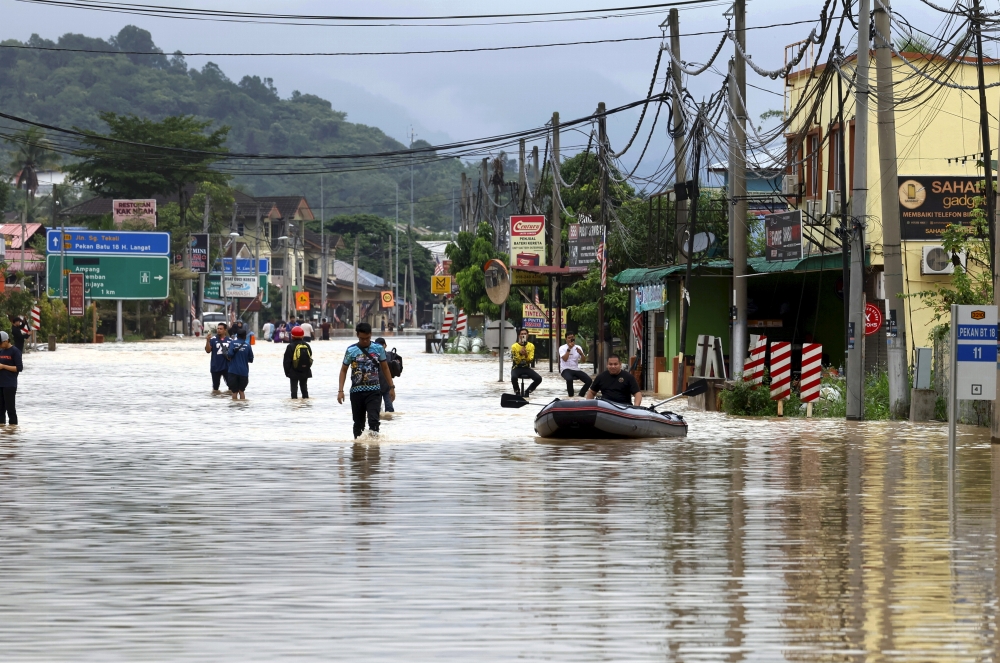
A Thai resident interviewed in the SCMP captured the truth with painful precision: “You can say it is climate change, but the lack of systematic flood management is just as much to blame.”
This is the point Asean can no longer ignore. The monsoon is no longer just a seasonal cycle; it has become a strategic threat. The floods in Thailand affect trade and tourism with Malaysia.
The repeated inundation of Vietnam’s central plains threatens rice production and regional food security. If Malaysia is next — as forecasters warn — then urban centres, river-delta communities, and vital transportation corridors could face severe disruptions.
Asean’s problem is therefore not merely environmental. It is economic, humanitarian, geopolitical, and deeply interconnected.
The region urgently needs to elevate meteorology to the highest level of policymaking.
Climate-induced monsoon volatility is the new normal, and Asean cannot safeguard its people, economies, and cross-border systems if it continues treating weather as an afterthought.
The time has come for a regional meteorological compact that provides real-time data sharing — rainfall intensity, river-level monitoring, dam-release schedules, storm-trajectory projections — all integrated into a single shared platform.
The monsoon moves as a system across borders, and Asean must learn to respond as a system, not as ten separate states working in isolation.
Infrastructure is the next frontier. Much of Asean’s drainage and water-management systems were designed decades ago, calibrated for a climate that no longer exists. In every flood-hit country, the same vulnerabilities recur: insufficient drainage capacity, poorly maintained rivers, weakened mangroves, clogged waterways, and cities built without ecological buffers.
Without large-scale investment in retention basins, riverbank reinforcements, nature-based flood controls, and modernised urban planning principles, South-east Asia will face monsoon disruptions with crippling regularity.
Equally important is regional disaster coordination. Asean has commendable frameworks on paper, but the floods in Thailand and Vietnam reveal the limitations of symbolic cooperation. When multiple countries are hit simultaneously, each struggles alone.
Asean must operationalise a mechanism that allows rapid deployment of shared resources — rescue teams, mobile pumps, temporary shelters, transport coordination hubs — so that no affected member state is left scrambling for support in the early days of a disaster.
Malaysia, for its part, must act with urgency rather than expectation. The warning is explicit: the storm system battering Thailand and Vietnam is moving south, and the east coast of Malaysia is highly vulnerable.
Urban flash floods in Klang Valley, landslides in hill areas, and coastal flooding along Pahang, Terengganu, and Kelantan remain perennial risks that will worsen with this shift in monsoon behaviour.
Early preparation — from pre-positioning assets to public-alert campaigns — is not optional but essential.
The floods devastating Thailand and Vietnam are not anomalies; they are a preview of South-east Asia’s future.
If Asean does not treat meteorological instability and monsoon volatility as core regional security issues, the next decade will be one of disruptive cycles, economic losses, and preventable tragedies.
The monsoon is changing faster than Asean’s institutions. It is time for Asean to change with it — and to take meteorological risks as seriously as its economic and strategic challenges. Only then can the region weather the storms that are no longer coming, but already here.
* Phar Kim Beng is Professor of Asean Studies and Director, Institute of International and Asean Studies (IINTAS) International Islamic University Malaysia
** This is the personal opinion of the writer or publication and does not necessarily represent the views of Malay Mail.