


















NOVEMBER 5 — Yesterday, I wrote of back-end clauses in an agreement, which go by different names – conflict clauses, savings clauses, compatibility clauses.
Such clauses are in the reciprocal trade agreement (RTA) between the United States (US) and Malaysia.
Article 7.1, on Recognition of Existing Rights and Obligations, is one of the clauses.
Article 7.5, on Termination, is another. It reads as follows:
Either Party may terminate this Agreement by written notification to the other Party. Termination shall take effect 180 days after the date of the notification.
Article 7.6, on Annexes, Appendices, and Footnotes, is the last of the clauses. It reads as follows:
The annexes, appendices, and footnotes to this Agreement constitute an integral part of this Agreement.
Many agreements contain one or more attachments, which also go by different names – schedule, annex, appendix, exhibit. The naming style is not significant. The English, it is said, seem to prefer schedules, whilst Americans prefer annexes or appendices.
That perhaps explains why Article 7.6 refers to Annexes, Appendices, and Footnotes.
The terms tend to be used for technical details or commercial details and are used to clarify or expand upon terms in an agreement.
A common reason for including the term or terms is complexity of an agreement. Where an agreement is complex, the use of schedules, annexes or appendices “enhances the overseeability” of all documents in the agreement.
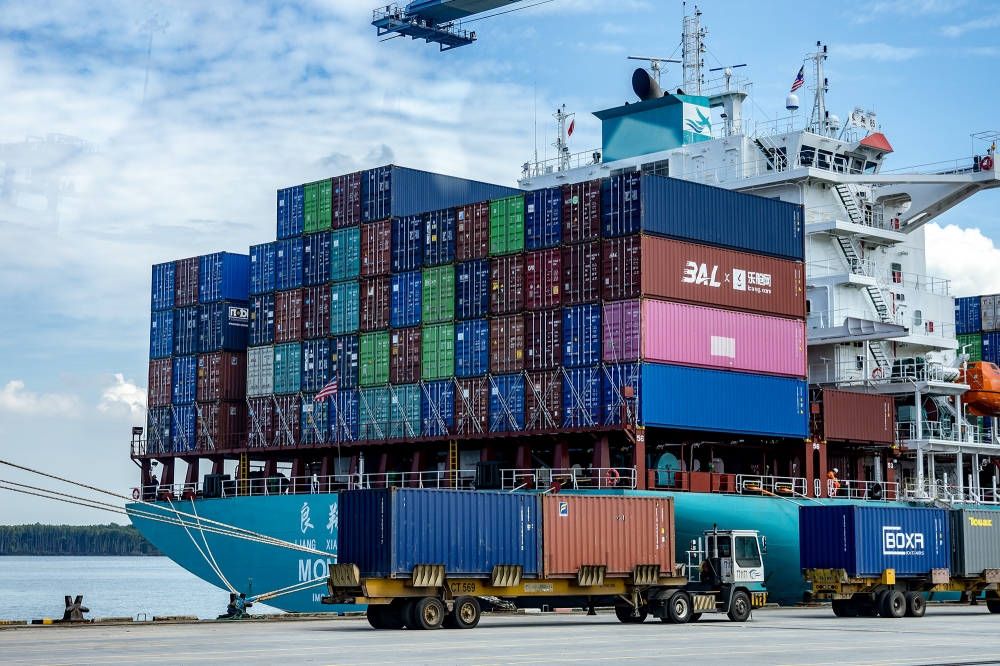
It is the legal effect of the schedules, appendices, annexes or exhibits that is important. Article 7.6 of the RTA between Malaysia and the US clearly says that the annexes, appendices, and footnotes to the RTA “constitute an integral part of this Agreement”.
So, when I wrote that the RTA must be read wholly – that is, to the full or entire extent – it must include the annexes, appendices and footnotes.
One shouldn’t cherry-pick a clause – like cherry-picking Article 3.3 (Digital Trade Agreements) or Article 5.1 (Complementary Actions) or Annex IV (Purchases and Investment) which includes, among others, purchase by Malaysia Aviation Group (MAG) of 30 Boeing aircraft plus a purchase option for 30 additional aircraft; purchase of security equipment valued at US$67 million and purchase by Petronas of three million tonnes per year (MTPA) of US liquified natural gas (LNG).
The above, among others, has drawn criticism from opposition politicians, economists and NGOs, with detractors accusing the government of compromising national sovereignty.
But one should also read Schedule 2 of Annex 1 which offers tariff exemptions for 1,711 Malaysian export product lines, which the Malaysia External Trade Development Corp (Matrade) says are valued at US$5.2 billion (RM21.83 billion) or about 12 per cent of total exports to the US in 2024. These include key commodities such as palm oil, rubber goods, cocoa, aircraft components and pharmaceuticals.
Importantly, the exemptions secure US market access for Malaysian exporters.
Let’s be honest. In any trade agreement, you lose some, you win some.
When you lose, do you compromise sovereignty?
*This is the personal opinion of the writer or publication and does not necessarily represent the views of Malay Mail.


