


SEPTEMBER 26 — Not all things are always quiet on the Asean front. This despite a successful Asean Economic Ministers Meeting (AEM).
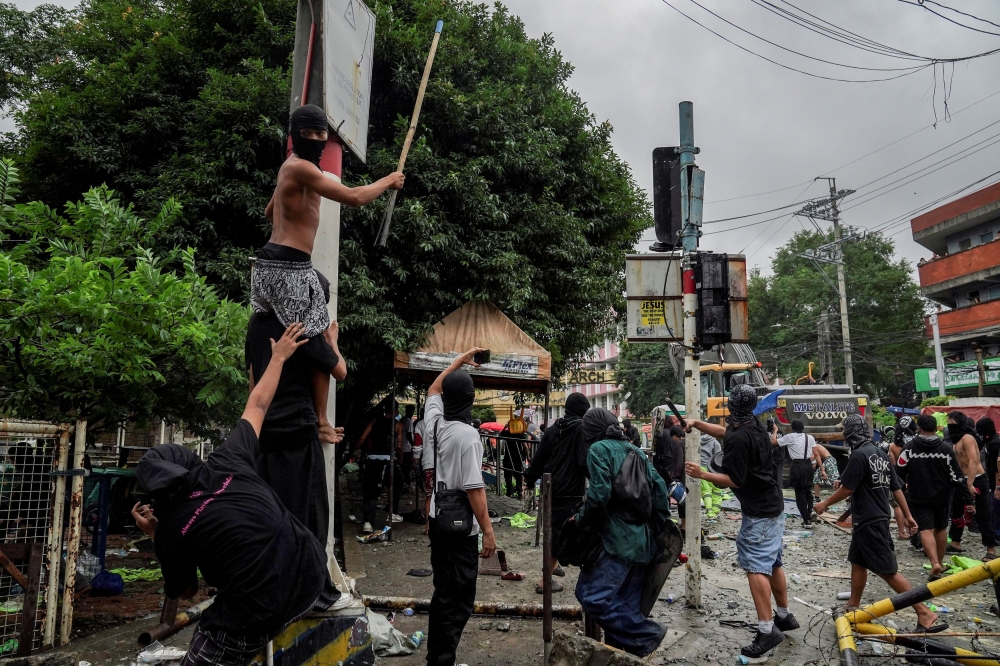
On September 21, tens of thousands of Filipinos braved the sun and rain to gather in Manila’s Luneta Park and later along the EDSA thoroughfare.
Their protest — the “Trillion Peso March” — was not only a cry against systemic graft but also a howl of anguish at nature’s unforgiving fury.
In the Philippines, one of the most climate-exposed countries on earth, the twin burdens of corruption and climate change now feed off each other in a vicious cycle.
The immediate trigger for this outrage was the failure of flood infrastructure during the monsoon season, when three storms wreaked havoc in July.
Thousands of homes were damaged, 38 lives were lost, and billions of pesos in government-funded flood control projects turned out to be little more than paper promises.
Weeks later, Super Typhoon Ragasa arrived, forcing the public to ask: what happened to the nine billion dollars allegedly poured into flood defences?
President Ferdinand Marcos Jr. has since signed an executive order establishing the Independent Commission for Infrastructure to investigate how just 15 firms could corner such massive contracts.
The scandal has ensnared lawmakers and toppled parliamentary leaders, including Senate president Francis “Chiz” Escudero and House speaker Martin Romualdez, the president’s cousin.
For Marcos, this is more than an anti-corruption crusade — it is a referendum on his family’s contested return to power.
Yet the Philippines is not alone. Across Asean, the struggle against climate change is repeatedly undermined by the corrosive effects of corruption.
In Indonesia, reforestation funds have vanished into the pockets of middlemen even as Kalimantan burns each dry season.
In Myanmar and Cambodia, river management projects are diverted toward military-linked companies rather than flood-prone communities.
In Vietnam, promises of green transition compete with allegations of bid-rigging in renewable energy tenders.
Everywhere in the Ring of Fire, where earthquakes, volcanoes, and superstorms remind nations of their geophysical fragility, the moral earthquake of corruption magnifies the damage.
The consequences are devastating.
When public works are compromised, every typhoon, monsoon, or earthquake becomes deadlier.
Bridges collapse under swollen rivers.
Evacuation centers leak or crumble.
Relief funds arrive late, or not at all, because they have already been skimmed off.
In the Philippines, the figure of 50,000 protesters is not just a headcount; it is a mirror of a society pushed to the brink, where trust in government is eroded by every swollen riverbank and every funeral procession.
This cycle is vicious because it is self-reinforcing.
Corruption undermines infrastructure resilience, which in turn magnifies the impact of climate disasters.
The greater the destruction, the greater the inflow of emergency funds and reconstruction budgets — and with them, more opportunities for rent-seeking.
The state becomes locked in a loop where tragedy fuels graft, and graft ensures the next tragedy.
Breaking this cycle requires leadership that is not merely reactive but transformative.
President Marcos Jr has vowed that “no official will escape investigation,” even opening himself to scrutiny.
That pledge, if pursued consistently, could mark a watershed in Philippine governance.
But the test will lie not in rhetoric but in institutional reform: transparent procurement, digital tracking of budgets, independent audits, and robust whistleblower protections.
Without these, the “Trillion Peso March” will become just another episode in the Philippines’ long history of moral indignation, soon overtaken by the next storm.
Asean, too, must take heed.
The region is bound not only by its political “centrality” but by its shared climate vulnerability.
South-east Asia is a cluster of low-lying deltas, volcanic arcs, and typhoon corridors.
The Philippines’ plight today could be Myanmar’s tomorrow, or Indonesia’s the next day.
Climate change respects no border, and corruption erodes every government’s defence.
If Asean does not integrate anti-corruption measures into its climate resilience agenda, the gap between rhetoric and reality will continue to widen — with human lives as collateral damage.
The Bandung Spirit of 1955 once promised liberation from imperialism.
Today, South-east Asia must liberate itself from the homegrown tyranny of graft, which has become as destructive as any foreign domination.
The Ring of Fire will always burn, quake, and flood.
But whether Asean societies are consumed by its fury or withstand it will depend less on natural forces than on political will.
The Filipinos who marched on September 21 are not merely protesters.
They are prophets reminding the entire region that the greatest disaster is not a storm or an earthquake but the corruption that makes their impact unbearable.
If their voices are heeded, perhaps the vicious cycle can finally be broken.
* Phar Kim Beng, PhD, is professor of Asean Studies at the International Islamic University of Malaysia and director of the Institute of International and Asean Studies (IINTAS).
** This is the personal opinion of the writer or publication and does not necessarily represent the views of Malay Mail.


