


JULY 21 — One of the most discussion-provoking aspects of sport is the vagaries of form which inevitably affect all players, however brilliant they are, at some time or other.
Who is playing well and deserves a bigger role? Who is struggling and should be dropped? Thousands of hours of bar-room debate are spent on these points, with unanimity only notable by its absence.
Maybe more than any other sport, cricket provides the most brutal examination of form.
This is partly due to the heavy reliance upon statistical achievements, making the level of personal contribution starkly obvious in a way that doesn’t happen in, for example, football, where it isn’t generally evident at first glance how well every member of the team has performed.
And it is also due to cricket being perhaps the most individual of all team sports, with batsmen and bowlers effectively on their own to sink or fail on their own merits, leaving no hiding place for poor personal performances to be masked by a team victory.
This means that in cricket, it is perfectly normal to be deemed a failure even after your team has won. A batsman contributing two single-digit scores or a bowler going wicket-less while his teammates successfully plundered can be sure to be subjected to a forensic examination, putting every player mercilessly under judgment each time they cross the boundary rope.
Another peculiarity of the sport is the lack of substitutions, forcing the eleven players who start each match to play through the entire five days unless struck down by injury.
If football rules applied to cricket, it would make perfect sense for out of form players to play the first innings but then be replaced by a substitute for the second if they were continuing to struggle. But that option is not available to cricketers, who are either in or out for the entire duration.
At the moment, the fickle nature of form and consequent severe public reactions, are being experienced to their fullest by several members of the England and Australia teams as they progress through the Ashes series, which the Aussies tied at one apiece this weekend with a crushing victory in London.
One of the key contributors to Australia’s victory was Mitchell Johnson, who delivered a perfect exhibition of aggressive but controlled fast bowling on his way to six wickets at an excellent average of 13.
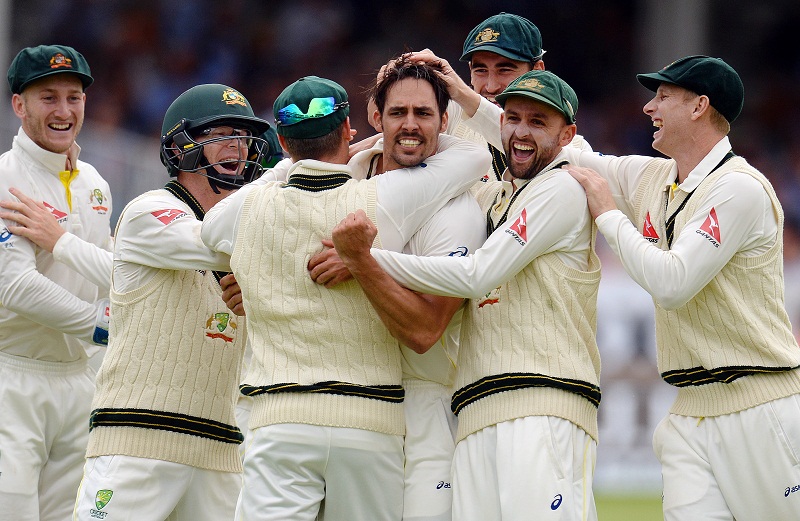
Just a week previously, however, many fans and experts alike had been advocating dumping Johnson from the team after he struggled badly in the first test, seemingly further strengthening the argument that he can only play at his best on home turf — a debate which nobody is attempting to reopen right now.
At the other end of the form scale, England’s most experienced player, Ian Bell, is now finding his place in the team come under severe scrutiny after another pair of failures, extending his sequence of innings without a century to 12.
Bell, it is clear, is desperately lacking the confidence necessary for batsmen to play at their full potential, and the argument in favour of leaving him out for the third test, which starts next week in Birmingham, has plenty of merit.
From any objective long term viewpoint, Bell remains a far superior player to any of those who are now being touted as possible replacements; at same time, however, it is also difficult to see him regaining his touch in the short space of time remaining between now and the next game.
Being brutal, the logical thing would be to leave him out, draft in Jonny Bairstow or James Taylor on a temporary basis in the expectation that even if they can only contribute 40 runs, it could well be 30 more than a badly out of form Bell. And then, once Bell has regained his form, he could be brought straight back into the team in recognition of his overall superiority.
As a human activity, however, cricket is not an entirely logical pursuit, and decisions cannot therefore be taken on statistical probabilities alone.
A cricket team is a group of emotionally insecure and unstable people, and like any collective unit they can only function at their maximum capacity when they are allowed to feel comfortable, supported and protected.
There has to be a balance, of course: players cannot take their place in the team for granted and allow their standards to slip, but a climate of fear and uncertainty is no way to run an international cricket team, where players spend more time in each other’s company than any other sport organisation.
Dropping Bell and introducing another player on a short term whim would send a terrible message to the rest of the team. It would make them feel that if even their most senior player, and an obviously very talented one, can be simply discarded because of a few bad scores, then nobody’s place is safe. That is not the kind of environment to encourage high performance under pressure.
Bell is in bad form, true. And another player may well score more runs than him in the third test, equally true. For the sake of the team, however, England should stick with him and wait for form’s unpredictable wheel of fortune to turn in his favour.
After all, it worked for Mitchell Johnson.
* This is the personal opinion of the columnist.


