


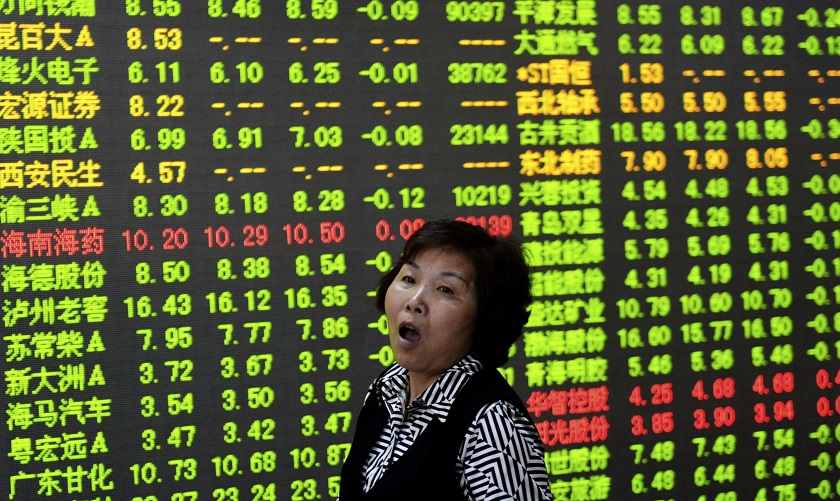
HONG KONG, Sept 14 — Shanghai led most regional markets down today after another round of disappointing Chinese data at the weekend, with investors concentrating on a crucial US interest rate decision at the end of the week.
There was little reaction to news that Beijing intends to overhaul its vast state-owned firms in a bid to give a boost to the world’s number two economy, while an earlier rally in some riskier assets petered out.
China yesterday released another set of figures that underline weakness in its huge economy — the main driver of global growth — following soft reports last week.
The government said growth in industrial production increased below expectations in August while retail sales accelerated a little more than forecast. And fixed asset investment grew in January-August at its slowest pace in 15 years.
A gauge of manufacturing this month showed the sector contracting in August, while inflation in consumer prices rose but those at the factory gate fell at their fastest pace in six years owing to slowing overseas demand and a slack property market.
While the data is soft, analysts said it could lead to further monetary easing following five interest rate cuts since November.
“The flood of August data shows that the Chinese economy is still struggling, despite efforts to provide policy support,” Richard Jerram, chief economist at Bank of Singapore, said in a report.
“Soft data should not be a surprise, as it was already implied by the August (manufacturing figures), but it could spur discussion of more aggressive fiscal policy measures to boost growth.”
In equities trade Shanghai ended 2.67 per cent down and Seoul shed 0.51 per cent. Hong Kong was 0.14 per cent lower in late trade.
Tokyo ended 1.63 per cent lower, hit by big losses in telecom firms after media reported comments from Japan’s prime minister on the need to reduce mobile phone fees.
Sydney closed 0.50 per cent higher.
China overhaul plans
Beijing also unveiled a broad set of reform guidelines yesterday to partly privatise its vast state-owned companies aimed at making them more competitive overseas and increasing transparency.
The move comes after leaders in 2013 said they wanted the market to play a greater role in the economy, easing government influence on key sectors such as transport, energy production and arms manufacturing.
Among the reported changes are efforts to modernise SOEs (state-owned enterprises), improve management of state assets and diversify their ownership structures through “mixed ownership”—or the introduction of “multiple types of investors”—ultimately meaning more private shareholders or capital.
But Wu Kan, a Shanghai-based fund manager at JK Life Insurance, said: “The economic reports don’t look good so investors prefer to be on the sidelines.
“The SOE reform rules were widely expected by the market and aren’t very detailed, therefore the reaction is limited.”
The main focus this week is on the Federal Reserve’s policy meeting, with hopes it will hold off hiking borrowing costs until later in the year.
The central bank is expected to announce a lift-off before 2016 but its decision has been muddied by the latest global volatility caused by concerns about China’s economy and after Beijing announced a shock devaluation of its yuan last month.
“Trading will remain volatile ahead of the (Fed policy) meeting,” Bernard Aw, a strategist at IG Asia in Singapore, said.
“Sunday’s (yesterday’s) data reinforced concerns about China’s economy slowing down. Investors may expect more stimulus in the pipeline.”
US dealers ended last week on a high with all three main indexes ending more than two per cent higher.
An initial rally in higher-yielding investments in Asia gave way to a move to safety.
The dollar edged down to 120.24 yen from 120.57 yen Friday in New York, while the euro was at 136.60 yen against 136.64 yen.
The yen is regarded as a safe bet in times of crisis and turmoil, while the dollar is also feeling the pinch from uncertainty over the Fed rate decision.
The greenback also eased against some emerging market currencies, with the South Korean won, Malaysian ringgit and the Taiwan dollar all strengthening. — AFP


