


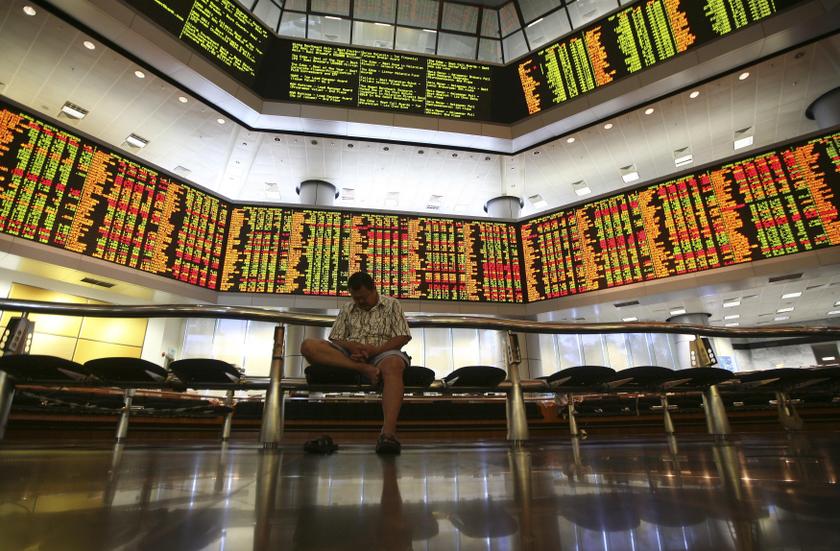


KUALA LUMPUR, Feb 4 — Share prices on Bursa KL were sharply lower today, reflecting falls in regional bourses amid deepening concerns about the health of emerging market economies.
The benchmark KLCI index fell 23.24 points to 1780.79 at midday close.
Bursa KL resumed trading today, having been closed since Friday to mark public holidays.
The drop was not surprising as investors took their cue from abroad. Stock markets from Tokyo through Hong Kong and Singapore were all down. Shares in New York also closed down overnight.
Worrying US economic data, softer economic growth in China and the possible effects on other emerging markets have been weighing on sentiment along with concerns that investors will pull out of the region as the US rolls back its super-easy monetary policy.
It didn’t help that recent rhetoric on the region had added to investors’ worries.
If anything, comments from billionaire hedge fund manager, George Soros, at the start of the year set the tone.
Soros identified slowing growth in China as the biggest economic worry facing the globe.
“The major uncertainty is not the euro but China. The growth model responsible for its rise has run out of steam,” he wrote.
Backing that up data from China showed that the world’s second biggest economy isn’t growing as fast as it used to. At 7.7 per cent, China’s GDP growth in 2013 was the same as in the previous year and the slowest since 1999 which marked the end of the Asian financial crisis.
China and the US are among Malaysia’s biggest trading partners.
Over in Malaysia, growth has held up well, buoyed by robust domestic spending. But the widespread cost of living rises as the government cuts back on subsidies are expected to weigh on spending and a rise in interest rates will hurt borrowers.
Household debt levels are around 80 per cent of GDP while property prices in areas such as Kuala Lumpur, Penang and Johor Baru have risen rapidly, helped by low interest rates.
Jesse Colombo, a Forbes columnist, who famously criticised Singapore’s de facto central bank for letting a bubble build up under its watch, made equally worrying pronouncements about Malaysia.
“Malaysia’s bubble will most likely pop when China’s economic bubble pops and/or as global and local interest rates continue to rise,” he wrote in Forbes.
“The resumption of the US Federal Reserve’s QE taper plans may put pressure on Malaysia’s financial markets in the near future,” he added.
More recently, a write up in the New York Times singled out Malaysia as an emerging market economy that could be heading for trouble.
“The widespread worry about emerging markets — investors are also nervous about Brazil, India, Indonesia, Thailand, Taiwan and Malaysia, to name a few — can in some ways be traced to the fact that they did remarkably well during the credit crisis that began in 2008,” the article said, echoing the views of the Forbes columnist.
Data from Malaysia’s central bank showed that foreign holdings of Malaysian government bonds at the end of 2013 reached RM137.1 billion up from RM129.7 billion at the end of the previous year, indicating that foreigners looking to dump Malaysian assets could do a lot of damage.


