


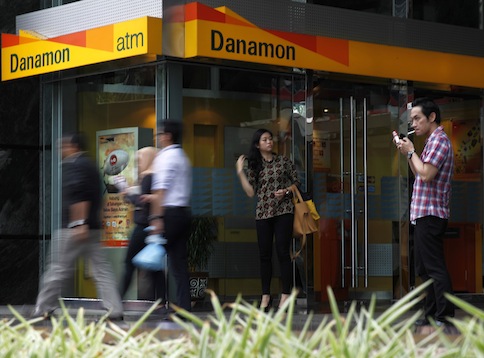


SINGAPORE, Aug 2 — After the collapse of the DBS deal, the best bet of Singapore sovereign investor Temasek Holdings to sell its stake in Bank Danamon Indonesia Tbk PT is to find a Japanese or Chinese bank keen to expand in Southeast Asia’s biggest economy.
After 16 months of negotiations, Singapore’s DBS Group Holdings Ltd decided to drop its bid for Bank Danamon, killing a US$7.2 billion (RM23.2 billion) takeover that was set to be Southeast Asia’s biggest bank M&A.
The deal stumbled after Indonesia in May limited single ownership in domestic banks to 40 per cent from 99 per cent. DBS had sought to buy a controlling stake in Indonesia’s sixth-largest lender from Temasek, which owns about 67 per cent in Danamon and a 29 per cent stake in DBS.
For foreign investors keen to tap Southeast Asia’s booming economies, gaining a controlling stake is key to make their investments worthwhile.
Some lenders, however, may be willing to settle for a minority stake just to get their foot in the door, said Melissa Ng, a partner at Clifford Chance who specialises in Southeast Asia M&A deals.
Japanese banks may be among these interested parties. So far this year, Japanese banks and insurers have launched deals worth US$8.15 billion in Southeast Asia to beat slower growth at home.
Mitsubishi UFJ Financial Group was among the bidders interested in buying Temasek’s stake in Bank Danamon and was waiting in the wings up until late last year, sources familiar with the matter said.
MUFG is unlikely to approach Temasek any time soon as just this month it made a US$5.6 billion bid to buy Thailand’s Bank of Ayudhya Pcl. The Japanese lender, however, may still be interested in Indonesia, a source with knowledge of MUFG’s strategy said.
“MUFG is very busy right now, though that does not preclude them from doing anything else,” the source said.
MUFG was not immediately available for comment.
Other potential buyers may come from China, where the government has encouraged banks to expand into regions where Chinese companies are active.
Chinese energy and resources companies have interests in Indonesia and among the larger lenders, Industrial and Commercial Bank of China and China Construction Bank have shown interest in buying into Southeast Asia, banking sources said.
Temasek may also be approached by its Malaysian counterpart, sovereign fund Khazanah Nasional Bhd, which has been aggressively bidding for stakes in Southeast Asian banks and insurers, the sources added.
Rivalry, however, may get in the way. “Khazanah doesn’t like to be seen helping Temasek make a huge profit because, they themselves are a financial investor,” a Hong Kong-based investment banker said.
Selling sooner or later
Bank Danamon is one of two non-Singaporean lenders that Temasek has a majority stake in — the other is a Pakistani bank.
Sources said the Singapore state investor is seeking to exit from these foreign lenders. In the case of Danamon, Temasek had wanted to reshuffle its portfolio so that all its exposure to the Indonesian bank would be through DBS.
“If you look at where Temasek is going and what sort of stakes they are pursuing, Danamon is a legacy investment. It doesn’t make sense in the new Temasek,” said a source familiar with Temasek’s investment policy.
“If someone comes and knocks on the door and says ‘would you consider talking to us’, then why not,” the source added, declining to be identified as he was not authorised to talk to the media.
Temasek’s Fullerton Financial Holdings (FFH), which owns the Danamon stake, said it remains a long-term investor in the Indonesian lender, signalling that it is no hurry to sell.
“As a long-term investor in financial services, FFH remains committed to working with all stakeholders in Indonesia to grow and strengthen Danamon,” Tow Heng Tan, board director of FFH, said in a statement.
Temasek, headed by Ho Ching, the wife of Singapore’s prime minister, Lee Hsien Loong, manages about US$170 billion and financial services accounted for 31 per cent of its portfolio at the end of March.
A Temasek-led vehicle bought a controlling stake in Bank Danamon in 2003 for an undisclosed price and subsequently increased its stake to 67.4 per cent over the next few years. — Reuters


