











KOTA KINABALU, July 24 — A Taiwanese developer says it will spend the next decade restoring coral reefs, protecting turtle nesting beaches and reforesting Sabah’s Mengalum Island before laying a single brick for what it hopes will become the world’s first net-zero carbon island resort.
The decade-long conservation effort forms part of Sinyi Group’s more than RM1 billion investment in two tourism projects in Sabah, in what the company says is a long-term commitment to developing luxury destinations without compromising the state’s fragile marine ecosystems.
“We want to conserve and enhance the island before development,” Sinyi Realty Malaysia assistant general manager Henry Chou told delegates recently at the Sabah Asia-Pacific Impact Investing for Sustainable Development Summit.
“There are coral reefs that are only beginning to recover, so we are taking a long-term approach,” he said.
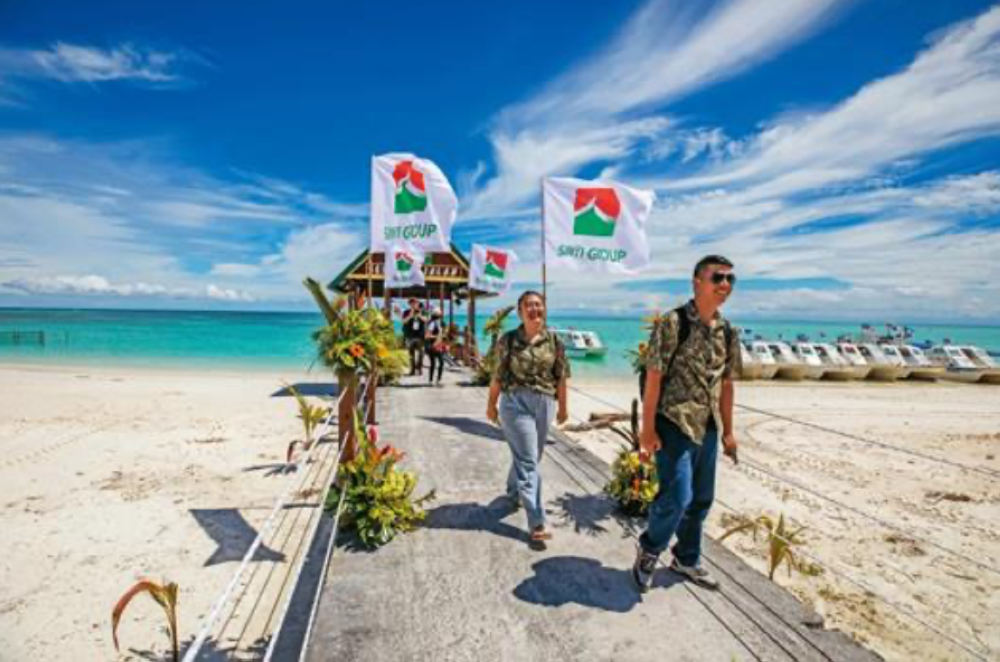
Located about 56km north-west of Kota Kinabalu, Mengalum Island is an uninhabited tropical island known for its white sandy beaches, crystal-clear waters and coral reefs.
The island was once used as a cattle quarantine station before becoming a popular day trip destination for picture-taking snorkeling, diving, and deep-sea fishing.
Sinyi acquired about 300 hectares, covering most of the island, in 2019 with plans to build an ultra-low-density luxury resort that it says will balance high-end tourism with environmental conservation.
Before construction begins, the company plans to rehabilitate coral reefs damaged by decades of fish bombing, restore turtle nesting habitats, carry out reforestation, improve soil conditions, conduct biodiversity and hydrological studies, and develop nature-based carbon solutions as it works towards internationally recognised carbon certification.
The completed resort is planned as a low-impact development, with about 95 per cent of its electricity expected to come from solar power supported by battery storage systems.
Sinyi is also working with Sabah Parks on turtle conservation and reforestation programmes.
Net zero carbon means balancing the greenhouse gases a project emits by removing or offsetting an equivalent amount, resulting in no net emissions.
The Mengalum project is one of two major tourism investments Sinyi is undertaking in Sabah.
The other is the InterContinental Resort at Melinsung in Papar, a beachfront development comprising 11 buildings and about 450 rooms that is expected to open next year.
Chou said Sabah remained an attractive investment destination despite challenges such as shortages of construction materials and technical expertise that could slow project implementation.
“Progress can sometimes be slow because there are insufficient building materials and there is still a lack of technical knowledge,” he said.
“But I trust that through collective effort, Sabah can develop sustainable tourism while generating appropriate profits.”
Chou said the company’s decision to invest in Sabah stemmed from a family holiday more than a decade ago.
“My parents came here 15 years ago and fell in love with Sabah’s beauty,” he said.
“They showed me a piece of land then, and today my brother and I are fully committed to investing here.”
He said Sabah’s forests, mountains, mangroves and marine ecosystems gave the state a unique advantage in sustainable tourism.
“We believe it would be a shame if the world never gets to experience Sabah’s beauty,” he said.
“We hope these projects will allow more people to discover it.”