


PUTRAJAYA, Jan 21 — Balamah, who was born in this country before Merdeka, died before she could be recognised as a Malaysian, the Court of Appeal heard today.
Lawyer Annou Xavier said Balamah’s other siblings — who were also born here before Merdeka — had already been registered as Malaysians.
Annou described the National Registration Department (NRD) as having “upgraded” Balamah’s citizenship status from the initial “Bukan Warganegara” (Non-citizen) in an 2011 document, to “Belum Ditentukan” (Yet to be determined) in her birth certificate issued in 2019.
But before NRD’s process of interviews regarding Balamah’s case could be completed, she died on January 27, 2024, he said.
“So this is a case, if I may use the layman’s term - ‘We are near there, but not really there’. ‘Jauh di mata, dekat di hati’,” he told the Court of Appeal today.
Just months before her death at age 71, Balamah’s son Velmurugan had in a September 1, 2023 statutory document said he was making efforts to apply for her citizenship under the Federal Constitution’s Article 16.
Article 16 enables those born in Malaysia before Merdeka Day to be registered as Malaysians, if they apply to the Malaysian government and meet three conditions.
Annou confirmed to Malay Mail that Velmurugan had wanted to file the Article 16 citizenship application for Balamah, but that it had not been done by the the time she died.
Because of Balamah’s citizenship status, Velmurugan himself is still not a Malaysian despite having lived his whole life here.
“This is a classic case of generational statelessness, not only this case, but there are many other cases out there,” Annou argued, referring to how Velmurugan is currently stateless just like his late mother.
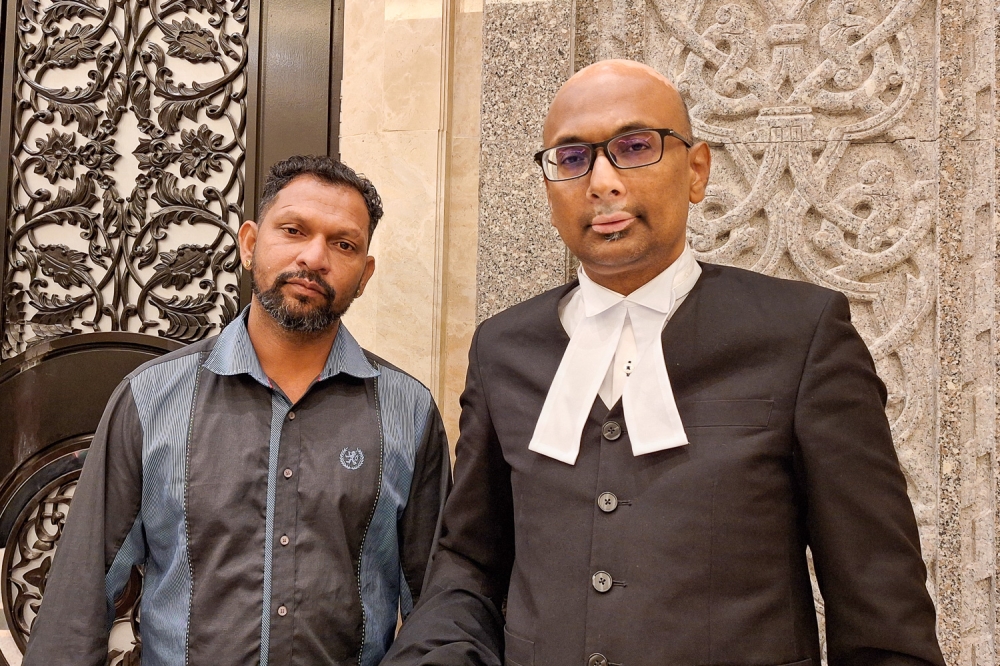
Born in an estate in Tanjung Malim, Perak, the 38-year-old Velmurugan has never been to school.
He grew up without a birth certificate as his uneducated mother did not know of the need to register his birth.
Velmurugan’s birth was finally registered in 2011, with his birth certificate saying that he is a “non-citizen” and stating Balamah to be his mother with a “non-citizen” status.
Balamah’s birth was finally registered in 2019, with her birth certificate saying her citizenship status was “yet to be determined”.
The NRD said Balamah’s citizenship status was “yet to be determined”, as it had through interviews received inconsistent information over whether Balamah was born in Tanjung Malim or Kuala Lumpur and the actual number of her siblings.
Velmurugan’s aunt and two uncles — three of Balamah’s siblings — were previously registered as Malaysians and received MyKads.
For example, Balamah’s sister K. Parawathy who was born locally in 1946 had been registered as a Malaysian in 1967 under Article 16.
A DNA test had shown Balamah is the biological sister of Parawathy, and that Velmurugan is Balamah’s biological son.
Ultimately, Velmurugan said both he and his mother should have automatically been Malaysians under the Federal Constitution, as they were born in Malaysia and were not born citizens of any other country.
Federal counsel Safiyyah Omar, who represented the NRD, the Home Ministry and the Malaysian government, however disagreed that this is a case of “generational statelessness”.
Safiyyah said Velmurugan’s citizenship case was different from the recent Perak case of generational statelessness at the Court of Appeal, where K. Kamaladevi, her children and grandchildren successfully won citizenship declarations in November 2025.
Among other things, Safiyyah said Balamah’s “Belum Ditentukan” citizenship status meant she was still not a Malaysian citizen, and argued Velmurugan had failed to show definitive proof in order to automatically be a Malaysian under the Federal Constitution.
Lawyer Ranee Sreedharan held a watching brief today for DHRRA Malaysia, a local non-governmental organisation which has been assisting stateless persons in their citizenship cases.
The Court of Appeal has scheduled January 26 as case management in order to fix a decision date for this case.
Recommended reading:


