












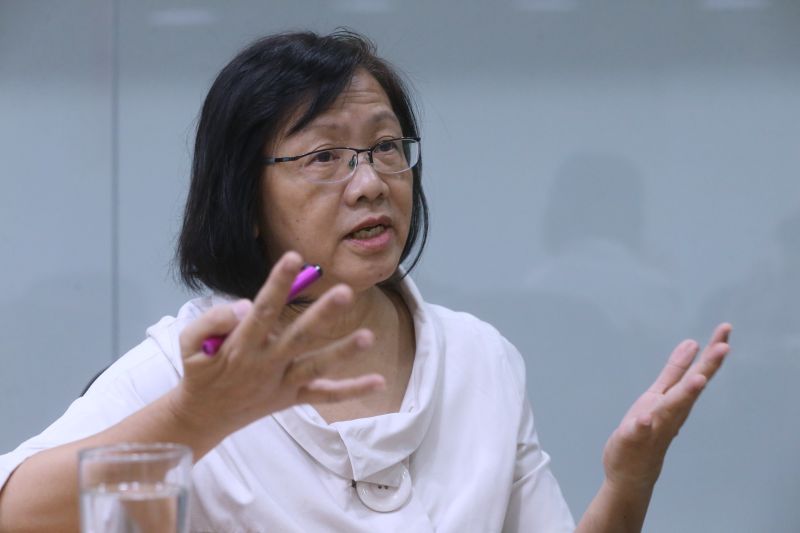


PETALING JAYA, March 17 — In her maiden run for office, activist Maria Chin Abdullah plans to push for local council elections, electoral reform, and laws protecting women’s rights.
The former Bersih 2.0 head, who wants to contest the 14th general elections (GE14) under a Pakatan Harapan (PH) ticket without formally joining one of its component parties, believes that local council elections would ensure more accountability and encourage greater participation from women.
“If you want more representation, just look at the local council elections,” Maria told Malay Mail in an interview yesterday.
“I will raise the discussion. Put in a Private Member’s Bill and raise the discussion for the local council elections. I think it is also important for women,” she said.
Maria said as women tend to be more well-read in community and local council-related issues, they can implement or call for better policies.
She noted, however, that it was very difficult for states to restore local council elections, saying that the Local Government Act 1976 and the Federal Constitution must be amended.
“And if you do not have the two-thirds majority, you can’t make change,” said Maria.
PH, however, did not raise the issue of local council elections in its manifesto for GE14, despite pledging to reform the system.
The Opposition coalition’s “Buku Harapan” (Book of Hope) merely states that the Local Government Act will be “amended” to increase the accountability of local councils.
Previously, the DAP-led Penang government attempted to revive the local council elections, only to lose its bid at the Federal Court.
On whether she would join a party to get a seat, Maria insisted she would stay independent and leave the decision on her proposed candidacy to PH.
“People need to shift their mindset. Change. What is the bigger picture? The bigger picture is not whether I am attached to a political party or not. And please look at me as Maria Chin Abdullah, and not Bersih,” she added.
Maria, who has led three anti-corruption and electoral reform rallies under the Bersih 2.0 movement for free and fair elections, said she felt that Parliament would be her next best platform to demand for better policies and debates, as she was angry with the alleged inefficiencies of the Election Commission and the government.
In the interview, Maria said that electoral reform will continue to be her main agenda, followed by women’s issues, environment issues that mainly surround sustainable development, and local council elections.
She lamented that while the government had introduced initiatives to have women make up 30 per cent in decision-making roles, this was primarily aimed at the corporate sector alone. This, she said, could be addressed with a Gender Equality Act.
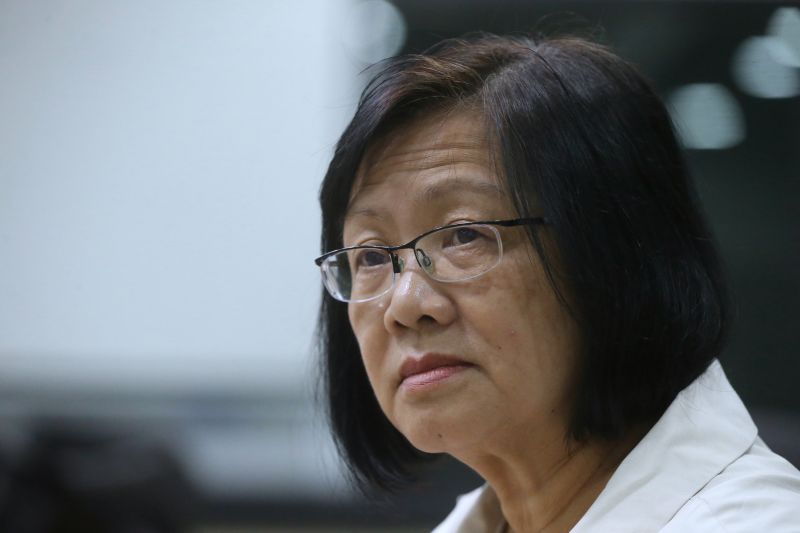
Maria also said she will push the government for specific policies and laws dealing with sexual harassment and rape.
“For instance, domestic violence. We have still been struggling with acts which does not give full (definition for) rape. There are many forms of rape, but ours don’t recognise many of these rapes that are happening,” she added.
She said she would also be pushing for sex education in schools under the Gender Equality Act to better mitigate such problems and to bring to light the many forms of sexual misconduct.
On March 6, PH chairman Tun Dr Mahathir Mohamad said the pact will discuss with Maria on her supposed candidacy in the general election.
The former prime minister said his pact has not settled on where the activist might contest, in the event she is fielded for GE14.
Maria officially resigned from polls watchdog Bersih 2.0 on March 6 after serving the movement for 10 years. She then announced that she would enter active politics.
Despite suggesting that she will contest on a PH ticket, Maria had also insisted that she will not join any political party.
She claimed that she must remain independent in order to pursue her reform agenda.
Maria further insisted that she be given a federal seat to contest, saying that it would not be possible to push for institutional reforms as a state lawmaker.