


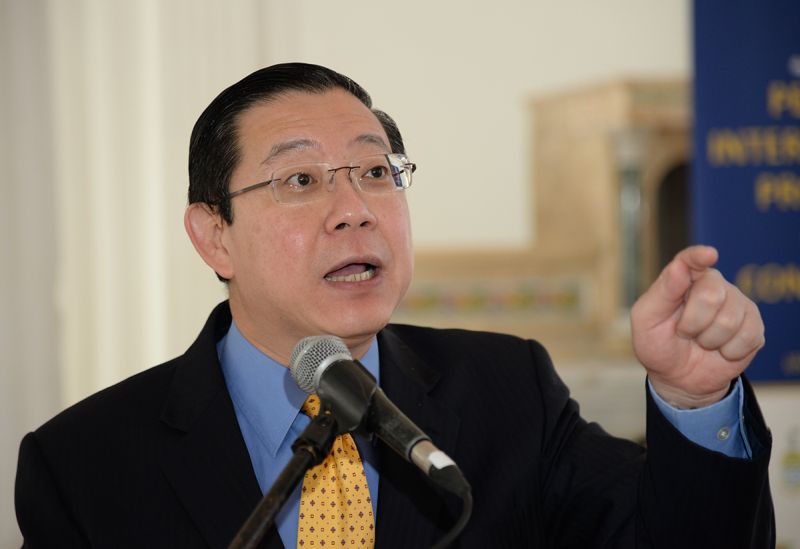
GEORGE TOWN, June 12 — Revenue from a new tourism tax should be channelled back proportionately to the states where it is collected, Penang Chief Minister Lim Guan Eng suggested today.
Lim, who is DAP secretary-general, said this could then be used to promote the industry in the specific states, when commenting on the new tax that will be levied on hotel stays starting July 1.
“So, for example, if they collected RM20 million in tourism tax in Sarawak, they should return the RM20 million to Sarawak for the state to promote tourism,” he said.
Citing a similar tax in Penang, Lim said the revenue was used to encourage tourism in the state specifically.
The Penang government introduced a hotel room fee in 2014 in which visitors pay RM3 per room night in hotels above four stars and RM2 per room night for hotels three-star and below.
The state collected RM19,764,972 in such fees between 2014 and September 2016.
These were used for promotional and marketing activities by the Penang International Convention and Exhibition Bureau (PICEB) and Penang Global Tourism (PGT).
“We have a committee that decides on how the revenue collected from the fee is spent on tourism promotion activities and tourism stakeholders, such as the Malaysian Association of Hotels (MAH) Penang chapter chairman Khoo Boo Lim, are in the committee,” Lim added.
However, Lim also noted that there was resistance to the new tax, such as from Sarawak that withdrew from the Malaysian Tourism Board today following a row between the state’s tourism minister and his federal counterpart.
“Maybe the federal government can consider deferring the implementation of the tax first,” Lim said.
The new tax will be levied starting July 1 on all patrons at a rate of RM20 per room night in five-star hotels, RM10 at four-star outlets, RM5 for three- and two-star hotels and RM2.50 for orchid and other non-rated accommodation premises (RM2.50).
Tourism and Culture Minister Datuk Seri Nazri Aziz previously said the money collected would be spent to promote tourism nationwide, when telling Sarawak it would benefit disproportionately from the new tax.


