


PETALING JAYA, Sept 14 — Malaysians who say bah when they mean lah have been drawing blank looks from their audience in the peninsula over past years.
The reason for the linguistic complication is the fact that they are from Sabah and Sarawak where lah is little known and bah is the norm.
The words are suffixes used at the end of sentences by Malaysians on both sides of the South China Sea.
And bah is increasingly being heard from Sabahans and Sarawakians studying, working or staying here for good.
So are words like the Sarawakian kitak (you) and kamek (me) which are being heard more regularly alongside the Sabahan sia (I) and ging (friend).
It is part of the process of introducing Sabahan and Sarawakian culture to “orang Malaya” as people from the peninsula have been known in the two states since before Malaysia’s inception in 1963.
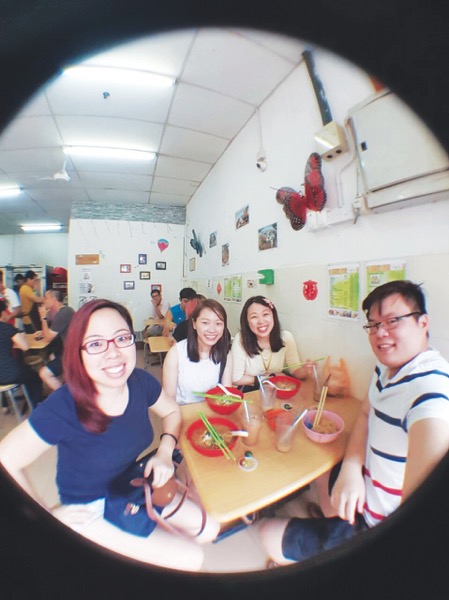
Also included is a way of life which involves Sarawak laksa, kolo mee and kueh chap (rice noodles cut into squares) and ngui chap (beef noodles) from Sabah.
There are restaurants here specialising in Sarawakian cuisine that are increasingly being patronised by Malays, Chinese and Indians. There are a few eateries that specialise in Sabahan food as well.
Harvest festivals that were little known over the years here like Gawai (Sarawak) and Kaamatan (Sabah) are being increasingly celebrated here with open houses for people from the two states.
Of course, bah and kamek are often heard at the restaurants.
Some churches have also introduced services in Bahasa Malaysia for servicemen, those in the police, workers and university students from the two states to accommodate their needs.
Sarawakians and Sabahans have also brought new meaning to unity to their peninsular counterparts with their ability to mix freely.
Copywriter Huixin Yeo, 28, from Miri, Sarawak, said she cannot help but use bah despite being here for the past seven years.
“I still use bah when I talk or text people. Sometimes they ask me ‘what is that?’ and I tell them it is just an expression like lah,” she said, adding Sarawakian food was increasingly available here.
She said she would highly recommend a restaurant in USJ 14, Subang Jaya, for Sarawak laksa.
“Sarawak laksa is also available in Lucky Garden, Bangsar, and a restaurant in Kelana Jaya,” she said.
Clerk of works Idzuan Ismail, 29, of Suluk, Lundayue and Chinese descent, who comes from Kota Kinabalu, said he would get strange looks when he blurted out bah in the middle of a sentence.
“I have lived here for seven years. I try to only use bah when I talk to Sabahans or Sarawakians but sometimes it just slips out,” he said.
He said some of them tried to use bah in return but got it all wrong much to the amusement of Sabahans or Sarawakians.
“It is nice to see though that they are willing to learn,” he said, adding that such exchanges led to a better understanding of what constituted Sarawak and Sabah.
“I try to mingle with the people here. For me, everyday is Malaysia day as the people are becoming closer.”
Accountant Soon Ai Ling, 29, also from Miri, said Sarawak laksa must have bee hoon “because that is how it is done back home”.
“I sometimes go out during the weekends to satisfy my craving for Sarawakian food,” she said.
Creative and brand assurance executive Sabrina K. Hiew, 29, a Sino-Kadazan from Kota Kinabalu, tried to teach her friends how to properly use bah but often failed.
“They sometimes get it right but fail on most occasions. They use the bah everywhere,” she said.
She said Sabahan food was difficult to find here but could still be obtained in some places.
For Sabahans, an essential condiment daily is “Borneo chilli padi”, served with almost every dish in the state. They bring back bottles of the sauce every time they return from Kota Kinabalu.
“No chilli paste here can compare to it. It is one of the things I look forward to when I go back,” said Sabrina.
She said people here were friendly and tried to understand the cultures in the two states.
Her Sabahan accent in both English and Bahasa Malaysia often gave her away even as she tried to assimilate here. But her accent is an integral part of her and she is not willing to change it to fit in.


