


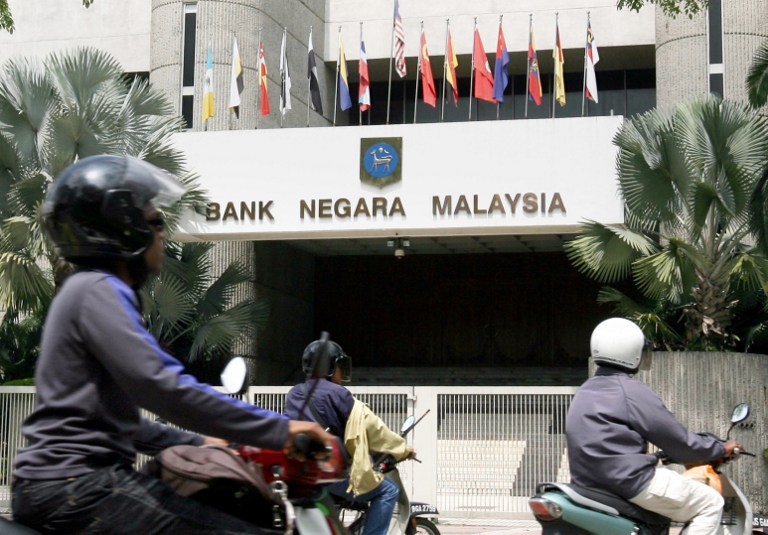
KUALA LUMPUR, Jan 28 — Bank Negara Malaysia's (BNM) move to lower the mandatory reserve ratio for local banks will provide needed liquidity to address the outflow of foreign funds caused by political controversies here, according to Moody's Investors Service Singapore.
Commenting on the central bank's unexpected decision to cut the statutory reserve requirement (SRR) ratio by 0.5 percentage points to 3.5 per cent last week, the ratings firm said the move could reintroduce as much as RM6.1 billion into the local financial system.
Moody's also commended BNM for holding the overnight policy rate steady at 3.25 per cent, saying that lowering this would have caused Malaysia's already heavily-indebted households to increase their borrowings.
“The BNM’s measures aim to address tightening liquidity in the system following slowing deposit growth and capital outflows.
“The latter is as a result of political challenges surrounding the ruling party and investor aversion to emerging market exposure,” Dan Pek, an analyst with Moody's Investors Service Singapore, said in a statement today.
According to Moody's data, approximately RM24.5 billion in foreign capital exited the country in the third quarter of 2015, during which time the ruling government had been embroiled in a controversy over political funding.
The matter has since been resolved after the country's Attorney-General said that there was no criminal wrongdoing involved in the controversy.
Moody's also said BNM's policies would be positive for local banks by easing the competition for deposits, naming Public Bank and CIMB bank as the main beneficiaries from the improved net interest margins (NIM).
Interbank placements with BNM fell to RM108 billion in November last year, nearly half the peak level of R208 billion in 2008, illustrating the severity of the liquidity problem among local financial institutions.
“The central bank’s measure will also stabilise Malaysian banks’ NIMs, which have tightened over the past year owing to an elevated cost of funding. The average NIM among Malaysia’s six large banks fell to 2.23 per cent in September 2015 from 2.41 per cent a year earlier,” Pek wrote.
When announcing its decision last week, BNM said it could not state how much money the reduction in SRR will free up for banks to lend and possibly stimulate the economy, noting that this would be dependent on the financial standings of the individual institutions.
It said the reduction is part of efforts “to ensure sufficient liquidity in the domestic financial system, and to support the orderly functioning of the domestic financial markets.”
Malaysia was hit by an extended foreign capital outflow in 2015, in which tens of billions of dollars left the local markets and financial institutions.
The situation was exacerbated by the fall in the ringgit's value, now around 4.23 to the US dollar, which caused Malaysian corporations to draw on their local reserves to finance the resultant increase in their foreign borrowing costs.
The ringgit was Asia’s worst-performing currency in 2015, losing approximately 18 per cent against the US dollar.


