
















KUALA LUMPUR, Jan 25 — After the deadly attacks in Jakarta, the Indonesian government is weighing legislation to prevent its citizen terrorists from returning home.
While Putrajaya already has a tough stance on terrorism, some experts are of the opinion that Malaysia with hundreds of citizens in radical groups abroad might consider a similar approach to keep its homegrown militants from coming back and spreading their ideologies.
“Preventing people from going or returning is a good measure, but it needs to be carefully implemented,” Ahmed Salah Hashim, an associate professor in military studies at the Rajaratnam School of International Studies in Singapore, told Malay Mail Online in a recent email interview.
The expert in irregular war and counter-terrorism strategy and policy said incarcerating returnees would work, but also warned that this reactive measure may backfire if the militant is locked up in the same cell with regular detainees.
“If all are put in the same prison, they can foment and plot [an attack] and this is a mistake the US made in Iraq,” he said.
Chia Shuhui, a Malaysian analyst at BMI Research in Singapore, said prevention laws were better than waiting to arrest a terrorist and subsequently charging him or her under available laws such as the Prevention of Terrorism Act (Pota) and Security Offences (Special Measures) Act (Sosma).
“They are better than waiting to arrest a terrorist who enters the country,” she said in an email response to the Malay Mail Online.
“Arresting a terrorist upon entry into the country also presents other difficulties, given how porous both Indonesia and Malaysia’s borders are.”
However, the downside to preventive measures was that they require close coordination across many ministries, the strengthening of the legal system, and more financial resources to empower the police and various agencies, she said.
And while preventing the return of homegrown militants would curb the spread of radical ideology, Chia said the move does not remove the root of the problem.
“It would also be difficult to enforce given that the identities of those who have gone overseas are not always known,” she said.
Another anti-terror expert Dr Sally Leivesley also supported the idea of a prevention law to keep terrorists from returning, but emphasised that the fundamental step to tackle the root cause of radicalisation was through education.
“To reduce the long term threat of increasing radicalisation which (depending on culture) may weaken the persuasion of the Islamic State, an integrated education programme for children from age nine in all schools is needed,” the principal adviser of Newrisk Limited, a London-based crisis and security consultancy, told Malay Mail Online in an email.
The catastrophic and extreme risk specialist said education must start with children, adding that they should be taught the danger of terrorism as well as persuasion through the Internet, friends and family members.
The government however, believes it has enacted sufficient legislation to deal with citizen terrorists.
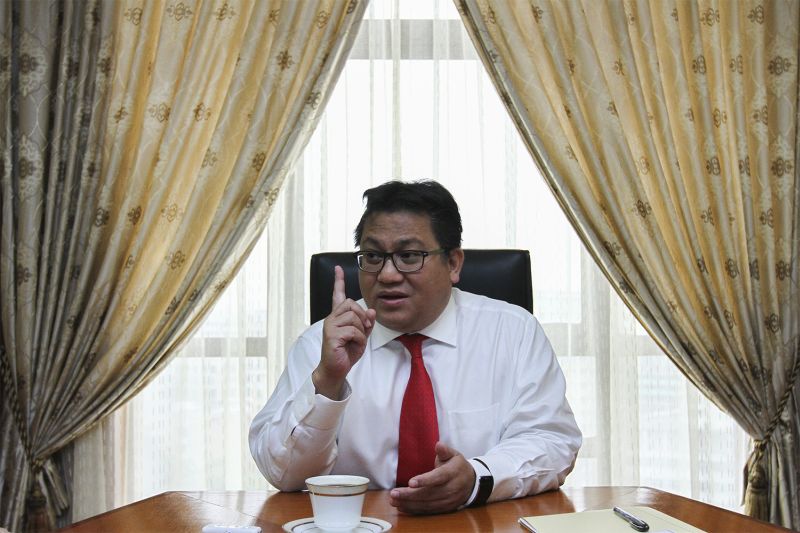
Putrajaya’s take
Yesterday, Inspector-General of Police Tan Sri Khalid Abu Bakar announced the arrest of seven Malaysians suspected of plotting attacks within the country.
The police also recently arrested a 28-year-old man at an LRT station suspected of travelling from Terengganu to stage a suicide attack at a karaoke outlet or a pub in the federal capital.
Deputy Home Minister Datuk Nur Jazlan Mohamed said the country’s counter-terrorism efforts have advanced considerably, pointing to the recent capture of returnees and suspects.
“One or two months ago, we caught a young Malay boy coming back from Syria through KLIA,” he told Malay Mail Online.
The case he made was in reference to a 19-year-old from Perak nabbed on December 11 on suspicion of being a recruit of an al-Qaeda unit.
Bukit Aman Special Branch Counter Terrorism Division head Senior Assistant Commissioner Datuk Ayub Khan also said the police were well informed on matters related to militants looking to enter the country.
“For us, simple. You come back, we will arrest you,” he said, adding that the police have since detained and charged eight suspects in connection with terror groups.
But Malaysia’s reputation has been tarnished internationally with a number of its people actively participating in terror activities in conflict zones abroad.
Two Malaysian suicide bombers blew themselves up separately in Iraq and Syria earlier this month, killing more than 30 people.
A survey by local pollster Merdeka Center released in 2014 found that 71 per cent of Malays polled supported the Islamic penal code that imposes punishments like amputation for theft.
A Pew Research Centre study last year on the attitude of Muslims towards IS showed that 11 per cent of Malaysians supported the Muslim militant group that has claimed responsibility over the January 14 bombings in Jakarta, Indonesia, that killed four civilians and four terrorists.
What about opposition lawmakers?
Lawmakers however did not see a need for the government to introduce further legislation to address this issue.
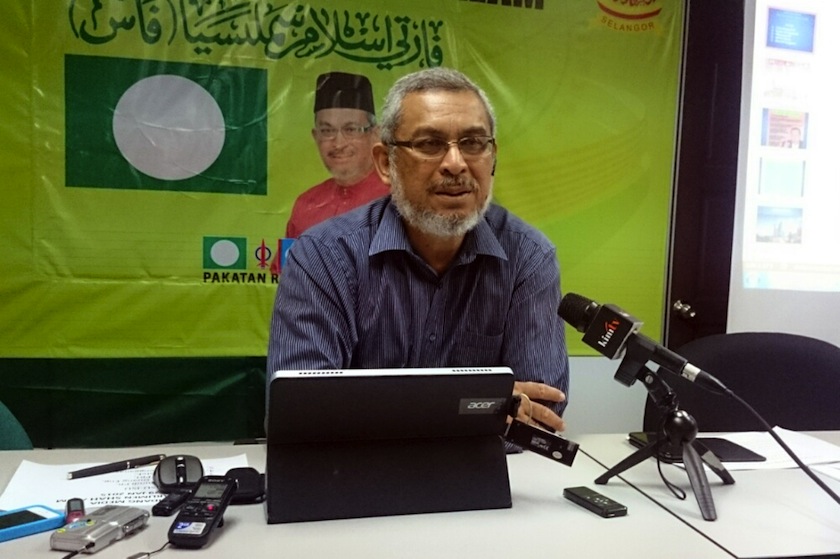
Shah Alam MP Khalid Samad said a prevention law would not do much good, choosing to consider the positive effects of Malaysia bringing home its citizen terrorists rather than keeping them out, as Joko Widodo’s administration hopes to do.
The Parti Amanah Rakyat strategic communication director suggest that some returnees might have repented of their terror acts and could then aid the authorities in combating domestic terrorism.
“I am not supporting them but I am saying that if we could use them to our benefit, it will be good,” he said, referring to the potential penitent militant.
Khalid said it was better for Putrajaya to weigh on the individual merits of each case instead of evoking a blanket policy or legislation, which may be Jakarta’s choice.
DAP lawmaker Charles Santiago said not everyone can be classified a terrorist, adding that a prevention law would pave the way for the capture of anyone on the skimpy belief on having some connection—no matter how tenuous—with a radical cell.
“Sometimes people are influenced to take up arms. Should they be categorised as a terrorist?” the opposition MP for Klang said, adding “The best way forward is education, moderation and change in foreign policy of superpowers.”